Time Walk
A Windmill's Footprint


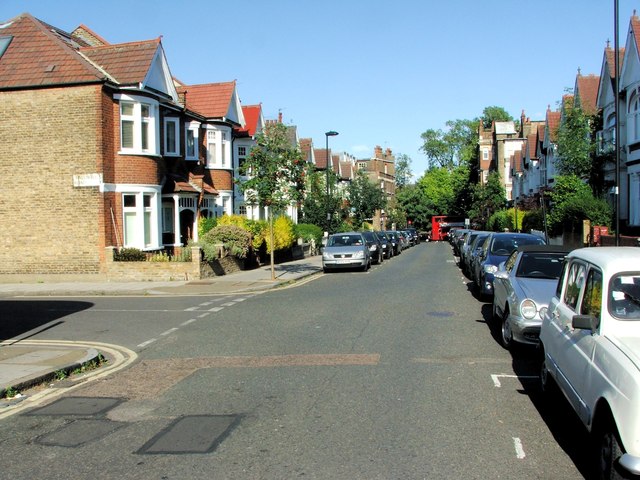
A working windmill once stood here, turning for well over a century until it was ground down for the last time in 1934. Today the street is given over to housing, much of it rebuilt between 1969 and 1972, with little obvious trace of the mill left to the casual eye.
Beneath the later housing lies a working landscape of a miller's land, a corn mill and the brick villas built for his family. That older layer explains a name the street once carried, and the one it carries now.
Name Origin
From Cornwall Road to Blenheim Gardens
The street began life in 1817 as Cornwall Road, laid out as a new road across land leased to John Ashby, a miller of Brixton Hill. It had become Blenheim Gardens by the time it appears under that name in a 1968 record.
The sources used here do not explain why "Blenheim" was chosen, or exactly when the change from Cornwall Road took place. The west section of the street is now known separately as Ramilles Close.
History
A Miller's Lease and the Houses That Followed
In 1817, Christopher Chryssell Hall granted John Ashby, a miller of Brixton Hill, a 99-year lease of two acres on the south side of the new Cornwall Road. The lease came with a brick corn mill and other buildings already planned for the site, and a windmill was erected there in 1816–17.
The windmill stayed in use by the Ashby firm continuously until 1934, apart from a short break in 1862–4 when its sails were taken down and new machinery fitted. It was later listed as a building of architectural and historic interest.
In 1843 Ashby agreed with John Muggeridge, a builder of Brixton Road, to let the eastern half of his land for building; Muggeridge put up seven houses fronting Cornwall Road that year. Only one survives: No. 47, a small house with a plastered front. Nearby, No. 49 — the Mill House, built for the Ashby family — and No. 51, a small rustic-looking villa standing in the yard approaching the mill, date from the same development.
Of the seven houses built here by John Muggeridge in 1843, only one — No. 47 — still stands.
Culture
Remembering Brixton's Postmen
Recent Times
Rebuilt Around the Mill
The area changed shape between 1969 and 1972, when the whole district was redeveloped. The street's west section was given over to a separate address, Ramilles Close. Blenheim Gardens is now one of Brixton's smaller housing estates.
On the Map
Blenheim Gardens Then & Now
Frequently Asked Questions
Why is it called Blenheim Gardens?
The street was originally named Cornwall Road when laid out in 1817. It had become Blenheim Gardens by 1968, but the sources used here do not explain the reason for the change.
What is Blenheim Gardens known for?
A windmill stood on the street from 1816–17 until 1934, built on land leased to miller John Ashby, and the street's Royal Mail Delivery Office holds memorials to Brixton postmen lost in both world wars.
Do any of the original buildings survive?
One does: No. 47, a small stuccoed house, is the sole survivor of seven houses built in 1843 by John Muggeridge. The Mill House at No. 49 and the villa at No. 51 also date from the same development.