Lambeth London England About Methodology
Lambeth · Clapham

Brixton Hill

The road that Roman legionaries may have marched down, where a Saxon stone gave a district its name — and where a San Francisco–style cable car once hauled passengers up south London’s steepest slope.

Name Meaning
Stone of Brixi
First Recorded
1530
Borough
Lambeth
Character
Victorian & Edwardian residential
Last Updated
Time Walk

Roman Road, Victorian Suburb

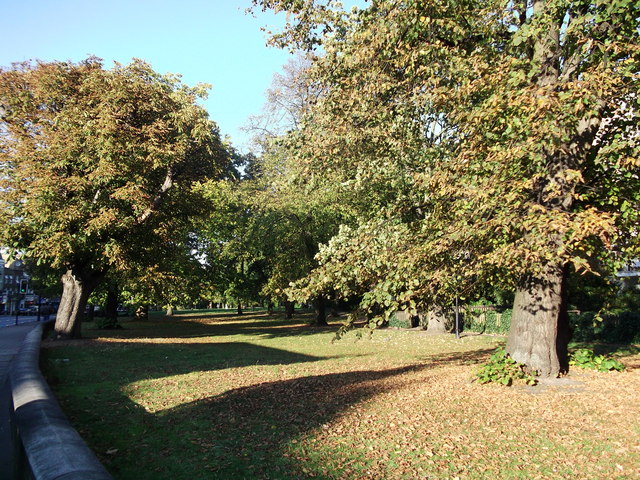
The tree-lined strip of Rush Common running along the eastern pavement is the first thing to explain itself. Those generous front gardens and set-back façades are not accidents of taste—they were mandated by Parliament. On the eastern side of the road, Rush Common—an area of former common land—is subject to a prohibition on ‘erections above the surface of the earth’ under an Act of Parliament of 1806. The result is one of inner London’s most unusual streetscapes: a wide road with a protected green buffer that no developer has ever been able to fully close.

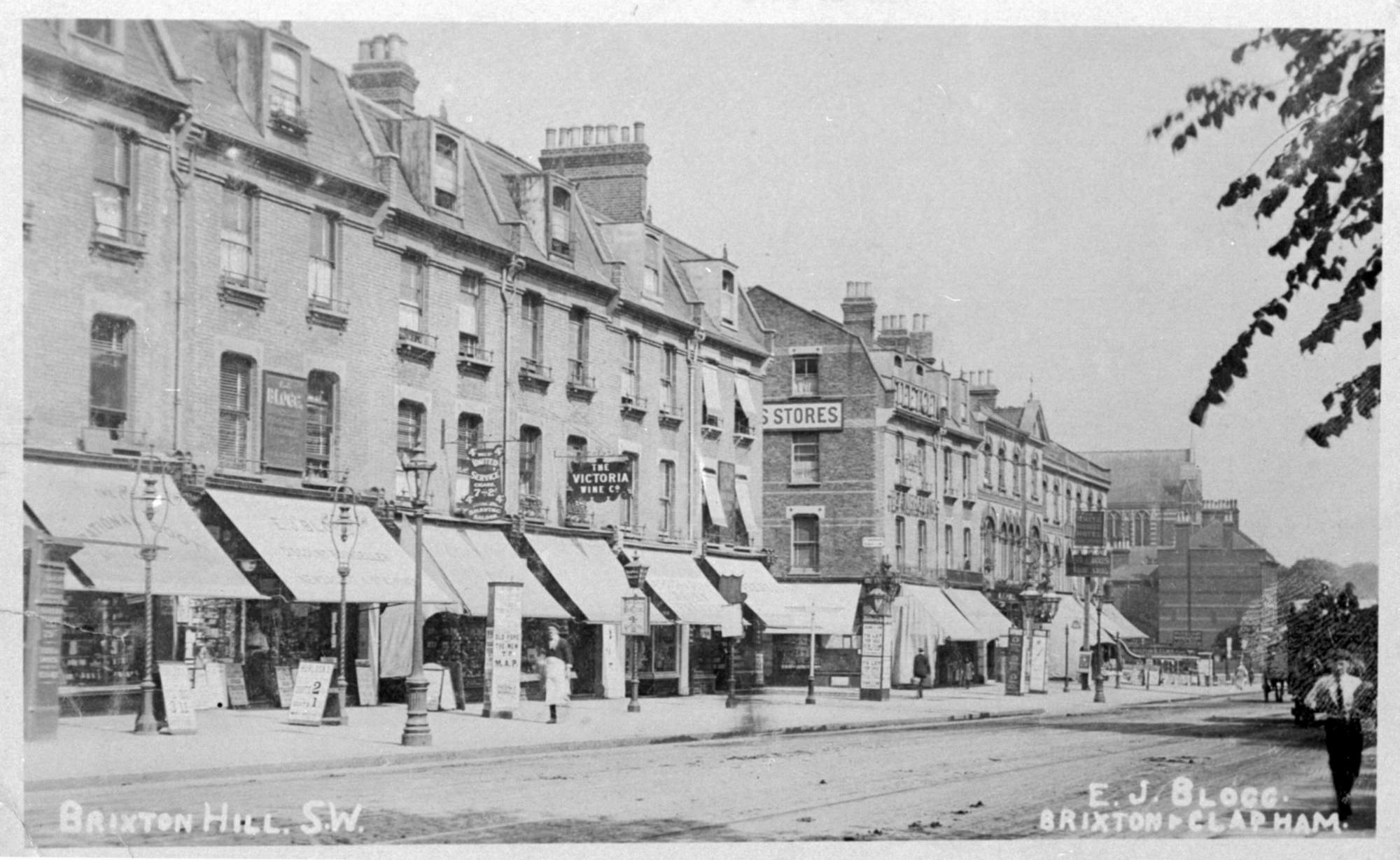
1910
Brixton Hill in around 1910
Wikimedia Commons · Public domain
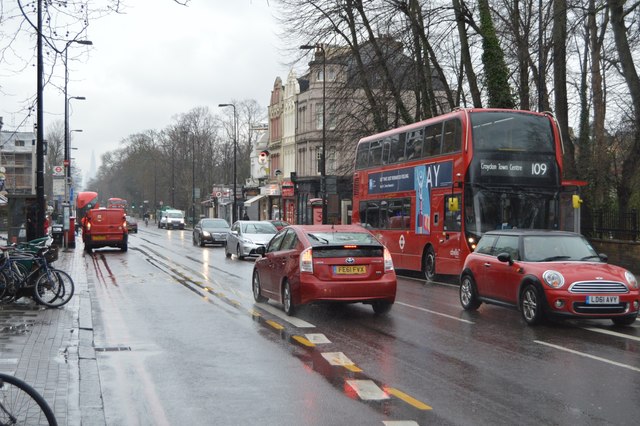
2018
Brixton Hill, A23
Brixton Hill, A23
Wikimedia Commons · CC BY-SA 2.0
2024
Brixton Library, Windrush Square
Wikimedia Commons · CC0
Today
Rush Common — near Brixton Hill
Geograph · CC BY-SA 2.0

Georgian stucco terraces from the 1820s stand alongside late-Victorian redbrick, the whole ensemble giving the Clapham neighbourhood a character quite distinct from the busier streets below. The road climbs steadily southward. That gradient—modest to a walker, once impossible for horses hauling a loaded tram—turns out to be central to the story of the name.

✦   ✦   ✦
Name Origin

The Stone of Brixi

The gradient gives the road its modern suffix, but the word Brixton is far older. As recorded in the British History Online Survey of London, the name Brixton dates from at least the 11th century, with a derivation suggested as “at the stone of Beohtsige (Brightsige)”—though a rival explanation holds that in the 14th century Sir John de Burstow repaired this piece of road with stone, after which it was known as Burstow or Bristow Causeway. Another tradition holds the name originates from Brixistane—the stone of Brixi, a Saxon lord who is thought to have erected a boundary marker for the ancient Brixton hundred court of Surrey.

The earliest known written reference to the causeway appears in a will of 1530, when Hugh Action left £20 for making and repairing the highway from Streatham Church to the foot of “Bristowe Cawsey.” The road kept that form—Brixton or Bristow Causeway—until the late 19th century, when the name Brixton Hill gradually replaced it, the northern section having formerly been called Brixton Causeway. The “Hill” element simply acknowledges the topography that once made it famous.

How the name evolved
11th century Brixistane
1530 Bristowe Cawsey
c. 18th century Brixton Causeway
late 19th century Brixton Hill
✦   ✦   ✦
History

Causeway, Common, and House of Correction

The road that became Brixton Hill may have ancient origins: British History Online records that research has shown a Roman road ran from Brighton through the Weald to Croydon and Streatham, whence it may have followed the modern Brixton Hill and Brixton Road to form a junction near Kennington Park. At some date before 1530, and possibly even in Roman times, the road was evidently embanked or paved—the Causeway element in early names may record that physical fact rather than any individual’s handiwork.

Key Dates
c. 1530
Bristowe Cawsey
Earliest written record: Hugh Action’s will leaves £20 to repair the highway to the foot of the causeway.
1806
Rush Common Act
Parliament forbids building on Rush Common within 150 feet of the road, shaping the street’s open eastern frontage permanently.
1816
Windmill & Villas
John Ashby builds his windmill just off the Hill; Vauxhall Bridge opens, triggering suburban house-building along the road.
1819–20
House of Correction
Surrey House of Correction (later Brixton Prison) is built near the summit on five acres of former manor land.
1891
Cable Tram
London Tramways Company opens a San Francisco–style cable system—London’s second—to haul cars up the slope to Streatham.
1904
Electric Era
LCC converts the cable line to electric traction; the depot at Telford Avenue is rebuilt to house the new fleet.
1951–52
Trams End
Brixton Hill tram service closes with the wider London tram network; the Telford Avenue site becomes a bus depot still in use today.
Did You Know?

The San Francisco–style cable system on Brixton Hill was installed in 1891 because the steep slope made horses unworkable; it was powered by four coke-burning water-tube boilers in the Telford Avenue depot, each strong enough to drive twelve miles of cable.

Brixton Hill remained relatively rural when the windmill was built in 1816; the first developments occurred around 1800, with settlements near Stockwell, Brixton Hill and Coldharbour Lane, and the new suburb grew from the 1820s as plots of land were sold by the Manor of Stockwell, attracting wealthy households with live-in servants and carriages. Rush Common bordered the whole length of the east side, and the Inclosure Act of 1806 provided that no buildings should be erected on the Common within 150 feet of the road; when building began in the 1820s, houses were set well back behind long narrow front gardens.

Soon after the windmill, the Surrey House of Correction—more commonly known as Brixton Prison—was built in 1819–20 on five acres purchased from the manor; the prison moved to Wandsworth in 1851, and the land was sold, only to be bought back in 1853 for a Women’s Prison. That institution was considered one of the worst-managed prisons in the kingdom; even members of Parliament and the Duke of Wellington had been refused admission to its precincts.
✦   ✦   ✦
Culture

Grip Cars and a Ghost in the Rails

The site of the Telford Avenue tram depot was previously home to a depot owned by the London Tramways Company, which operated a cable-hauled tram line on Brixton Hill—a San Francisco–style system installed in 1891 because the steep slope made horse traction unworkable. A surviving tram shed near the junction of Brixton Hill with Christchurch Road was designed by London County Council Tramways’ architect G. Topham Forest, and had a capacity of 30 trams. It is readily visible on the east side of Brixton Hill shortly before the South Circular Road junction; the pediment still carries engraved lettering reading ‘LCC TRAMWAYS.’

A Shed That Outlasted Its Purpose
LCC Tramways Depot, Brixton Hill

Built c. 1905 and designed by G. Topham Forest, architect to London County Council Tramways, the depot near Christchurch Road is one of the few surviving LCC tram structures in inner London. The ‘LCC TRAMWAYS’ inscription on its pediment and original tram rails beneath the entrance gates are catalogued by Historic England as part of London’s tramway heritage. The Telford Avenue depot across the hill is now a bus garage, still serving routes south from Brixton.

In the 19th century the road was also a site of technological experiment: an experimental telegraph apparatus was set up on Brixton Hill in 1815, and the event was commemorated when a pub opened with the name ‘The Telegraph’ to memorialise it. Rush Common alongside the road, with its protecting statute, remains one of the few strips of former open land in Clapham that retains any connection to the pre-urban landscape the causeway once crossed.

📖 Literature
Brixton Hill
Lottie Moggach · 2020
Novel set in an open prison on Brixton Hill, south London.
The Shadow Dancers of Brixton Hill
Nicole Willson · 2023
Gothic novella set on Brixton Hill featuring circus performers.
🎬 Film
Honeytrap
Rebecca Johnson · 2014
Feature film with scenes shot on Brixton Hill street.
· Art
Brixton Hill Road, London
Anthony Gross · 1940
Black ink drawing of Brixton Hill during winter with feathery trees.
✦   ✦   ✦
People

Bibliophiles and Booksellers

Edward Petherick, an Australian bookseller and bibliophile, lived at Yarra Yarra, 30 Brixton Hill; he maintained a library particularly extensive in its coverage of Australia, and George William Rusden was a frequent visitor when writing his books History of Australia and History of New Zealand. Petherick later donated his collection to the National Library of Australia—a collection assembled, in part, in a house on this slope.

The street has also been home to less celebrated but historically significant figures. British History Online records that William Houghton of Brixton Hill was the President of the Montpelier Cricket Club—formed around 1840—which played at the Bee Hive Tavern at Walworth before those grounds were required for building in 1844. Houghton went on to become the first lessee of The Oval in 1845.

✦   ✦   ✦
Recent Times

Murder, Music, and a Ward Renamed

The name Brixton Hill was given to an electoral ward of the London Borough of Lambeth from 2002 to 2022, reflecting how thoroughly it had defined its neighbourhood. The road has continued to attract public attention for stark reasons: Sarah Everard, a marketing executive murdered in 2021, was living on Brixton Hill at the time of her death—a case that sparked nationwide debate about women’s safety in public spaces.

The street is associated with the rap group 67, whose music emerged from the Brixton Hill area and helped establish the neighbourhood within the wider landscape of UK drill. More recently, developer Muse has been working with Lambeth Council as part of a town hall regeneration initiative; a redevelopment of the former Council offices on Brixton Hill is under way, with plans for a new seven-storey building overlooking Rush Common.

✦   ✦   ✦
Today

Green Buffer, Living Road

Rush Common still does its statutory work. The tree-lined gardens and open strip on the eastern side of Brixton Hill remain legally protected, giving the road an unusual spaciousness rare in inner London. The surviving tram shed near Christchurch Road—its ‘LCC TRAMWAYS’ lettering intact—is one of the most overlooked industrial heritage structures in Clapham.

The road carries the A23 south towards Streatham, as it has carried traffic towards the coast since Roman times. Brixton Prison remains at the summit, still in use after two centuries. The Victorian and Edwardian stock behind the common strip continues to be sought after, and the street name—once an electoral ward, still a neighbourhood identity—carries the echo of a Saxon stone that nobody has ever found.

10 min walk
Brockwell Park
120 acres of parkland with a lido, walled garden and panoramic views over south London.
5 min walk
Rush Common
Parliamentary-protected strip of former common land running the length of Brixton Hill’s eastern side.
12 min walk
Clapham Common
220 acres of open grassland, ponds and woodland at the edge of the Clapham neighbourhood.
8 min walk
Windmill Gardens
Public gardens surrounding Brixton Windmill—built 1816—with community orchard and wildflower meadow.
✦   ✦   ✦
“Almost on the summit of Brixton Hill, in one of the most open and salubrious spots in the southern suburbs of London, stands one of the metropolitan houses of correction.”
Old and New London, Vol. 6 (c. 1878), via British History Online
On the Map

Brixton Hill Then & Now

National Library of Scotland — Ordnance Survey 6-inch, c. 1888. Hosted by MapTiler. Modern: © OpenStreetMap contributors.

✦   ✦   ✦

Frequently Asked Questions

Why is it called Brixton Hill?
The name Brixton most likely derives from the Old English Brixistane—the stone of Brixi, a Saxon lord whose boundary marker is thought to have stood near the top of this road. The Survey of London also records a rival tradition that the name comes from Sir John de Burstow, who reputedly repaired the road with stone in the 14th century, after which it was known as Burstow or Bristow Causeway. The road was called Brixton (or Bristow) Causeway until the late 19th century, when the current name gradually took over.
What was the Brixton Hill cable tram?
From 1891, horse-drawn trams could not manage the gradient, so the London Tramways Company installed a San Francisco–style cable system powered by steam boilers at the Telford Avenue depot. A steel cable nearly six miles long ran beneath the road; grip cars latched onto it to haul passenger cars up the slope. The LCC converted the line to electric traction in 1904. The surviving tram shed near Christchurch Road, designed by LCC architect G. Topham Forest, still bears the ‘LCC TRAMWAYS’ inscription on its pediment.
What is Brixton Hill known for?
Brixton Hill is known for its Victorian and Edwardian housing set back behind Rush Common, a legally protected strip of former common land. It has a remarkable transport history—London’s second cable tramway climbed its slope from 1891 to 1904. Brixton Prison, built in 1819–20 near the summit, has shaped the character of the upper road for two centuries. The street also gave its name to an electoral ward from 2002 to 2022, and is associated with the emergence of the UK drill scene in the early 21st century.