Time Walk
A Street Built Around a Law


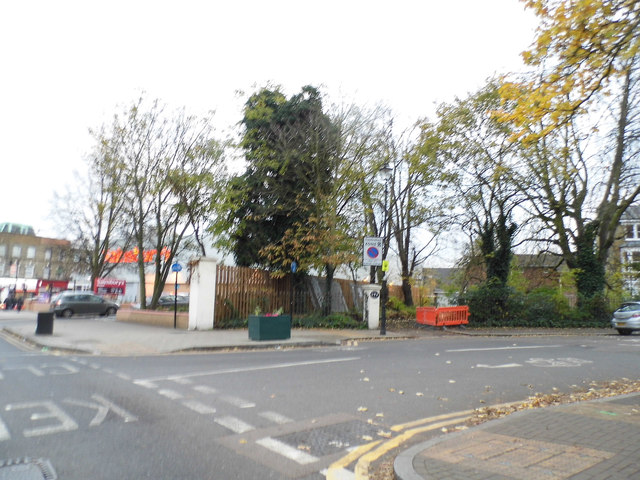
An old restriction on building shaped this avenue before a single house went up. Walk it today and the trees are what you notice: mature horse chestnut, lime, plane and oak running the length of the street, with communal gardens down the centre and houses set back behind them. Some of those gardens are still enclosed by tall arrow-head railings.
Beneath the grand terraces lies a much older boundary: a line drawn across open common land decades before the avenue existed. That line explains the shape of the street more than any builder's taste did — and it is where the story of Josephine Avenue's name has to begin.
Name Origin
A Name the Sources Keep Silent On
The origin of "Josephine" itself is not explained in the sources used here. What is documented instead is the legal framework the avenue had to fit around: the Rush Common Act, which restricted building on this stretch of Brixton Hill.
History
Fitting a Victorian Avenue Around an Old Limit
The Rush Common Act was already decades old by the time Josephine Avenue was planned. Before 1786, a house had already been built behind what is now No. 95 Brixton Hill as an encroachment on the common, predating the 1806 Act that formalised the building restrictions. By the late 1860s, when developers came to lay out Josephine Avenue, that restriction was a fixed constraint they had to design around.
The result was a broad, tree-lined avenue with communal gardens running down its centre and terraced houses facing onto access roads rather than a single carriageway. The terraces are large, three storeys high, with two-storey bay windows carrying Corinthian capitals above recessed porches. Nearby, between Arodene Road and Josephine Avenue, buildings run straight up to the pavement — a contrast to the set-back, garden-fronted avenue itself.
A house standing behind what is now No. 95 Brixton Hill, near Josephine Avenue, had already encroached on Rush Common before 1786 — twenty years before the Act that was meant to stop exactly that kind of building.
Today
The Trees Still Set the Terms
Walk the avenue now and the trees still do the work they always did. The communal gardens and their arrow-head railings continue to separate the Victorian terraces from the road, a layout fixed in the late 1860s by a law far older than the houses themselves.
On the Map
Josephine Avenue Then & Now
Frequently Asked Questions
Why is it called Josephine Avenue?
The sources used here do not explain why the avenue was named Josephine. What they do record is that it was carefully planned in the late 1860s to fit around the building restrictions of the Rush Common Act.
What is Josephine Avenue known for?
Its broad, tree-lined form, with communal gardens running down the centre, grand three-storey terraced houses with Corinthian-capped bay windows, and mature horse chestnut, lime, plane and oak trees lining the route.
What is the Rush Common Act and why does it matter to Josephine Avenue?
It was an 1806 law restricting building on this part of Brixton Hill. When Josephine Avenue was planned in the late 1860s, developers had to design the avenue to respect that building exclusion zone.