Time Walk
A Street That Shouldn't Be Here

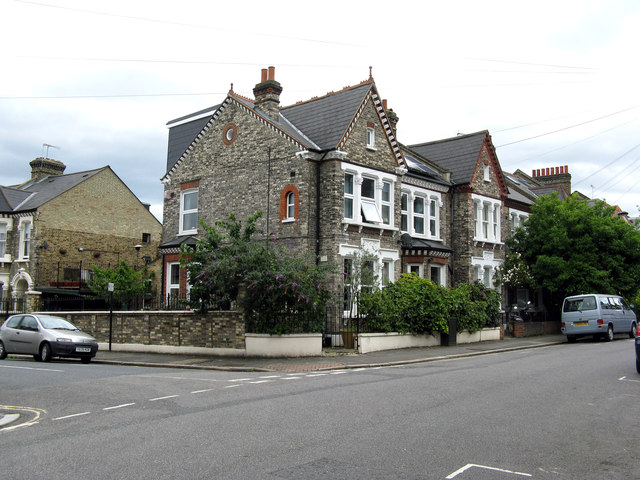
This is a street that was never meant to exist. An Act of Parliament had set this ground aside as open common, yet houses went up here within a few years of the road being formed. Walk it today and you find terraces with bay windows and decorated porches, set back behind small front gardens — ordinary Victorian streetscape, built on extraordinary ground.
Beneath the tiled porches and chequerboard paths lies a dispute. Residents objected to the London County Council as the houses were going up, but the terraces were completed regardless, and they remain. That tension — permission withheld, building done anyway — is the story Name Origin can't quite explain but the street itself still tells.
Name Origin
A Name Without a Record
The sources used here do not explain the name Arodene. No lease, map or local history note in this collection gives its derivation, so the name stands unglossed alongside its neighbour, Helix Road, approved for formation at the same time in 1891.
History
Built on Forbidden Ground
Rush Common had been protected since 1806, when an Inclosure Act banned new building on it. In 1891 the London County Council agreed to let Arodene Road and Helix Road be formed across part of that common — on condition that no buildings went up on the protected ground. Lambeth's own appraisal records the road as part of a wider wave of rapid Victorian terrace-building for artisan and middle-class occupants that same year.
The condition did not hold. By 1896 the Council was receiving protests that houses were being built on land the 1806 Act was supposed to keep clear. The houses went up regardless, in defiance of the old proscription, and they still stand today. A little further along Brixton Hill, a similar pattern had already played out: a shop parade near Arodene Road grew from a cottage said to date to at least 1786 — itself an encroachment onto Rush Common some twenty years before the Inclosure Act was even passed.
Rush Common was supposed to stay free of buildings under an Act passed in 1806. Arodene Road's terraces went up anyway in the 1890s, despite protests to the London County Council — and they're still standing.
Today
Reading the Terraces
The houses have full-height bay windows rising to decorative finials, and recessed porches set behind arched entrances. Many of the columns and consoles supporting those porches are still elaborately detailed, and the eaves carry contrasting red brickwork against slate roofs.
Small front gardens, enclosed by dwarf walls, railings or privet hedges, sit before doors that often keep their original stained glass, tiled porches and chequerboard paths. At the northern end, the terraces pick up the design of neighbouring Helix Gardens, with gothic arches over the first-floor windows filled with decorative clay-tile spandrels. It is a streetscape built, by its own builders' admission, where it technically should not have been.
On the Map
Arodene Road Then & Now
Frequently Asked Questions
Why is it called Arodene Road?
The sources used here do not explain the name. The road's documented history concerns its formation in 1891 on part of Rush Common, not the origin of the name itself.
What is Arodene Road known for?
Arodene Road is known for being built on land the 1806 Rush Common Inclosure Act was meant to keep free of buildings. Protests in 1896 failed to stop construction, and the Victorian terraces raised in defiance of that ban still stand today.
When was Arodene Road built?
The London County Council consented to its formation in 1891, and it was laid out that year as part of a wave of Victorian terraced housing for artisan and middle-class residents.