Time Walk
From a Georgian villa plot to a cultural landmark


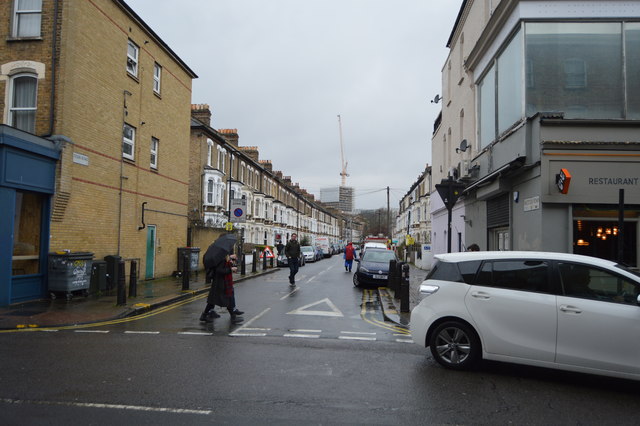
Two Georgian houses built around 1810 ended up at the heart of a civil rights institution two centuries later. Where Saltoun Road meets Effra Road, you reach Windrush Square, opened as a pedestrianised space in 2010 with new trees, lighting and a granite seat.
Beneath the paving and the square's modern landscaping lies a street built for Victorian villas on farmland, then reshaped by a 1920s coach station and a public hall. The name Saltoun itself is not explained in the records consulted here — a small mystery worth carrying into the next layer of the street's story.
Name Origin
A name without an explanation
No record among the sources used here explains why the street was called Saltoun Road. What is documented is the ground it was built on: the streets between Effra Road, Saltoun Road and Railton Road were laid out in the 1870s on the Stuart-Bruce Estate. That estate had originally been the western half of Effra Farm, also known as the Manor of Heathrow.
Development began under James Stuart as freeholder and continued after his death, carried on by his executors — including his widow and her brother, a Major-General Bruce. Saltoun Road's own name sits outside that family story; the sources simply do not say where it came from.
History
Villas, a hall, and a coach station
The oldest buildings on the street predate the estate that shaped it. Two houses were built around 1810 on what is now the Windrush Square site, long before the Stuart-Bruce Estate streets were cut through the surrounding farmland in the 1870s. Raleigh Hall, at 1a-1b Saltoun Road, followed later: built as a public hall around 1880, it was raised to two storeys shortly after.
In 1927 a motor coach station was built on a plot between Rushcroft Road and Saltoun Road, facing Effra Road. From the 1930s it was run by Orange Luxury Coaches, and in 1933 a banner hung under its arch advertising trips "daily to all seaside resorts."
"daily to all seaside resorts"Banner at the Saltoun Road coach station, 1933
The Windrush Square buildings were first listed in 1974. Raleigh Hall was converted to workshop and studio use in the 1990s, and the 1810 houses were converted to museum and archive use in 2014. In 2012, Raleigh House nearby at the Effra Road corner — its flank facing the Saltoun Road junction — was listed as a building of particular note but was then vacant and in poor condition.
Culture
From a seaside banner to the Black Cultural Archives
Before that transformation, the same stretch had a lighter, more transient culture: the 1927 coach station facing Effra Road, run from the 1930s by Orange Luxury Coaches, whose 1933 banner promised trips "daily to all seaside resorts" — a departure point for day trips rather than a cultural landmark.
Lights at the corner of Saltoun Road are known locally as the Windrush Lights, part of the square's 2010 redesign.
People
The family behind the estate
James Stuart was the freeholder who began developing the estate on which Saltoun Road was built in the 1870s. When he died, the work did not stop. His widow and her brother, a Major-General Bruce, carried the development forward as his executors, giving the estate — and indirectly the street — its hyphenated name, Stuart-Bruce.
Today
Where the villas met the square
Saltoun Road now meets Windrush Square at its most historic point, where the Georgian houses house the Black Cultural Archives and the Victorian public hall has become studio space. Nearby, Raleigh House's flank still faces the junction, recorded as vacant and in poor condition in 2012. The name Saltoun itself remains unexplained, a quiet gap in an otherwise well-documented street.
On the Map
Saltoun Road Then & Now
Frequently Asked Questions
Why is it called Saltoun Road?
The sources used here do not explain the name. The street was laid out in the 1870s as part of the Stuart-Bruce Estate, developed by James Stuart and, after his death, his executors.
What is Saltoun Road known for?
It is known for the Black Cultural Archives at Windrush Square, housed in two houses built around 1810, and for Raleigh Hall, a Grade II listed former public hall of around 1880.
What stood on Saltoun Road before Windrush Square?
A motor coach station stood on a plot facing Effra Road from 1927, run from the 1930s by Orange Luxury Coaches, which advertised seaside day trips.