Time Walk
Where Clapham Village Began


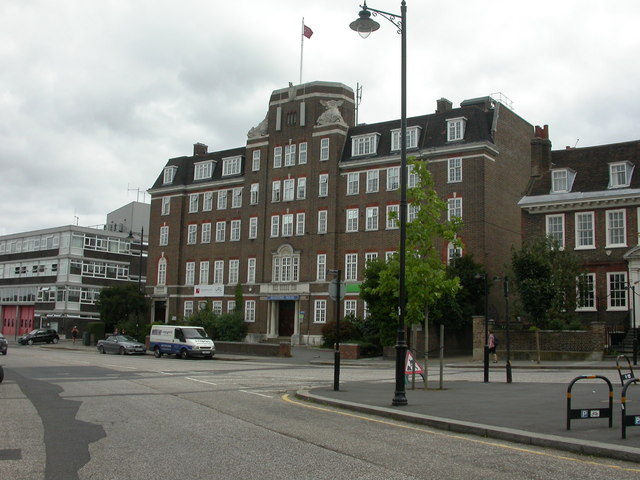
This short street was once the whole of Clapham, the old village itself before the parish spread outward. Walking it today, you pass early 18th-century town houses, a 1964 fire station, and the bulk of a 1939 union headquarters.
Behind the shopfronts, the bones of a Georgian village street are still there. That older layer is where the street's name begins.
Name Origin
The Village Before Clapham Grew
No source explains the name outright, but it fits what the street was. Clapham's old village was based not on one street but three: Rectory Grove, Old Town and North Street, running down to the common.
The Victoria County History records that Old Town lies in the old town of Clapham, on the north of the parish, along and near the road to London that forms the High Street. That position, on the main road but at the historic centre, is why the street still carries the oldest surviving buildings in the area.
History
Brick, Pilasters, and a Meeting-House
At the corner leading to Grafton Square stands a small late 17th-century building of red brick with a tiled roof, one of the street's oldest survivals. No. 45 is probably of the same date.
A little further along, Nos. 39, 41 and 43 form a well-preserved run of early-to-mid 18th-century town houses, two storeys with an attic and basement. No. 41's door, of six fielded panels, sits under a fanlight within a carved doorcase. Nos. 1 and 3, of around 1700, and Nos. 20 and 20A, early 19th century, add to a street where several centuries of brick sit side by side.
In 1762 a meeting-house was built in Clapham Old Town, a dissenting presence in the heart of the old village.
Culture
The Car Built on a Village Street
A side street brought an unlikely engineering story to Clapham village. Hounsfield's firm made production tools and gauges through the First World War instead of cars, before Trojan production finally began in 1920, not on Old Town but at a new works in Croydon. The Old Town site had briefly been considered for a police building, which was never built there.
People
An Architect at No. 43
A GLC blue plaque at No. 43 Old Town marks the home of John Francis Bentley, an architect who lived there and died in 1902.
Recent Times
Laundries, Printers, and a Returning Trough
Trade on Old Town kept changing through the 20th century. A corner site was a chemists shop in the 1920s and 1930s, then Downers Lane Engineering Works by the 1950s, and is now a modern restaurant. Battley Brothers Print Works operated on the street until 2002, when the family firm moved to Battersea as partners in Cantate.
Sycamore Laundry, which had begun in the 1860s at The Sycamores in Rectory Grove and later moved to 4 Old Town, merged with Blossom and Browne Laundry in 1994, closing a line of use that stretched back to its building's time as a girls' reformatory and a working men's club.
Before it became a laundry in 1898, Sycamore House on Old Town had already been a private school, a working men's club, and the Surrey Reformatory for Girls.
Today
Village Bones, Modern Uses
Old Town now mixes eras openly. Maritime House, built for the National Union of Seamen, is owned by the RMT Union and holds offices, flats and a Job Centre, its pediment still carrying a large fish and a ship's prow. A 1964 fire station stands nearby.
Alongside them, the early 18th-century houses at Nos. 39, 41 and 43, and the late 17th-century survivals near Grafton Square, keep the street rooted in the old village it was named for.
On the Map
Old Town Then & Now
Frequently Asked Questions
Why is it called Old Town?
The sources do not say outright, but the street was one of three, with Rectory Grove and North Street, that the old village of Clapham was based around.
What is Old Town known for?
Old Town is known for its surviving early 18th-century houses, including Nos. 39, 41 and 43, and as the site of Polygon Engineering Works, where the Trojan car was designed and prototyped between 1910 and 1913.
What is Maritime House?
Maritime House is a 1939 building on Old Town built as the headquarters of the National Union of Seamen. It is now owned by the RMT Union and contains offices, flats and a Job Centre.
Who lived at No. 43 Old Town?
The architect John Francis Bentley (1839-1902) lived at No. 43 Old Town, where a GLC blue plaque now commemorates him.