Lambeth London England About Methodology
Clapham, Lambeth · SW9

Clapham Road

An ancient Roman highway transformed into a turnpike route, then a Victorian residential street, and now the A3 Portsmouth Road linking London to the south coast.

Name Meaning
Homestead on the Hillock
First Recorded
c. 880
Borough
Lambeth
Character
Major Arterial Road
Last Updated
Time Walk

From Stane Street to the A3

Clapham Road is now part of the A3 Portsmouth Road, entering Lambeth where Kennington Park Road becomes Clapham Road and Clapham High Street. It carries significant commuter traffic between the City of London and the south coast, threading through Clapham, Stockwell and Kennington as a congested urban artery.

2006
Clapham Road SW9
Clapham Road SW9
Wikimedia Commons · CC BY-SA 2.0
2012
Clapham Road, Kennington
Wikimedia Commons · CC BY-SA 2.0
2013
Detail of 165 Clapham Road
Wikimedia Commons · CC BY-SA 2.0
Today
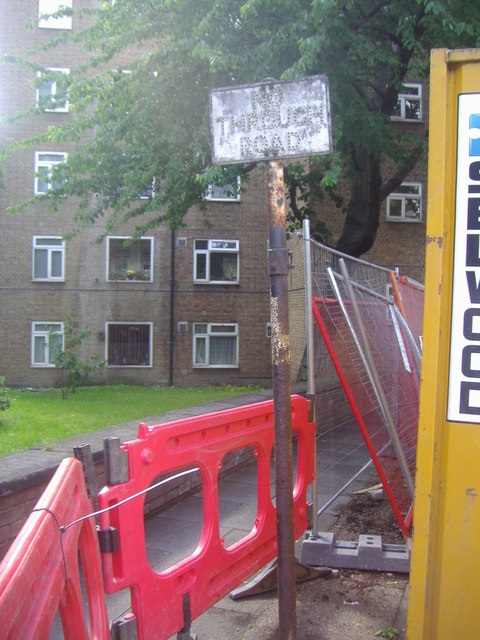
Pre-Worboys sign and pole. Greener House Clapham Road
Geograph · CC BY-SA 2.0

Yet the road itself predates the modern motor age by nearly two millennia. No trace of the Roman surface has been found in Lambeth, but there can be little doubt that it ran along Kennington Park Road and Clapham Road. The former was part of Stane Street, which ran from the East Gate of Chichester through Pulborough, Dorking and Tooting to London. What began as a military highway has evolved, over centuries, into one of London’s busiest approach roads.

✦   ✦   ✦
Name Origin

A Homestead on a Hillock

Clapham Road takes its name directly from Clapham, whose name derives from Old English, meaning ‘homestead or enclosure near a hill’, with the first recorded usage being Clappaham circa 880. Clapham appears in Domesday Book as Clopeham. It was held by Goisfrid (Geoffrey) de Mandeville, and its domesday assets were three hides, six ploughs, and 5.0 acres (2.0 ha) of meadow.

The name, like most of the ancient names, comes from Old English and translates as the ‘homestead or enclosure near a hill or hills’. The street itself, however, is not named after the landscape of a single hillock, but rather inherits the district’s name—a toponym that has endured for over a thousand years, from the Anglo-Saxon settlement of the 9th century to the present day.

How the name evolved
c. 880 Cloppaham
1086 Clopeham
1503 Clapham
present Clapham Road
✦   ✦   ✦
History

A Roman Road Becomes a Turnpike

The road beneath Clapham Road is older than Clapham itself. The date of its construction is uncertain, but it is likely that it was in use in A.D. 70. Clapham Road runs from Oval Underground station to Clapham High Street and was originally an ancient Roman military road called Stane Street. It became known as the Merton Road as it led all the way though Clapham, Balham and Tooting to Merton. For centuries it remained a quiet country lane serving the parish.

Key Dates
c. AD 70
Roman Stane Street
Military highway constructed from London to Chichester, passing through what is now Clapham Road.
1717
Turnpike Act
An Act of Parliament set up Turnpike Trustees for the roads from Stones End in Blackman Street, Southwark, to East Grinstead, Sutton and Kingston. The Sutton and Kingston roads comprised Clapham Road and Wandsworth Road respectively.
1805
Early Development
Houses were erected in 1805 at the costs of James Medland of St. Mary Newington, surveyor, and were let to him in that year by John Wright’s trustees.
1870
Residential Built-Out
By the OS 1st edition map of 1870 the site and the whole surrounding area had been fully developed with formalised residential development and street layout. The site comprised two properties with the former appearing to be a double sized plot with a large formalised garden.
1890
Underground Railway
The City and South London railway line opened to passengers between Stockwell and King William Street on 18 December 1890, and was both the first standard gauge tube and the first railway to employ electric traction in London.
1900
Clapham North Station Opens
Clapham North opened as Clapham Road in 1900, changed to its current name in 1926.
1905
Freeman’s Catalogue
Freemans had started trading in 1905, making it one of the oldest catalogues in the UK. It began in a two room terraced house in Lavender Sweep, London by Arthur and Stanley Rampton, William Jones and Henry Freeman. It was during the mail order boom time in the 1930s that it moved to 139 Clapham Road which they renamed Lavender House.
Did You Know?

The triangle of land on Clapham Road is the remnant of South Lambeth Common, also known as Stockwell Common. What remains today is a fragment of open ground where pastoral land once stretched.

In Georgian times Clapham Road transitioned from a rural lane into a fashionable residential area. Nothing is known about the early history of the land between Prima Road, South Island Place, Clapham Road and Brixton Road. The area formed a no-man’s land bounded by the Manor of Kennington and Vauxhall Creek on the north, by Vauxhall Manor on the west and by Lambeth Wick Manor on the east and south. Clapham Road has seen many buildings come and go, wartime damage being the main cause for this, however it has remained a mixture of houses and businesses into modern times.

The coming of the Underground in 1890 and the expansion of tram routes transformed Clapham Road into one of London’s key arteries. By 1870, trams were running down Westminster Bridge Road and Kennington Road to the junction of Brixton Hill and Brixton Water Lane; another route ran down Clapham Road. Victorian terrace housing proliferated along its length, and businesses—from coach-builders to the great Freeman’s mail order empire—flourished on the street’s accessibility.

✦   ✦   ✦
Culture

Transport Innovation & Commerce

Clapham Road’s character reflects two distinct periods of London development. In the 19th century it attracted Georgian merchants and became a respectable residential quarter, lined with elegant terraces built to the designs of local builders like William Head. The road existed for many hundreds of years as a wide rural lane on which coaches from southern parts of the country travelled to the City. In Georgian times City merchants began to build grand houses alongside Clapham Road and smart thinking businessmen built coach houses for those travelling by horse and cart on their long journey into London.

Architectural Heritage
Early & Mid-Victorian Terraces

Early-mid C19 tall terrace, each 4 storeys and basement, 3 windows. Stock brick, with parapet fronts rendered at top. Gauged flat brick arches to sash windows with glazing bars except for long first floor casements to ornamental cast iron balconies. Three and 6 steps to 6-panel doors with narrow reeded pilasters, reeded head, plain fanlight. Multiple examples of this terrace type remain listed on Clapham Road.

By the 20th century, commerce dominated. Freeman’s catalogue business relocated to 139 Clapham Road which they renamed Lavender House, from which Freeman’s was by then the largest mail order business in Great Britain; larger than all its competitors put together. Some of its 30,000 agents managed to buy cars and houses with their commission money. The street became defined by its role as a commercial thoroughfare and transport hub rather than an elite residential address.

📖 Literature
The Diary of Samuel Pepys
Samuel Pepys · 1660-1669
Pepys mentions Clapham frequently; lived there 1701-1703 in friend's house.
🎵 Music
Fire On The Clapham Road
Philip Jeays · 2021
Song featuring Clapham Road as central location and title, from album Blossoms And Bicycles.
✦   ✦   ✦
People

Residents & Enterprises

The street’s residents changed markedly over two centuries. Georgian merchants and their families occupied the grand houses; Victorian shopkeepers and clerks the terraces. By the 20th century, the link of 87 Hackford Road, SW9 to Vincent van Gogh was only discovered in 1971 by postman and avid art enthusiast Paul Chalcroft, who took it upon himself to locate Van Gogh’s London home whilst he was otherwise idle during a postal strike. Van Gogh’s time in Stockwell (1873–1874) preceded the intensive development of Clapham Road, but his presence reminds us that the area attracted people seeking work and new lives in London.

Freeman’s catalogue, which moved to 139 Clapham Road which they renamed Lavender House in the 1930s, employed thousands of agents across Britain and became one of the nation’s most recognisable mail order businesses. The street thus became inseparable from one of Britain’s commercial success stories of the 20th century.

✦   ✦   ✦
Recent Times

Modern Infrastructure & Redevelopment

In the second half of the 20th century Clapham Road transformed from a mixed commercial and residential street into a purely utilitarian transport route. The other section of single carriageways is through the urban environs of Battersea, Clapham and Stockwell towards the northern end, which has to accommodate bus lanes and parking meter bays. The road’s status as part of the A3 Portsmouth Road meant that it became subject to traffic management systems designed for through-traffic rather than local commerce or pedestrian life.

Notable buildings have been demolished and redeveloped. Freeman’s, once the anchor of Clapham Road’s commercial character, closed and the Freemans building and surrounding site has been redeveloped by Galliard Homes as housing and business units. Two new streets that run either side of the original building have been created: Lett Road and Printer Road. The street remains busy and vital, but its character is now that of a major London artery first and foremost.

✦   ✦   ✦
Today

A Busy Main Road with Layered History

Clapham Road today is one of South London’s busiest arterial roads, part of the A3 which enters the London Borough of Lambeth on Kennington Park Road which becomes Clapham Road and Clapham High Street. The street carries commuter traffic, buses, and cycles alongside pedestrians navigating the busy pavements. Cycle Superhighway 7 (CS7) runs either side of the A3 from Elephant and Castle to Clapham Common. The route is signposted and marked using painted blue cycle logos, carrying cyclists through Kennington, Stockwell, and Clapham.

Physically, the street reflects its layered history. Early 19th-century terraces, many now listed and converted to flats or offices, stand alongside mid-20th-century commercial buildings, modern residential blocks, and service infrastructure. The nearest railway station is Clapham High Street, approximately 0.5 miles away, with Clapham North (Overground) and Stockwell (Underground) stations within walking distance. The road itself remains, as it has for nearly 2,000 years, a principal route linking the City to the south and south-west.

5 min walk
Clapham Common
220 acres of parkland with ponds, mature plane trees, and Victorian bandstand overlooked by Georgian mansions.
10 min walk
Archbishop Park
Community park with play areas, tennis courts, and tree-lined paths in the Larkhall ward.
12 min walk
Stockwell Park
Victorian park with open green space and historic estate layout serving the Stockwell neighbourhood.
15 min walk
Vauxhall Park
Historic park with tree-lined avenues, gardens, and water features along the Vauxhall Estate.
✦   ✦   ✦
On the Map

Clapham Road Then & Now

National Library of Scotland — Ordnance Survey 6-inch, 1888. Hosted by MapTiler. Modern: © OpenStreetMap contributors.

✦   ✦   ✦

Frequently Asked Questions

Why is it called Clapham Road?
Clapham Road is named after Clapham, the district it leads towards. The place name derives from Old English ‘clopp’ (hillock) and ‘ham’ (homestead), recorded as ‘Cloppaham’ around 880. It appears as ‘Clopeham’ in Domesday Book and settled into the modern ‘Clapham’ by 1503. The street inherited the district’s ancient toponym.
Is Clapham Road a Roman road?
Yes. Clapham Road follows the course of the Roman Stane Street, a military highway built around AD 70 linking London to Chichester. Later known as the Merton Road, it remained a major thoroughfare for nearly two millennia, evolving from a country lane into a turnpike in 1717 and eventually becoming the A3 Portsmouth Road.
What is Clapham Road known for?
Clapham Road is known as a major transport artery in South London, part of the A3 connecting London to Portsmouth. It carries heavy commuter traffic and is served by the Underground (Stockwell), Overground (Clapham North), and Cycle Superhighway 7 which runs either side of the A3 from Elephant and Castle to Clapham Common, carrying cyclists through Kennington, Stockwell, and Clapham. Historically, it was notable for Victorian residential development and the Freeman’s catalogue business.