Time Walk
Villas on One Side, Fields on the Other


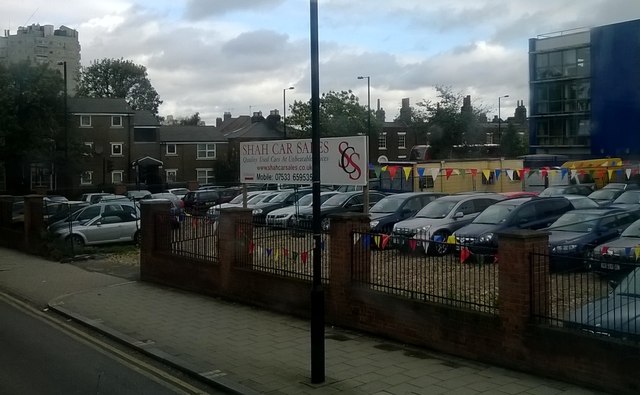
One side of this street was grand houses, the other open countryside, within living memory of Victoria's reign. Today Kings Avenue still carries that older rhythm: stuccoed villas standing among later infill, some marked out as the street's most distinctive survivals.
The street now forms the eastern edge of a protected pocket of Clapham Park, a boundary line that still shapes what gets built and what gets kept. Walk its length and the name above the houses has changed more than the bricks have — this was once Loats Road.
Name Origin
From Loats Road to Kings Avenue
The street was recorded as Loats Road in 1849, when it was lined with large houses on its eastern side while the western edge still ran out into open fields. At some point it was renamed Kings Avenue, the name it carries today.
The sources used here do not explain why the change was made, or when exactly it happened. What they do confirm is the sequence: Loats Road first, Kings Avenue now.
History
Villas, Gaps, and Infill
By 1849 only the eastern side of the street was built up, with large houses facing fields across the way. Building over the following decades filled in much of that western edge with more villas of the same scale.
No. 4 Kings Avenue, a three-storey villa with a basement, dates from around 1860 and is thought to have been built by Henry Harris; it is listed Grade II. Several neighbours followed in the same mid-19th-century style: No. 6 and No. 14 are also listed mid-century villas of three storeys and basement, and a detached coach house at No. 89B survives from the same period. Nos. 12 and 28 are later additions to the local heritage list, each recognised as a positive contributor to the surrounding area.
The twentieth century brought change behind the street rather than along it: in the post-war decades, new housing was built behind Nos. 4 and 14, filling in the rear gardens of the older villas. A school was also built on the street.
Culture
The Royal Zanettos at No. 19
Behind the ordinary front door of No. 19 lived a family whose working life was spent performing under a stage name, tied by that 1911 record to a quiet corner of residential Clapham.
Today
Villas Among the Infill
Historic villas still stand in places along Kings Avenue, marking out the street's oldest phase. Around them sit the later housing built behind Nos. 4 and 14, and the school added to the street at some point in its history. What began as Loats Road, half-fields and half-grand houses in 1849, is now a street where that Victorian frontage survives in fragments among twentieth-century additions.
On the Map
Kings Avenue Then & Now
Frequently Asked Questions
Why is it called Kings Avenue?
The sources used here do not explain the name. The street was recorded as Loats Road in 1849, and was later renamed Kings Avenue — the reason for the change is not given in the sources consulted.
What is Kings Avenue known for?
Its surviving mid-19th-century villas, several of them Grade II listed, including No. 4, probably built around 1860 by Henry Harris. The street also forms the eastern boundary of the Clapham Park and Northbourne Road Conservation Area.
What was Kings Avenue called before?
It was known as Loats Road, recorded in 1849 as having large houses on its eastern side and open fields to the west.