Time Walk
Cottages, Clearance, and a Tower


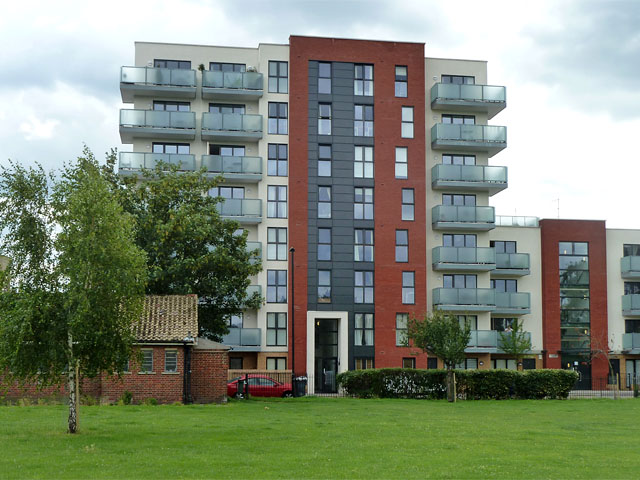
A row of cottage houses and small shops has given way, within living memory, to a public garden and a tall new tower. Walking the street today, the eye is drawn to Story Park Heights rising at the Brixton Road end, and to the trees of Slade Gardens across from it.
Little of the street shown on old postcards survives. Most houses on the north side came through the Second World War undamaged, yet were cleared all the same when the area was redeveloped. Behind that clearance lies a story of churches, printers and families who called Robsart Street home before the rebuilding began.
Name Origin
An Unexplained Name
The sources used here do not explain why the street is called Robsart Street. No naming record, estate map or rate book in this pack gives the origin, so the name is left unexplained rather than guessed at.
History
From Cottage Shops to Cleared Ground
Shops and cottage houses lined Robsart Street, some of them built as early as 1820. Just south, the part of Stockwell Park Road below Robsart Street was built in the late 1840s on land called Long Field, part of the wider Angell estate that shaped this corner of Brixton.
A Roman Catholic church, St. Helen's, opened on the street in 1905, probably designed by F. W. Tasker, and was one of four small local churches known as the "Ellis churches" after a benefactor. It was a plain brick building with a gabled front, lean-to entrance lobbies, a large circular window above them, and a cross on the gable. A Lady Chapel was added to its west side in 1938 by architect J. O'Hanlon Hughes.
The congregation left in 1953, moving to a disused Independent Church on Brixton Road. That building had opened in June 1870 as Brixton Independent Church, was heavily damaged in the war of 1939–45, and was restored in 1952–3 for St. Helen's congregation by architects Justin Alleyn and John Mansel, reopening for worship on 8 December 1953 as Our Lady of the Rosary. St. Helen's own building on Robsart Street was by then closed, and in 1955 was being converted into an annexe of Corpus Christi Primary School.
Wartime damage was uneven: most houses on the north side of the street survived the war intact, and those on the south side, though damaged, were repairable, yet both were demolished as redevelopment went ahead. The London County Council laid out Slade Gardens on part of the cleared ground in 1958, opening it in 1962 and naming it after Robert Slade, the landowner behind many of the early 19th-century houses on nearby Brixton Road.
Houses on the north side of Robsart Street survived the Second World War undamaged, and those on the south side were only repairable damage — yet all were still cleared when the area was redeveloped.
People
Two Doors Apart
In 1871 the street held a family split across two addresses. William Stanley lived at No. 18 with his wife Elizabeth and three of their children, Herbert, Cyrus and Clara, while his eldest son Edwin Henry had set up house with his wife Eliza just two doors along at No. 20.
A later resident of the street went into trade rather than family life. Sydney Solomon Lynes began his theatrical printing business at No. 4 Robsart Street before moving it to larger premises at 283 Brixton Road in 1913, where it continued for decades.
Today
A Touch of Lima on a Rebuilt Street
The street's newest buildings owe little to its 19th-century past. No. 2 Robsart Street, behind No. 272 Brixton Road, was reconstructed in 1994 as a tall commercial building in brick with red-brick trim and three arched bays. Its stepped window of dark stained wood was designed to recall the balconies of 19th-century houses in Lima, Peru.
At the Brixton Road end, Story Park Heights now stands twenty storeys tall on ground once held by Wayland House, a 1960s block of the Stockwell Park Estate. Slade Gardens remains close by, its name still carrying the memory of the landowner who shaped this part of Brixton two centuries ago.
On the Map
Robsart Street Then & Now
Frequently Asked Questions
Why is it called Robsart Street?
The sources used here do not explain the origin of the name. No naming record, map or rate book in this pack gives a source for it.
What is Robsart Street known for?
The street once had early 19th-century shops and cottage houses, and was home to St. Helen's Roman Catholic church, which opened in 1905 and closed in the 1950s. Much of the street was later redeveloped, giving way to Slade Gardens and, in 2016, the Story Park Heights tower.
What happened to St. Helen's church on Robsart Street?
St. Helen's opened in 1905 and gained a Lady Chapel in 1938. Its congregation moved to a restored church on Brixton Road in 1953, and by 1955 the original building was being converted into a school annexe.
Why is Slade Gardens called that?
Slade Gardens, laid out by the London County Council in 1958 and opened in 1962, is named after Robert Slade, the landowner who built many early 19th-century houses on nearby Brixton Road.