Time Walk
A Street That Changed Its Name


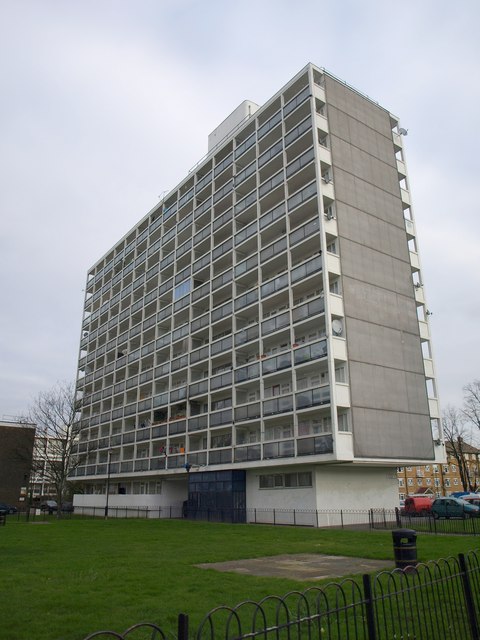
This road only became Minet Road after the Second World War — before that it was Holland Road. Walking it today, you pass Victorian terraces and, at the Lilford Road junction, a tall cast-iron column that once worked as both a sewer vent and a gas lamp.
Beneath the housing lies an older story of family landholding reaching back to 1770, long before any of the present terraces were built. That older layer is where the road's name really begins.
Name Origin
From Holland Road to Minet Road
The street is named after the Minet family. Sir Hughes Minet, a third-generation descendant of French Huguenot refugees, bought a large acreage on the borders of Lambeth and Camberwell in 1770. Later, William Minet shaped the development itself: he set the estate's layout, the size of the housing and the materials used, and provided for a broad range of residents across different housing types.
Despite that family connection, the road was known as Holland Road until the Second World War, when it took the Minet name it carries today. The sources used here do not explain why Holland Road was chosen as the original name.
History
Building the Minet Estate
The Minet estate grew in two distinct bursts of building. Development ran from 1871 to 1900, with the bulk of the work completed between 1870 and 1890. Lambeth later recognised the area's special character twice over: first as Conservation Area No. 25 in July 1980, and again in December 1982, when the area was extended.
Culture
Stucco, Stock Brick and a Sewer Vent
A short stretch of Minet Road, south of the Lilford Road junction, falls within the Minet Conservation Area. Along it stands a terrace of protected houses in stock brick and stucco, with semi-basements, mansard roofs and dormer windows. Nos. 24A-40A form an early-to-mid 19th-century terrace with a stuccoed frieze and cornice and slated mansard roofs. Nos. 22-26 are also protected. At No. 103 stands a more modest early 19th-century villa in stucco and stock brick, with a symmetrical front and a columned porch.
People
The Family Behind the Name
The road's name belongs to the Minet family rather than to any resident of the street itself. William Minet shaped the estate directly, setting house sizes, choosing building materials, and arranging a range of housing types so a broad cross-section of residents could live there.
Recent Times
Council Housing on Minet Road
The 1982 extension to the conservation area describes a small-scale Victorian residential area with a number of original mid-19th-century small shops. It lies between Conservation Area No. 25, covering the Minet Estate, and Conservation Area No. 50, covering Angell Town. Properties within the extended area were, at that time, virtually all council owned, with about two thirds let as single-family houses and the remainder converted into flats.
Today
A Short Stretch, A Long Memory
Only part of Minet Road sits within the conservation area, the stretch south of the Lilford Road junction. Its protected terraces, villa and cast-iron column still mark out the Victorian estate laid down by the Minet family, a name the street itself only adopted after years as Holland Road.
Minet Road was called Holland Road until the Second World War, decades after the Minet family's estate had already been built along it.
On the Map
Minet Road Then & Now
Frequently Asked Questions
Why is it called Minet Road?
It is named after the Minet family. Sir Hughes Minet, a third-generation descendant of French Huguenot refugees, bought land on the Lambeth-Camberwell border in 1770, and the family later developed it as housing.
What is Minet Road known for?
It is known for its Victorian terraced housing, built as part of the Minet Estate between 1871 and 1900, including grade II listed terraces and a cast-iron sewer vent column at the Lilford Road junction.
Was Minet Road always called that?
No. The road was known as Holland Road until the Second World War, when it was renamed Minet Road after the family who had developed the surrounding estate.