Time Walk
A Georgian Terrace With a National Address


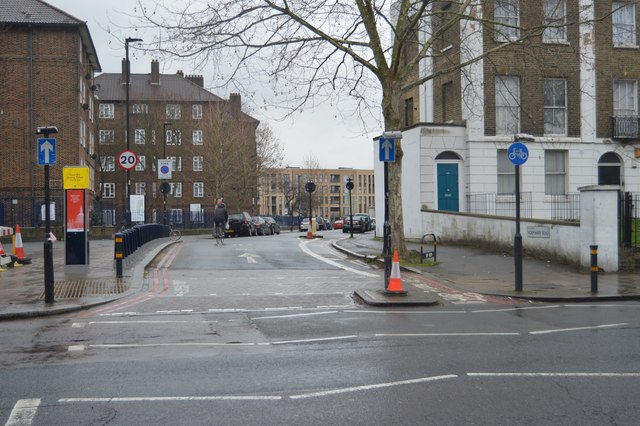
One house on this short Brixton road became, for a time, one of the most important addresses in Britain. Walking it today, you pass a run of low 1820s terrace houses, a taller red-brick corner pub, and, among the ordinary houses, a blue plaque. Nothing about the street hints at what happened here in 1985.
Underneath the quiet terrace is an older identity: part of this run of houses was once numbered and named separately, before being folded into Normandy Road as it exists now. That renaming is where the street's story — such as the records allow it to be told — begins.
Name Origin
Addison Place, Renamed
The sources used here do not explain why the road is called Normandy Road.
What is documented is a change beneath the surface: Nos. 4–16 (even), 22 and 24 were formerly known as Addison Place, numbered 1–7 (consecutive), 9 and 10, before being renumbered into the current Normandy Road sequence. The street is part of the Lambeth Wick estate in Brixton.
History
From Builder's Terrace to Council Clearance
The oldest houses on Normandy Road date to 1824. Nos. 4–14 form a two-storeyed terrace with its end houses set slightly forward, square-headed doorways and round-arched ground-floor windows; the ground floor of No. 4 was used as a shop. No. 12 is of the same design but rendered, and No. 16 a cruder version of the same pattern. Nos. 22 and 24, also of 1824, are plainer still, with a central doorway at No. 22 and two windows at No. 24.
The street's character changed again in the mid-20th century. A block on the corner of Brixton Road and Normandy Road, which had included a small post office, was demolished in the mid-1950s. Nearby, a line of villas on Brixton Road was cleared in the 1950s to make way for six blocks of council flats.
People
A Morning at 22 Normandy Road
On the morning of 28 September 1985, police raided 22 Normandy Road searching for Cherry Groce's son Michael Groce, and an officer shot her. The bullet passed through a lung and then her spine, leaving her paralysed from the waist down.
Cherry Groce died in 2011, from kidney failure brought on by an infection. An inquest found that failures in the planning and implementation of the 1985 raid contributed to her death.
The shooting of Cherry Groce at her home on Normandy Road was a direct trigger of the 1985 Brixton riot.
Recent Times
A Plaque, and a Jury's Verdict
A blue plaque was installed at 22 Normandy Road in 2012, marking Cherry Groce's former home. Two years later, in July 2014, an inquest jury concluded that eight separate police failures had contributed to her death, and the Metropolitan Police Commissioner apologised unreservedly.
Today
Terrace and Plaque
The 1824 terrace still stands on Normandy Road, together with the former Cowley Arms rising above its neighbours in red brick and stucco. At No. 22, the blue plaque marks the house where Cherry Groce once lived.
On the Map
Normandy Road Then & Now
Frequently Asked Questions
Why is it called Normandy Road?
The sources used here do not explain the origin of the name. What is recorded is that part of the street was once separately named and numbered as Addison Place before being brought into Normandy Road's current numbering.
What is Normandy Road known for?
It is best known as the site of the 1985 shooting of Cherry Groce by police during a raid at her home, 22 Normandy Road — an event that helped trigger the 1985 Brixton riot. A blue plaque now marks the house.
What is the oldest building on Normandy Road?
The terrace houses at Nos. 4–14, along with Nos. 16, 22 and 24, date from 1824, when the street's houses were originally built and numbered as Addison Place.
Is the former Cowley Arms still standing?
The building survives as a taller, late 19th-century red-brick structure with stucco dressings, standing out among the lower Georgian terrace around it.