Time Walk
The Street That Interrupted Its Own Opening


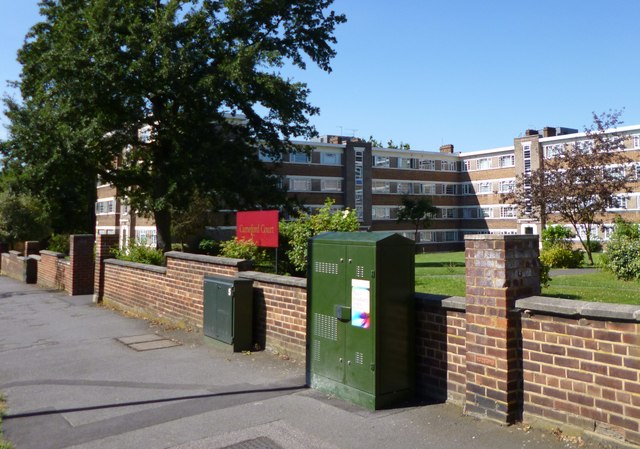
Fire first tested this street's brand-new fire brigade on the very day it opened. Walking New Park Road today, three things stand out: a pair of gabled stucco houses with high-pitched slated roofs, a Gault-brick chapel front with a plain pediment, and two inter-war corner pubs with tiled ground floors.
Beneath the pub signs and shopfronts, a scatter of early 19th-century houses survives among later Victorian and inter-war building. Nothing in the record explains where the road took its name — which makes a good place to start looking.
Name Origin
A Name the Record Keeps to Itself
The sources used here do not explain why the street is called New Park Road. No lease, designation report or listing entry consulted gives an origin for the name.
One curious trace exists elsewhere: a 1953 London County Council plan for the Clapham Park Estate in Wandsworth also used the name "New Park Road" for its site area. That estate lies in a different borough, and the pack gives no link between the two uses of the name.
History
Gothic Villas, a Gault-Brick Chapel, and a Fire
The oldest dated building on the street goes back to 1835. That year the builder William Eicke put up a pair of houses at Nos. 138 and 140, in a modified Gothic style, with stucco fronts and high-pitched slated roofs with several gables. Both are now Grade II listed.
A smaller pair of houses at Nos. 67 and 69 also dates from the early-to-mid 19th century; No. 67 still carries an original shop front with its low fanlight glazing intact. Both houses were listed Grade II on 27 March 1981.
In 1842 a Baptist chapel was erected on the street, originally known as Salem Thornton and Church, with a pedimented, symmetrical Gault-brick front. In 1903 Streatham's new fire station held its opening ceremony nearby — and the Brigade's very first emergency call took it straight to a fire at No. 149 New Park Road.
The newly opened Streatham Fire Station's very first emergency call came almost as soon as the ribbon was cut — to a fire at No. 149 New Park Road.
People
The Builder Behind the Gables
William Eicke is the one named individual the record attaches to this street. In 1835 he built the pair of houses at Nos. 138 and 140, now listed, in a modified Gothic style.
Today
Pubs on the Corners, a Triangle at the End
Two pubs anchor the street's corners. The Sultan, at Nos. 37–39, is an inter-war Neo-Georgian building with bow windows and a tiled pitched roof with dormers. The Hand in Hand, at No. 61, is a Neo-Georgian corner pub with silver and blue ground-floor tiling, now overpainted, and red brick above.
At the junction of Brixton Hill with New Park Road, a triangle of buildings mixes early 19th-century properties with Victorian ones, running up to the Telegraph public house. From the New Park Road end of Emmanuel Road, the view opens into the Rush Common and Brixton Hill area beyond.
On the Map
New Park Road Then & Now
Frequently Asked Questions
Why is it called New Park Road?
The sources used here do not explain the name. A 1953 plan for the separate Clapham Park Estate in Wandsworth also used the name "New Park Road" for its own site, but no link to this Lambeth street is recorded.
What is New Park Road known for?
Its surviving early 19th-century houses, several of them Grade II listed, a Gault-brick Baptist chapel of 1842, and the moment in 1903 when Streatham's newly opened fire station answered its first call to a fire on the street.
What historic buildings stand on New Park Road?
Listed houses at Nos. 67–69 and 138–140, the 1842 Baptist chapel originally called Salem Thornton and Church, and two inter-war pubs, the Sultan and the Hand in Hand, both in Neo-Georgian style.