Time Walk
A Family Name on a Brixton Lane


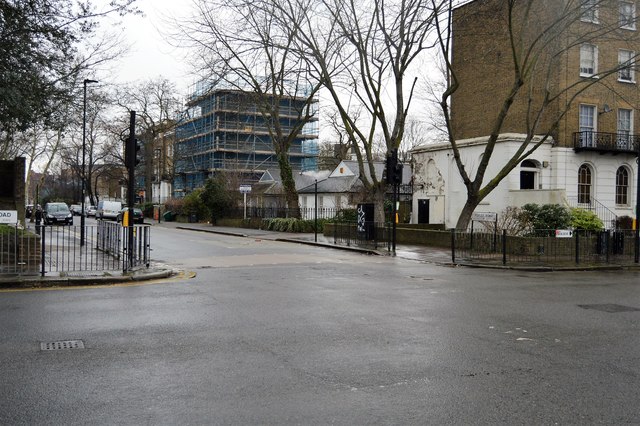
This quiet Brixton street carries the name of a family that never built a house on it but held the lease to the land beneath it. Walking it today you pass tall stuccoed villas with narrow front gardens and a grand terrace with cast-iron balconies, backed by later infill that keeps step with them.
Underneath the quiet, the street has been rebuilt more than once: a fire station went up here in 1910, became flats, then an ambulance station, and was finally knocked down and replaced in 1963. That churn sits oddly against a name that has not changed since the 1820s builders first laid it out.
Name Origin
Fox, Holland, and a Leasehold Estate
The road is named after the Fox family. Sir Stephen Fox leased the Manor of Lambeth Wick from 1701; he was the father of the First Baron Holland of Foxley, and his descendants kept the lease until the early twentieth century, according to Lambeth Council's Vassall Road conservation area appraisal.
The Brixton Society gives a related account: it states that Foxley Road and the neighbouring Vassall Road commemorate surnames of branches of the Holland family connected to the Lambeth Wick estate. Both point to the same source of the name — the family that controlled the ground here for two centuries — rather than to any feature of the land itself.
History
Villas for Holland Town
Building here began in the 1820s. Foxley Road formed part of the Holland Town development laid out by Henry Richard Vassall, Third Baron Holland, and the 1824 Plan of Lambeth Parish already shows broken lines of development along the road.
Nos. 15–31 and Nos. 32–48 were built on 1 January 1824 by Nicholas Phillipps Rothery of Exeter, and Nos. 33–37 on the same date by John Williamson of Fleet Street. Nos. 32–48, formerly known as Foxley Cottages, are tall villas linked in pairs by recessed annexes. No. 15 is a plain villa above a semi-basement with a central porch; No. 17 is similar but slightly taller. No. 19, with a flat pediment over its entrance, stood derelict when the Survey of London recorded it in the 1950s. Nos. 21–37 form a plain terrace linked by cast-iron balconies, with the end and centre houses stepped forward and given an extra storey.
All three groups were listed Grade II on 27 March 1981: No. 15, Nos. 21–37, and Nos. 32–48, a row of nine early-to-mid-19th-century villas.
People
A Watercolourist's Most Arduous Years
No. 34 Foxley Road was home to David Cox between 1827 and 1841. Born in Birmingham, Cox had first come to London in 1804, worked painting scenery at Astley's Amphitheatre on Westminster Bridge Road, and taught for some years in Hereford before returning to the capital in 1827. A blue plaque now marks No. 34.
The street's record also holds a far briefer, harder note: Bertie Bentinck, aged 55, died at Foxley Road on 14 September 1940, during the Blitz.
"the most arduous and the most rewarding period"Survey of London, Volume 26, on David Cox's years at 34 Foxley Road
Recent Times
From Fire Station to Flats and Back
The street's civic building changed use several times in the twentieth century. The London County Council acquired a site here in 1908 and opened a fire station in April 1910; it closed in the 1920s, served as residential accommodation, and became Kennington Ambulance Station in the early 1950s. In 1963 the original building was demolished, a new one built, and the station renamed Oval Ambulance Station. By 1975 the rehabilitation of properties on Foxley Road had won Lambeth Council a European Heritage Year Award.
Today
Villas, Terraces, and Infill
Foxley Road still runs quietly through residential Brixton. Detached and semi-detached villas sit alongside a grand terrace and later infill, all unified in tone. On the west side, tall villas create a strong rhythm against narrow front gardens. It is still, as it was named almost three centuries ago, the Fox and Holland family's ground.
No. 19 Foxley Road, with its flat pediment over the front door, was recorded as derelict by the Survey of London in the 1950s — yet the row around it, Nos. 21–37, was listed Grade II in 1981.
On the Map
Foxley Road Then & Now
Frequently Asked Questions
Why is it called Foxley Road?
It is named after the Fox family: Sir Stephen Fox leased the Manor of Lambeth Wick from 1701 and was father of the First Baron Holland of Foxley, whose descendants held the lease into the early twentieth century. The Brixton Society links the name, along with neighbouring Vassall Road, to branches of the Holland family connected to the same estate.
What is Foxley Road known for?
Its 1820s villas and terraces, three groups of which are Grade II listed, and as the home of watercolourist David Cox between 1827 and 1841, now marked by a blue plaque at No. 34.
When were the houses on Foxley Road built?
Building began in the 1820s as part of the Holland Town development. Nos. 15–48 were built on 1 January 1824 by Nicholas Phillipps Rothery and John Williamson.
Is there a fire station on Foxley Road?
There was: the London County Council built one in 1910, which later became flats, then Kennington Ambulance Station, and was rebuilt in 1963 as Oval Ambulance Station.