Time Walk
A Baron's Name on a Builder's Grid


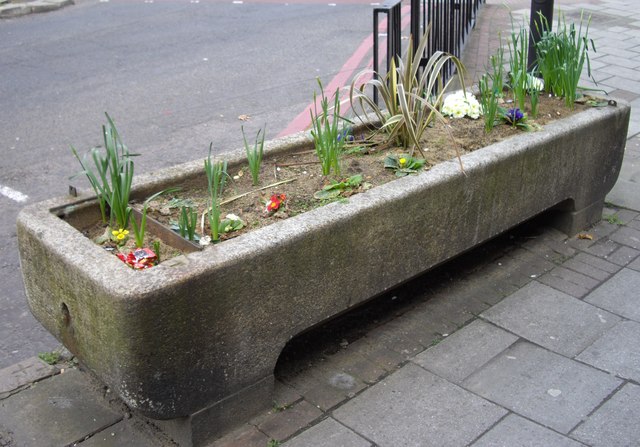
A baron borrowed his wife's surname for his own, then gave it to a road built across his leased land. Today's walker finds early Victorian villas and terraces along much of its length, a Gothic church with a tall spire rising above the rooftops, and a granite cattle trough still standing outside No. 122.
Underneath the stucco lies the old Lambeth Wick Manor, leased out in the 1820s in building plots of 99 years. The road's name turns out to be a family story before it is a place name — which is where this walk properly begins.
Name Origin
The Surname a Baron Adopted
The road is named after Henry Richard Vassall, third Baron Holland, who adopted his wife's maiden name Vassall in 1800. Between 1820 and 1824 the whole of Lambeth Wick Manor was let to him under fifteen separate building leases, each for a term of 99 years, and the new road through the estate took his adopted name.
The Brixton Society holds that nearby Foxley Road also commemorates a surname from another branch of the family, suggesting the naming of streets here followed a small family pattern rather than a single commemoration.
History
From Manor Leases to a Completed Street
The road grew out of a single landlord's bargain with his tenants. Once Baron Holland's leases were signed, Vassall Road was linked with the Brixton and Clapham roads by way of Caldwell Street, giving the new estate its connections to the wider district.
The 1824 Plan of Lambeth Parish already shows broken lines of development along Vassall Road, Camberwell New Road and Foxley Road, while the streets around them were still unlaid. Development here was part of a wider surge of building in the 1820s and 1830s, encouraged by the opening of Vauxhall Bridge in 1816 and the laying of Camberwell New Road in 1818. By the 1840s the area was largely built up, with neat properties set in relatively spacious plots carrying front and rear gardens. The 1871 Ordnance Survey map shows the area completely developed.
The road's most prominent building, the church of St John the Divine, rose amid this settled Victorian streetscape. It was built between 1871 and 1874 to the designs of the celebrated Victorian church architect George Edmund Street, in the Decorated Gothic style, and consecrated in 1874. Its spire was not finished until 1889, the work having proceeded in stages. The church was gutted during the war of 1939–45, and its repair was delayed until 1955, when Goodhart-Rendell carried out the restoration.
Culture
A Spire Over the Terraces
The church is the road's landmark, standing near Oval tube station and the Oval Cricket Ground. The Victoria County History describes it as built in the style of the 14th century, with a chancel, nave, aisles, north porch, vestries and a west tower carrying a tall stone spire.
Much of the surrounding streetscape survives from the estate's early building phase. Historic England lists numerous early to mid-19th-century villas and terraces along the road, among them No. 86 and the tall terrace at Nos. 100–104A.
Outside No. 122 on Vassall Road stands a Metropolitan Cattle Trough dressed in granite — a small, overlooked survival from the street's Victorian working life.
People
A Baron, an Architect, and a Vicar's Gift
Henry Richard Vassall, third Baron Holland, gave the road its name, having taken his wife's maiden name in 1800. George Edmund Street designed St John the Divine on the road.
Canon C. E. Brooke, vicar of St John the Divine, personally gave the chapel at St Gabriel's College on nearby Cormont Road, erected shortly after the main college block and dedicated in 1903. Following wartime damage to the church, the architect Goodhart-Rendell carried out its restoration in 1955.
Recent Times
Protecting the Villas
Lambeth's own appraisal of the road states that the Vassall Road Conservation Area was designated in 1968, among the earliest in the borough. The council's separate Minet Estate Conservation Area statement, by contrast, gives the date as 1980. The two Lambeth documents do not agree on the year.
What both confirm is that the surviving early to mid-19th-century villas and terraces, and G. E. Street's war-damaged church, remain the protected core of the area today.
Today
Still a Baron's Street
Vassall Road still carries the family name adopted by a baron in 1800. Myatt's Fields South and North, and the Cowley estate on Cowley and Vassall Roads, now stand near its line in Brixton. Walk its length and the story holds together: a leased manor, a borrowed surname, and a Gothic spire that took eighteen years to finish and decades more to repair.
On the Map
Vassall Road Then & Now
Frequently Asked Questions
Why is it called Vassall Road?
It is named after Henry Richard Vassall, third Baron Holland, who adopted his wife's maiden name Vassall in 1800 and later leased the Lambeth Wick estate the road was built across.
What is Vassall Road known for?
It is known for St John the Divine, a Grade I listed Gothic church by G. E. Street, and for its early to mid-19th-century villas and terraces, many now listed buildings.
What happened to St John the Divine during the war?
The church was gutted during the Second World War, 1939–45, and its repair was delayed until 1955, when Goodhart-Rendell carried out the restoration.