Time Walk
The Lane Behind the Shops


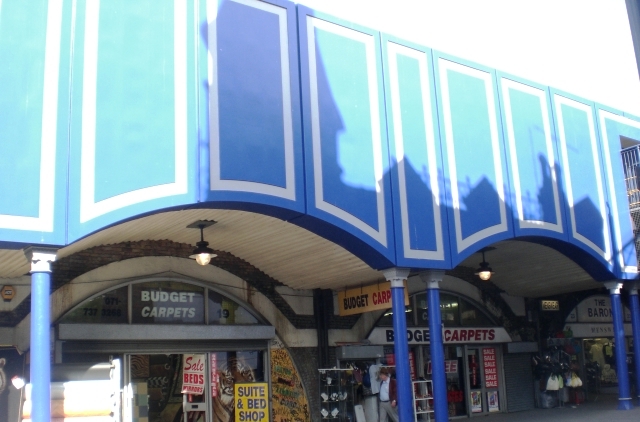
This street has worn three names, and the one that stuck came from a mission house, not a monarch. Walking it today, the lane feels narrow and tucked away, dominated by one large flank wall rather than a run of shopfronts.
A railway viaduct once cut straight through it, splitting the lane in two; the southern stretch survives separately today as Electric Lane. What remains on this side changed its name twice before settling on the one it keeps now.
Name Origin
From Back Lane to the Beehive Mission
The street was originally known as Back Lane, a plain name for a service road behind the main frontages. At some point before 1913 it became Cumberland Place.
That name did not last. In 1913 it was renamed because, as the London County Council's street list noted, "Cumberland occurs 18 times" among London's streets — a duplication the council wanted resolved. The replacement name came from the St Paul's Beehive Mission, a premises standing nearby at the time and later listed in the 1923 and 1937 Diocesan Directories as a licensed place of worship within St Paul's parish.
"Cumberland occurs 18 times"London County Council street list, 1913
History
A Service Lane Reshaped
Beehive Place began life serving the rears of properties on Brixton Road, not as a street in its own right. Its buildings were later subsumed into the Recreation Centre Development, which explains the dominant presence felt along the lane today.
Beehive Place was renamed partly for administrative tidiness — the London County Council's 1913 street list recorded "Cumberland" occurring eighteen times across London.
Culture
A Pub Front and a Pub Name
A local heritage walk also starts at the corner of Beehive Place and Brixton Station Road.
Today
Narrow, Intimate, Overshadowed
Beehive Place keeps an intimate character, created by a scatter of mostly low infill buildings and the narrowness of the street itself. It is dominated, though, by the flank wall of the recreation centre that absorbed its older buildings. The lane's third name has outlasted both Back Lane and Cumberland Place — and now gives its name, in turn, to the pub on the corner.
On the Map
Beehive Place Then & Now
Frequently Asked Questions
Why is it called Beehive Place?
It was renamed in 1913 from Cumberland Place after the St Paul's Beehive Mission, a nearby licensed place of worship, partly because "Cumberland" duplicated 18 other London street names.
What is Beehive Place known for?
A narrow former mews lane behind Brixton Road, now dominated by Brixton Recreation Centre, with a surviving Victorian pub front at 393 Brixton Road and a Wetherspoons pub named after it.
What was Beehive Place called before?
It was originally known as Back Lane, then as Cumberland Place, before being renamed Beehive Place in 1913.