Time Walk
A Street Built Round a Market


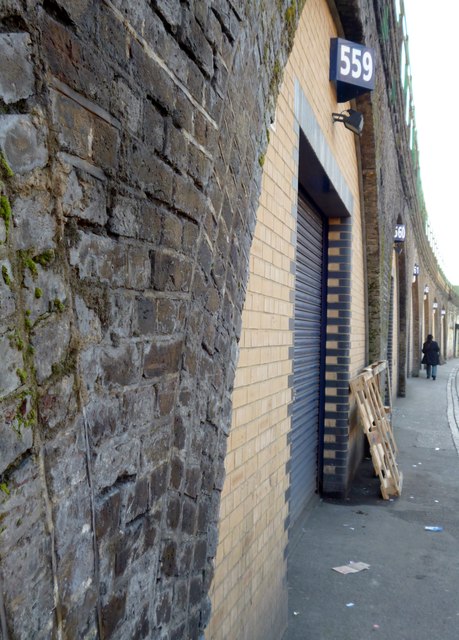
For a century and a half this has been one of the places Brixton does its shopping. Walk it today and the market is still the point of the street: stalls, shopfronts, and the railway viaduct crossing overhead.
Beneath the stalls lies an older boundary. In 1806 the corner now occupied by Brixton Station Road marked the northern edge of Rush Common. That older line is easy to miss among the market trade it now carries — which is where its name history begins.
Name Origin
A Name the Sources Leave Unexplained
The sources used here do not explain how Brixton Station Road got its name. What they do record is what the street became: Brixton's street market, which began on Atlantic Road in the 1870s, soon expanded along it, a use later described as long-established and central to the economic and social life of the local and wider community.
History
From Rush Common's Edge to the Market's Spine
Before it was a market street, the ground here marked a boundary. In 1806 the northern-most point of Rush Common stood at 417 Brixton Road, the spot now known as the corner with Brixton Station Road.
By 1979 the market that had spread along the road was recognised as long-established, bound up with the economic and social life of both the immediate neighbourhood and the wider area. A council conservation statement issued in 2012 noted that a post hoarding on the north side of the railway viaduct, at the corner of Brixton Station Road, was harming the appearance of the surrounding area.
Culture
Where the Heritage Walks Begin
The street's market history is still walked today, pausing only in January and February.
People
The Cabinet Maker at No. 527
In the 1950s, John Dight ran a cabinet-making business at 527 Brixton Station Road. In June 1951 he advertised in the Norwood News for cabinet makers to build kitchen cabinets at his workshop there.
John Dight Ltd, working from 527 Brixton Station Road, supplied kitchen cupboards for the whole of the London County Council's Loughborough Estate — more than 1,000 new homes built in the 1950s.
Today
Market Still, Viaduct Still Overhead
The market remains the street's defining use. The railway viaduct that crosses it still carries the same post hoarding flagged in 2012 as a detractor from the surrounding area's appearance.
On the Map
Brixton Station Road Then & Now
Frequently Asked Questions
Why is it called Brixton Station Road?
The sources consulted for this page do not explain the naming of Brixton Station Road; they document its history as a market street rather than the origin of its name.
What is Brixton Station Road known for?
It is known for Brixton's street market, which began on nearby Atlantic Road in the 1870s, soon expanded along this road, and was later recognised as a long-established use central to local life.
What stood on Brixton Station Road in the 1950s?
Cabinet maker John Dight Ltd traded at 527 Brixton Station Road, recruiting cabinet makers in 1951 and supplying kitchen cupboards for the Loughborough Estate's new homes.
Is there a heritage walk on Brixton Station Road?
Yes. The Brixton Society runs monthly Heritage Walks, most Saturdays, starting from the corner of Beehive Place and Brixton Station Road and exploring the history of Brixton's shops and markets.