Time Walk
A Corner of the Old Wick


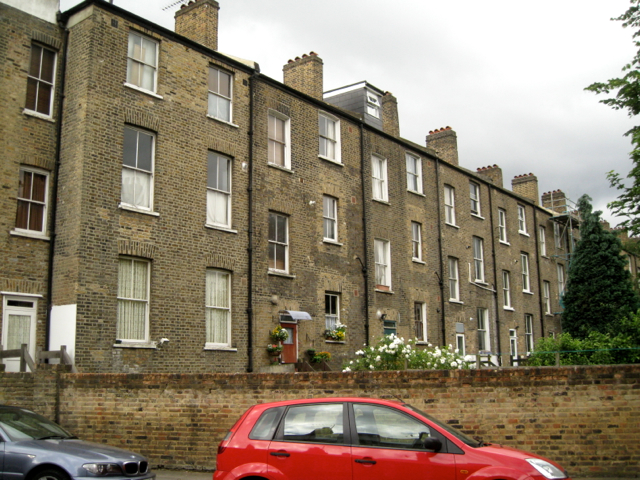
A street named for a family few would now recognise, laid out over manor land long since built over. Walking it today, three things stand out: a run of tall early-19th-century terraces with porched doorways, a closed corner pub with an Art Deco hart over its door, and a scatter of short side streets that go nowhere much.
Beneath the pavements lies the smallest of three parcels once belonging to Lambeth Wick Manor, land that also gave its shape to neighbouring Flaxman Road and Kenbury Street. The street's own name points further back still, to a family connection with that estate.
Name Origin
The Hollands and the Wick
Lilford Road commemorates the Holland family's connection with the Lambeth Wick estate. The sources used here do not go further into the detail of the family's link to the estate, so the name is best read as a marker of ownership rather than a story in itself.
History
From Manor Land to Terraced Street
The terraces came first. Nos 12–22 and 12A–22A are early-mid 19th-century houses with porches, dormers and attic rooms. They are listed Grade II and remain the oldest built fabric named in the record for this street.
A century later a corner pub went up at what is now No. 2: Hart House, built in the 1930s with an Art Deco white hart carved onto its corner. It stood as the White Hart for decades before closing in recent years.
Hart House's Art Deco corner still carries a carved white hart — a lingering sign of its former name, the White Hart.
Recent Times
Restoration and Recognition
The Council turned to repair, not redevelopment. In the 1970s and 1980s it ran a rehabilitation scheme focused on the former Lambeth Wick Estate, restoring houses to their original appearance and bringing them up to modern standards.
The old pub's fortunes went the other way. The White Hart closed in recent decades, though the building survived to be recognised later: drawn into the Minet Conservation Area boundary in 2016, then added to Lambeth's Local Heritage List in 2021 as Hart House.
Today
Terraces, a Closed Pub, Short Side Streets
Lilford Road today is a mix of its oldest and its most ordinary parts. The listed terraces still line part of the street, and Hart House still marks its corner, its pub trade gone but its Art Deco hart intact.
Off it run streets of lesser note, tracing the grain of the old Lambeth Wick land underneath.
On the Map
Lilford Road Then & Now
Frequently Asked Questions
Why is it called Lilford Road?
It commemorates the Holland family's connection with the Lambeth Wick estate, the land over which the road was laid out. The sources used here do not explain the link further.
What is Lilford Road known for?
Its early-mid 19th-century listed terraces at Nos 12–22, and Hart House, a 1930s Art Deco former pub at No. 2 on Lambeth's Local Heritage List.
Is the White Hart pub still open?
No. The White Hart, now known as Hart House, closed as a pub in recent decades, though the Art Deco building survives and is locally listed.
What was here before the street was built?
Lilford Road lies on the smallest of three parcels of the old Lambeth Wick Manor land, which also underlies Flaxman Road and Kenbury Street.