Time Walk
From Bridge Road to Vanished Theatres


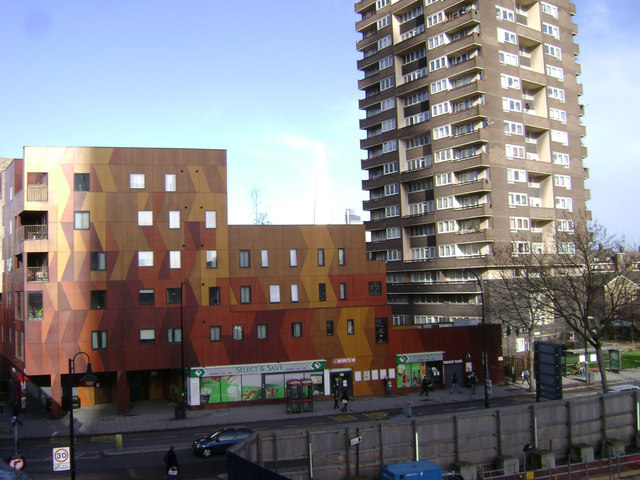
New Kent Road today is a street caught mid-transformation. Walk from Elephant & Castle eastward and you pass through layers of London's recent past — a cinema converted to a club converted back to a venue, shopping centres demolished and rebuilt, pubs named after silent-film stars. The road itself was built in 1751 as infrastructure for Westminster Bridge, upgraded from a footpath into a broad, tree-lined thoroughfare. For two centuries it was one of South London's most distinctive address books, where architects lived, performers worked, and reformers built their markets. That phase is ending, and the next one is already underway.
Name Origin
A Bridge's Access Road
New Kent Road exists because Westminster Bridge needed building. In 1751, the Turnpike Trust upgraded a local footpath into a proper road as part of the infrastructure for the new bridge, per Wikipedia. The 1751 Act mandated that the road be no less than 42 feet wide, making it notably broad for its time. The result was a direct, tree-lined route from Elephant & Castle to Bricklayers Arms.
Originally named Greenwich Road, reflecting its direction toward Greenwich, it was renamed New Kent Road at an unknown date—though by 1878, historian Edward Walford recalled it as "a broad, open roadway planted with trees," capturing both its engineered width and distinctive landscape character.
History
Architects, Entertainers, and Markets
The first generation of development on New Kent Road set a pattern persisting for nearly two centuries: the street attracted professionals who saw in its width and position an opportunity for distinguished residence.
The Paragon, built between 1789 and 1790 by Michael Searles for the Rolls family, was the road's most celebrated Georgian structure, per British History Online. Searles lived at No. 4 and designed the terrace of fifteen houses. It attracted notable residents: engineer Bryan Donkin at No. 6 (1829–1855) and architect George Gwilt the elder at No. 8 (1805–1809). When demolished in 1898, only No. 15 survived, serving as the rectory of St. George the Martyr, Southwark since 1902. Paragon Gardens now occupies the site, with listed gate piers marking where the terrace stood.
Theatre dominated from the 1870s onward. The Theatre Royal opened at 28 New Kent Road in 1872 but burned down in 1878. Rebuilt as the Elephant and Castle Theatre in 1879, it hosted Charlie Chaplin during his early career. Converted to an ABC cinema in 1928 and later the Coronet Cinema (1981), it closed in 1999. The Trocadero Cinema at 1–17 New Kent Road operated until 1963. Samuel Plimsoll, the social reformer, promoted a fish and provisions market on the road from 1883 to 1886, per Layers of London.
The County Terrace Tavern at No. 95, built in 1811, operated for nearly two centuries until closing in 2003. The Elephant & Castle Shopping Centre, opened in the 1960s, was demolished in 2021, with redevelopment planned for 1000 homes and a new London College of Communication campus, per Wikipedia.
The past twenty years have systematically erased mid-twentieth-century landmarks. The Charlie Chaplin pub at 26 closed in 2018 and was demolished in 2020. Tavern Court, opened in 2005, replaced the County Terrace Tavern as shared-ownership housing. The Victorian chapel at its rear, built in 1888, has housed the Brotherhood of the Cross and Star since 1991. No. 83, built in 1905 as the Morning Post Embankment Home, later became part of South Bank Polytechnic's residence system and is now being developed into housing.
Literary connection marks David Copperfields Garden, a narrow public space near Tavern Court. In September 1931, the Dickens Fellowship placed a plaque explaining that this was where the protagonist of Charles Dickens' David Copperfield stopped on the Kent Road. The plaque was removed in 2006 during redevelopment but the garden reopened in July 2007. A 35-feet-high stag sculpture by Ben Long was erected on the Oakmayne Plaza site in 2008.
Culture
Theatres, Cinemas, and Silent-Film Echoes
New Kent Road's distinctive cultural identity lay in entertainment. Theatre and cinema made it a destination for performance and then recorded entertainment. Charlie Chaplin's appearances connected the road to silent cinema's birth, and a 1950s visit to the Charlie Chaplin pub at 26 New Kent Road—where he reportedly had a martini—cemented this link in local legend, though the pub closed in 2018 and was demolished in 2020.
Literary traces survive in David Copperfields Garden, one of the road's few explicitly literary memorials. St Saviour's and St Olave's Church of England School, opened in 1903 on land given by Lord Llangatock of the Rolls family, continues as a girls' secondary school, representing educational culture on the street.
Today
A Street Under Reconstruction
New Kent Road in 2026 is actively transforming. The 1 kilometre route still runs from Elephant & Castle to Bricklayers Arms as the A201, but buildings that gave it character—theatres, the Charlie Chaplin pub, the shopping centre—have been systematically removed or repurposed.
What remains mixes listed Georgian survivals, post-war housing blocks, and modern developments. The gate piers at Paragon Gardens mark the only visible fragments of Searles' 1789–90 terrace. The Grade II listed terrace at Nos. 154–170, late eighteenth-century multi-coloured stock brick with slate mansard roofs, represents an earlier residential phase.
Recent developments include Watling House at 128 and Tavern Court at 95 (opened 2005). The former Trocadero Cinema site now hosts a convenience store whose window plaque commemorates the vanished venue. David Copperfields Garden, reopened in 2007, continues marking the Dickens connection. Ben Long's 35-foot stag sculpture on Oakmayne Plaza adds contemporary art to the streetscape.
The major current transformation is the Elephant & Castle regeneration. The shopping centre demolished in 2021 is being replaced with 1000 homes and a new London College of Communication campus—the largest single change since the centre's construction in the 1960s. The road's width—mandated by the 1751 Act—still marks it as notably broad and straight, an engineering legacy that endures even as almost everything built on it in the last 150 years is erased or transformed. What role New Kent Road will play in the rebuilt Elephant & Castle remains unclear; for now it is a thoroughfare watching its own past disappear.
On the Map
New Kent Road Then & Now
Frequently Asked Questions
Why is it called New Kent Road?
New Kent Road was created in 1751 by the Turnpike Trust as an access road for the newly constructed Westminster Bridge. It was originally called Greenwich Road, reflecting its direction toward Greenwich. The name changed to New Kent Road at an unknown date but was standard by the late nineteenth century. The 1751 Act stipulated the road be no less than 42 feet wide, making it notably broad for its time.
What happened to the theatres on New Kent Road?
The Theatre Royal opened at 28 New Kent Road in 1872 but was destroyed by fire in 1878. Rebuilt as the Elephant and Castle Theatre in 1879, where Charlie Chaplin performed, it was converted to an ABC cinema in 1928, became the Coronet Cinema in 1981, and closed in 1999. The Trocadero Cinema at 1–17 New Kent Road closed in 1963. These closures marked the road's shift away from live entertainment.
Who were some notable residents?
The Paragon terrace (1789–90), designed by Michael Searles, attracted professional residents including engineer Bryan Donkin (1829–55 at No. 6) and architect George Gwilt the elder (1805–09 at No. 8). Michael Searles himself lived at No. 4 from 1789 to 1791. Social reformer Samuel Plimsoll promoted a fish and provisions market on the road from 1883 to 1886.