Time Walk
A Road Built Over a Prison's Shadow


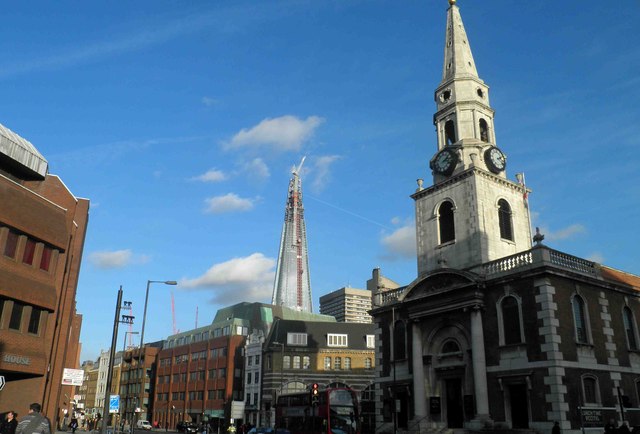
Marshalsea Road exists because a novelist made a prison famous. The Marshalsea itself — the debtors' prison that once sat where the road now runs — had been closed for forty-six years when the thoroughfare opened in 1888. But Charles Dickens had immortalised it in *Little Dorrit*, published three decades earlier, and the name stuck so hard in the public imagination that when the Metropolitan Board of Works needed to name a new street cut through Southwark to ease traffic between London Bridge and Southwark Bridge Road, they reached for the prison's ghost. The irony is that Dickens had never been imprisoned there himself — only his father had, for three months in 1824, when Dickens himself was a boy living just south of the site. That brief, bitter episode became the emotional heart of his greatest novel. The road that bears the prison's name is therefore, in a real sense, a monument to Dickens' memory of his father's suffering.
Name Origin
After the Prison That Dickens Made Unforgettable
Marshalsea Road takes its name from the Marshalsea Prison, a debtors' gaol that stood on the east side of Borough High Street, between Newcomen Street and St George's Church, per Survey of London. The prison was closed in 1842 and demolished, but by then its reputation had spread far beyond Southwark — chiefly because Charles Dickens had made it the setting for a pivotal chapter in his own life, and later the moral centre of *Little Dorrit*.
When the Metropolitan Board of Works was granted powers to form Marshalsea Road by the Metropolitan Street Improvements Act of 1877, and opened the new thoroughfare in 1888, the choice of name was both apt and commercially shrewd: it honoured a notorious piece of London history while tapping into Dickens' celebrity and his association with the area. The Mint, as the district had been known, had already lost its lawless character and its identity; Marshalsea Road anchored the neighbourhood to its past.
History
From Prison Site to Traffic Relief
The Marshalsea Prison had dominated the area for centuries before Dickens was born. It was a debtors' prison, holding men and women imprisoned for owing money they could not repay — a common punishment in the eighteenth and early nineteenth centuries. The Mint in Southwark Act of 1722 removed the special privileges that had made the area around the prison a refuge for debtors, but the prison itself continued to operate until 1842, per Wikipedia.
Charles Dickens' father, John Dickens, was sent there on 20 February 1824, committed under the Insolvent Debtors Act. He remained imprisoned until 28 May 1824. At the time, Charles Dickens was a boy of twelve living on Lant Street, just south of what is now Marshalsea Road. His father's imprisonment was a shock and a shame that marked him deeply. Years later, Dickens drew on the memory to write *Little Dorrit*, in which the protagonist's father is imprisoned at the Marshalsea and the prison becomes a metaphor for the inescapable debts of family and society. The novel, published in 1857, ensured that every reader of Victorian fiction knew the Marshalsea's name.
By the time the prison closed in 1842, it had already served its social purpose: the law of imprisonment for debt was falling out of favour, and the penal system was changing. A fragment of the prison's outer wall survives, now forming the north part of St George's churchyard, a few yards from where Marshalsea Road now runs.
In 1875, it was proposed that a new road connecting Southwark Bridge Road to London Bridge would ease traffic congestion. Powers to create the route were granted to the Metropolitan Board of Works by the Metropolitan Street Improvements Act of 1877. Marshalsea Road was opened in 1888, running approximately along a line suggested in an earlier, unsuccessful 1842 Act. The road was not merely a convenience — it was a symbolic gesture, one that named the new street after the abolished prison, keeping Dickens' Southwark alive even as the physical reality of the Mint was erased.
The area surrounding Marshalsea Road continued to change. Mint Street, which branches off Marshalsea Road, marks the site of a former workhouse. The neighbourhood remained relatively stable until World War II, when much of the area was damaged by air raids and became derelict. Reconstruction was slow, and the character of the area shifted. What had once been a district of prisons, workhouses, and refuge — the Mint — became, after 1888, the Marshalsea district, defined by Dickens' fiction rather than by law or poverty.
Culture
Dickens' Long Shadow
No street in South London carries Dickens' fingerprint more visibly than Marshalsea Road, and yet the man himself never lived here. The road exists because his novel exists, and because his father's suffering at the Marshalsea Prison became, in *Little Dorrit*, the moral centre of one of the great novels of the Victorian age. The choice to name the new road after the closed prison was a literary and commercial calculation: it fixed Dickens' Southwark into the map.
The presence of St George the Martyr church, located at the northeast corner of Marshalsea Road, adds another layer to the area's history. A fragment of the prison's wall now forms part of the churchyard's northern boundary — a material remnant of the institution that Dickens made unforgettable.
The modern streetscape includes Brandon House, on the corner of Marshalsea Road and Borough High Street, now the headquarters of Acas (the Advisory, Conciliation and Arbitration Service). The Tara Bryan Gallery occupies No. 10 Marshalsea Road, BCH Architects sit at 16–18, and the Christian Medical Fellowship is based at 6 Marshalsea Street — a mix of cultural and professional use that reflects Southwark's ongoing role as a centre of institutional and creative life.
Charles Dickens never spent a night in the Marshalsea Prison, but his father did — for three months in 1824. That episode, which Dickens witnessed as a twelve-year-old living nearby, haunted him for life and became the seed of *Little Dorrit*, one of his greatest novels. The street that bears the prison's name is, in effect, a monument to that childhood wound.
Today
A Major South London Thoroughfare
Marshalsea Road is a major street in Southwark, classified as A3201. It runs between London Bridge and Southwark Bridge Road, serving the traffic relief purpose for which it was created in 1888. The road carries office use, cultural institutions, professional firms, and the continuing presence of St George's Church. To a modern traveller passing along it, there is nothing to immediately suggest the prison that once stood here or the novelist who made it legendary. The two remnants that do survive — the fragment of prison wall in the churchyard and the named playgrounds to the north — are quiet, easily missed. Yet they hold the street's deeper story: that Dickens made the Marshalsea impossible to forget, and Southwark, by naming this road after the prison, chose to remember not the institution but the fiction it inspired.
On the Map
Marshalsea Road Then & Now
Frequently Asked Questions
Why is it called Marshalsea Road?
Marshalsea Road was named in 1888 after the Marshalsea Prison, a debtors' gaol that once stood nearby on Borough High Street. The prison had closed in 1842, but its reputation was kept alive by Charles Dickens, who set *Little Dorrit* there and whose father had been imprisoned there in 1824. When the Metropolitan Board of Works opened the new road to relieve traffic congestion, naming it after the defunct prison was both a historical gesture and a nod to Dickens' fame.
What was the Marshalsea Prison?
The Marshalsea was a debtors' prison — a place where people unable to pay their debts were locked up, often indefinitely. It stood on the east side of Borough High Street, between Newcomen Street and St George's Church, for centuries before closing in 1842. It is best remembered today because Charles Dickens' father was imprisoned there in 1824 and because Dickens based the setting of *Little Dorrit* on his memories of the prison and the area around it.
How did Dickens connect to Marshalsea Road?
Dickens himself never lived on Marshalsea Road (which did not exist until 1888), but in 1824 he lived on Lant Street, just south of the site, while his father was imprisoned at the Marshalsea. This three-month episode profoundly affected him and became the emotional foundation for *Little Dorrit*, published in 1857. The novel's fame ensured that when the road was later created, it would bear the prison's name — a literary memorial that has outlasted the physical prison by nearly 150 years.