Time Walk
A House Built From a Show-Home Dream


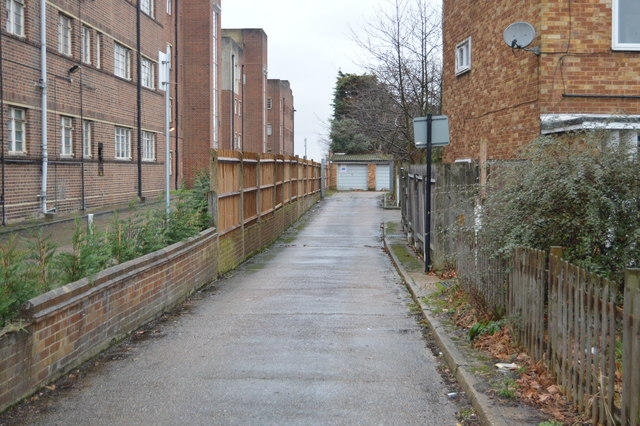
One house here was shown to the public at an exhibition before it was ever built on this street. Today the drive looks like ordinary 1930s suburban housing in Herne Hill, but at No. 10 sits a sharp-edged, flat-roofed design that still looks futuristic. It sits at an angle to the road rather than running parallel to it, so it catches the eye even in passing.
Beneath that one unusual house lies a street of otherwise ordinary inter-war building, including flats and houses by the same architects. The story of why it looks the way it does belongs to a competition and a show-home, decades before it became a long-term family home.
Name Origin
An Unexplained Name
The sources used here do not explain why the street was named Dorchester Drive. No fact in the record consulted ties the name to a person, place, or event.
History
From Ideal Home Show to Herne Hill
The design of 10 Dorchester Drive began life as an exhibit, not a house. It was shown as the "House of the Future" at the Ideal Home Show of the mid-1930s, designed by Leslie H. Kemp and Frederick E. Tasker. It was actually built on Dorchester Drive in 1935-36, by Cyril and Stanley Morrell, with its plan set at an angle to the street rather than aligned with it.
It was not a one-off. The same architects built at least three known examples of their Ideal House Competition design, of which No. 10 is one.
10 Dorchester Drive began as a show-home design, exhibited as the "House of the Future" at the mid-1930s Ideal Home Show, before it was ever built on the street.
Culture
A Cluster of Kemp and Tasker
One architectural partnership shaped much of this short street.
People
A Psychologist and an Opera Singer
Hans Eysenck, the German-born British psychologist, lived at 10 Dorchester Drive from 1960 until his death in 1997. Best remembered for his work on intelligence and personality, he was Professor of Psychology at the Institute of Psychiatry, King's College London, from 1955 to 1983, holding that post for much of his time on the street. His widow, Sybil, stayed on at the house until her own death in 2020.
Across the street, in a top-floor flat at Dorchester Court, the Australian opera singer Dame Joan Hammond lived during the Second World War. One family recollection, left on the Herne Hill Society's page, has a physiotherapist from King's College Hospital, down the road, attending her after she sprained her ankle on stage at Covent Garden.
Recent Times
A Last-Minute Listing
The house nearly fell outside protection before it was granted it. A Building Preservation Notice was placed on 10 Dorchester Drive in February 2022, and Historic England granted it full Grade II listed status that June.
On the Map
Dorchester Drive Then & Now
Frequently Asked Questions
Why is it called Dorchester Drive?
The sources used here do not explain the naming of Dorchester Drive. No record consulted ties the name to a specific person, place, or event.
What is Dorchester Drive known for?
It is known for 10 Dorchester Drive, a Grade II listed 1930s moderne house first shown at the mid-1930s Ideal Home Show, and for its long-term resident, psychologist Hans Eysenck, who lived there from 1960 to 1997.
Who designed 10 Dorchester Drive?
It was designed by architects Leslie H. Kemp and Frederick E. Tasker and built in 1935-36 by Cyril and Stanley Morrell, following a design first exhibited at the mid-1930s Ideal Home Show.
Who lived at 10 Dorchester Drive?
Psychologist Hans Eysenck lived there from 1960 until his death in 1997, and his widow Sybil remained at the house until her death in 2020.