Lambeth London England About Methodology
Lambeth · SE24

Casino Avenue

A street born from the ruins of a grand estate, where a celebrated lawyer’s Regency mansion and its designed gardens transformed into homes for returning soldiers after the First World War.

Name Meaning
From Casino House
First Recorded
c. 1920
Borough
Lambeth
Character
1920s Terrace
Last Updated
Time Walk

From Grand Estate to Social Housing

Casino Avenue is a residential street of early 20th-century terraced houses forming part of the Sunray Estate, a conservation area recognised as one of the finest examples of the ‘Homes fit for Heroes’ social housing developments built after World War I. The street is bordered by Sunray Gardens, a small public park that preserves the sole surviving element of celebrated landscape designer Humphry Repton’s original work—an ornamental lake and mature woodland that once formed part of a 15-acre private estate.
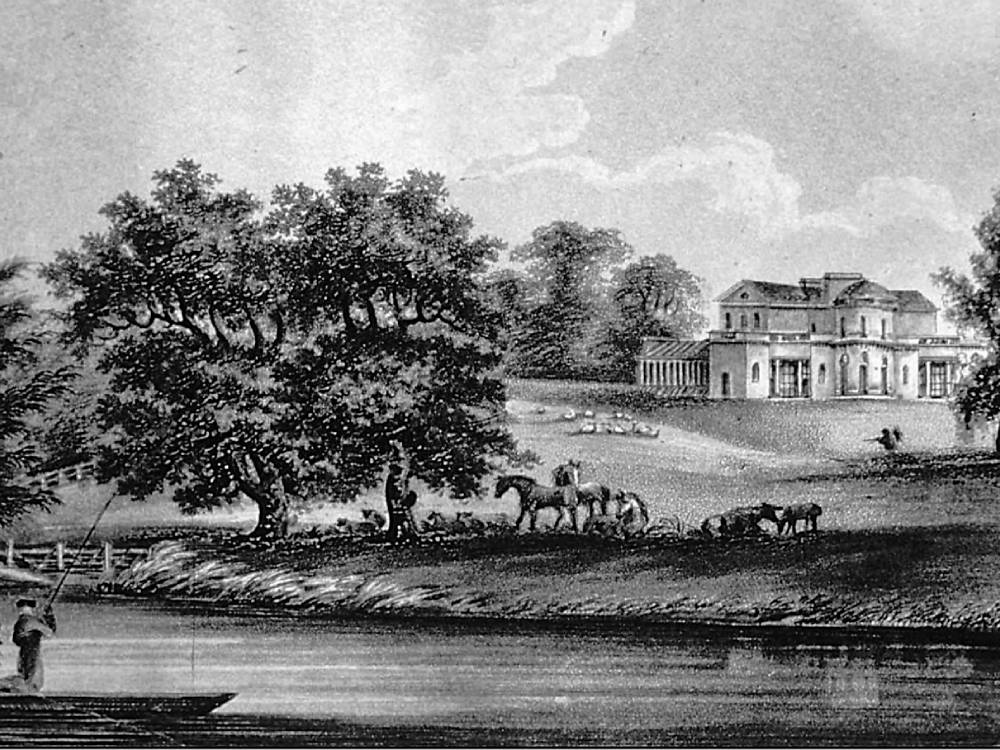
c.1820
Casino House (The Casina), Herne Hill
Casino House (The Casina) — the mansion that gave the street its name
Historical engraving · Public domain
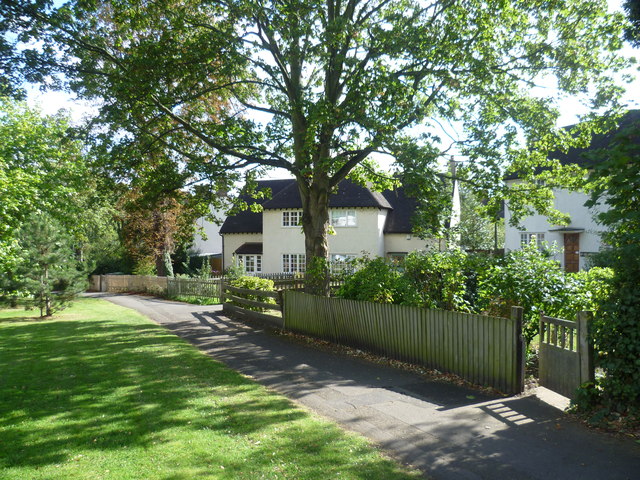
2018
Casino Avenue
Casino Avenue
Wikimedia Commons · CC BY-SA 2.0
Today
Cottage estate on Red Post Hill — near Casino Avenue
Geograph · CC BY-SA 2.0

But Casino Avenue’s name tells a deeper story: not of the gaming establishments that claim the word today, but of a grand Regency house whose owner was a famous trial lawyer. That mansion is long gone, demolished in 1906, yet its name endures on the street that rose from its ruins.

✦   ✦   ✦
Name Origin

A Lawyer’s Italian Fancy

Before gambling houses claimed the word, casino meant something far more elegant. The Italian casina—literally “little house”—was a fashionable term for a pleasure pavilion or refined country retreat: a place of leisure and conspicuous taste. Richard Shawe (1755–1816), a wealthy barrister, chose it deliberately when commissioning his new Herne Hill villa in 1796. Shawe had just concluded the most celebrated case of his career—seven years defending Warren Hastings, the Governor-General of India, against parliamentary impeachment for corruption and abuse of power. The trial ran from 1788 to 1795, the longest in British political history. Hastings was acquitted. The fees made Shawe rich.

With those proceeds Shawe hired John Nash—later the architect of Regent Street and Buckingham Palace—to design the house, and Humphry Repton to landscape its fifteen acres of grounds. The result, completed around 1800, was a Regency villa set in designed parkland with an ornamental lake at its centre. In 1800, Herne Hill was still open countryside four miles from the City; the Casina was exactly the kind of rural retreat that prosperous London professionals aspired to.

Shawe died in 1816. The house passed through several owners and stood for another century before being demolished in 1906. Camberwell Borough Council leased the land in the early 1920s and built the Sunray Estate—one of the earliest “Homes fit for Heroes” developments—on its grounds. Casino Avenue was one of the new streets, keeping the mansion’s name alive. A condition of the development preserved the area around the lake as public open space; renamed Sunray Gardens in 1923, it remains the only surviving fragment of Repton’s original design.

How the name evolved
1796–1800 Casina House
c. 1800–1906 Casino House
c. 1920 Casino Avenue
✦   ✦   ✦
History

From Trial Proceeds to Housing Estate

Lawyer Richard Shawe (1755–1816) was appointed to defend Warren Hastings (1732–1818) in Britain’s longest political trial. Having served as the Governor-General of Bengal following years in India, Hastings was impeached on charges of corruption upon his return to Britain. The Hastings trial ran for years and made Shawe’s fortune. He invested that wealth in a new country estate, commissioning the architect John Nash and the landscaped gardens designed by Humphry Repton. The site is all that remains of the 16 acre grounds of Casina House built around 1797 for the wealthy lawyer Richard Shawe…An illustrated description of the house and grounds, which included a kitchen garden and hothouse, was published in 1804. This made special mention of Repton’s conversion of flooded, spring-fed brick pits at the lower end of the site into an ornamental fishing lake.

Key Dates
1755–1816
Richard Shawe
Lawyer who built Casino House from proceeds of the Warren Hastings trial. Died intestate, though his original will indicated his pride in the ‘mansion house at Dulwich Hill which I have at great expense erected’.
1796–1800
Construction
Casino House designed by John Nash with grounds by Humphry Repton. The Palladian house featured five bedrooms with dressing rooms, servants’ quarters, and estate buildings including stables for eight horses.
1839–1878
Silk Merchant Era
Casino House leased by wealthy silk merchant William Stone and his son for about forty years. The estate remained a fashionable Dulwich residence throughout the 19th century.
1906
Demolition
Casino House demolished after standing empty for five years. The Dulwich Estate governors believed it unlikely to find a residential tenant due to its ‘unusual size’ and the rapidly changing character of the neighbourhood.
1920–1922
Sunray Estate Built
Camberwell Borough Council developed the site as ‘Homes fit for Heroes’ housing under the Housing Act. 154 dwellings built on what was briefly called the Casino Estate, designed by Sir Frank Barnes with architect involvement from the Ministry of Health.
1923
Sunray Naming
The Casino Estate was incorporated into the larger Sunray Estate. Casino Open Space renamed Sunray Gardens, which now preserves the surviving ornamental lake and trees from Repton’s original 1800 landscape design.
Did You Know?

One of the most famous occupiers is thought to have been Joseph Bonaparte, Napoleon Bonaparte’s brother and former King of Spain, who stayed briefly in England in the 1830s. For about forty years from 1839, Casino House was leased by the wealthy silk merchant, William Stone and his son, William Henry Stone.

The Sunray Estate has proved one of the most celebrated products of the post-war housing movement. The estate, now a conservation area, was built by Camberwell Borough Council after World War I, modelled on the garden suburb ideal and part of the drive to provide Homes Fit for Heroes. 154 dwellings were built on what was then called the Casino Estate or just over thirteen to the acre if Sunray Gardens was excluded. The houses were arranged in generous streets with deep front gardens, emphasising the garden city principles that influenced the era’s best social housing.

✦   ✦   ✦
Culture

An Enduring Landscape

The most striking cultural feature of Casino Avenue is its proximity to Sunray Gardens, where Humphry Repton’s 1800 ornamental lake survives as the sole remnant of his landscape design. The park was refurbished at a cost of £220,000 in 2001/2 and currently holds a Green Flag Award. The lake underwent important modifications when it became public: Some changes were made to Repton’s lake when it was transformed into the public park. These included being made more shallow and given shelving banks after a small girl fell in, luckily rescued by a local postman; at one end it was infilled for the creation of a playground.

Casino Avenue itself represents a pivotal moment in London housing history. The street and its neighbours embody the garden city ideals of the 1920s—a deliberate break from Victorian terrace monotony, with generous frontages, tree-lined verges, and culs-de-sac creating a distinctly suburban character. For returning First World War soldiers, Casino Avenue offered not grand estates but solid, dignified homes, a tangible token of a grateful nation.

Conservation Area
Sunray Estate Designated 2009

Casino Avenue forms part of the Sunray Estate conservation area, recognised for its exceptional garden city design and as one of the finest ‘Homes fit for Heroes’ developments. The area’s mature trees, cul-de-sac layout, and generous front gardens remain largely intact from the 1920s design.

✦   ✦   ✦
People

Lawyers, Spaniards, and Soldiers

Richard Shawe (1755–1816) was appointed to defend Warren Hastings in Britain’s longest political trial. His success on that case transformed his fortune and enabled him to create one of the finest estates in South London. Shawe lived and died a man of consequence in the district, though the house he ‘at great expense erected’ outlived him only by ninety years.

The house that bore his name then welcomed other notable figures. One of the most famous occupiers is thought to have been Joseph Bonaparte, Napoleon Bonaparte’s brother and former King of Spain, who stayed briefly in England in the 1830s. Later, ordinary working families arrived when Casino Avenue was laid out for them after 1920—the soldiers and their families for whom the Sunray Estate was built.

✦   ✦   ✦
Recent Times

A Cherished Conservation Area

In the late 20th and early 21st centuries, Casino Avenue and the Sunray Estate gained recognition as historically significant. The estate’s original layout and character, largely preserved through the decades, made it a candidate for conservation designation. In 2009, the Sunray Estate was formally recognised as a conservation area, safeguarding its garden city character from unsympathetic development.

Sunray Gardens, the surviving public park, has similarly been restored and maintained. The original ornamental lake, saved from being filled in during the 1920s only through legal intervention, remains the focus of the park. Friends of Sunray Gardens, formed in 1997, continues to advocate for its preservation and enhancement, ensuring that Humphry Repton’s 1800 landscape design remains visible to residents and visitors more than two centuries after its creation.

✦   ✦   ✦
Today

A Street of Cottage Homes

Casino Avenue remains a quiet residential street of early 20th-century terraced and semi-detached houses, characterised by generous front gardens and tree-lined pavements. The dominant property type is a early-century house built between 1912 and 1935. The street is largely composed of owner-occupied family homes, reflecting the original vision of the Sunray Estate as housing for working families rather than speculative rental properties.

The street itself is residential and car-oriented but pleasantly leafy, with mature street trees contributing to the garden suburb atmosphere that planners intended. Nearby Sunray Gardens provides immediate access to significant green space, and the wider conservation area setting discourages heavy through-traffic. The street’s modest villas and terraces have appreciated significantly in value since the 1920s, though they retain the solid, unpretentious character of housing built for heroes returning from war.

Immediate
Sunray Gardens
Historic public park with ornamental lake, mature trees, and children’s play areas. Site of Humphry Repton’s 1800 landscape design.
8 min walk
Brockwell Park
50.8-hectare park with Brockwell Lido (1937), Grade II* listed Brockwell Hall (1811–13), and extensive woodland and grassland.
12 min walk
Herne Hill
Mature residential area with tree-lined streets and conservation status. Home to historic Herne Hill railway station (1862) and viaduct.
10 min walk
Grove Park
Wooded local park with spring-fed streams, reflecting the area’s historic mineral springs that once attracted Londoners for therapeutic reasons.
✦   ✦   ✦
On the Map

Casino Avenue Then & Now

National Library of Scotland — Ordnance Survey 6-inch, c. 1888. Hosted by MapTiler. Modern: © OpenStreetMap contributors.

✦   ✦   ✦

Frequently Asked Questions

Why is it called Casino Avenue?
Casino Avenue takes its name from Casino House (also spelled Casina), a grand Regency estate that stood in the area from 1796 to 1906. The house was built by wealthy lawyer Richard Shawe, who made his fortune defending Warren Hastings in Britain’s longest political trial. The name ‘Casina’ comes from Italian, meaning ‘small house’—though this 15-acre domain was anything but small. When the house was demolished in 1906, the land was eventually redeveloped as social housing, and Casino Avenue became one of the new streets created as part of the Sunray Estate in the early 1920s.
Who designed Casino House and its gardens?
Casino House was designed by John Nash, one of London’s greatest architects, who also designed Regent Street and the Royal Pavilion at Brighton. The landscaped gardens were designed by Humphry Repton, the celebrated landscape architect of the period. Their partnership created a country estate of considerable sophistication, with an ornamental lake, kitchen gardens, and extensive grounds. Remarkably, Repton’s lake survives today as the centrepiece of Sunray Gardens, making it one of the few surviving elements of a designed landscape from the early 1800s still in public use.
What is Casino Avenue known for?
Casino Avenue is known for being part of the Sunray Estate, one of the finest ‘Homes fit for Heroes’ social housing developments built after World War I. The street consists of solidly-built terraced and semi-detached houses designed on garden city principles, with generous front gardens and tree-lined pavements that create a distinctly suburban character. The avenue is also remarkable for its proximity to Sunray Gardens, where an ornamental lake designed by celebrated landscape architect Humphry Repton in 1800 survives as a public park. This remarkable transformation from a grand private estate to accessible public space reflects the social ideals of the 1920s.