Lambeth London England About Methodology
Lambeth · SE24

Herne Hill Road

The street that transformed from country estate lane to Victorian thoroughfare, home to a Carnegie Library and lined with the terraced homes that replaced the villas of merchant families.

Name Meaning
Angle of Land
First Recorded
1789
Borough
Lambeth
Character
Victorian Terraces
Last Updated
Time Walk

From Villa Lane to Terraced Thoroughfare

Herne Hill Road runs through one of South London’s most striking transformations. The Carnegie Public Library on Herne Hill Road opened in 1906 after a Lambeth librarian was awarded a grant from Andrew Carnegie for building a library within the Herne Hill area. This Grade II listed building stands as testament to the road’s importance as a developing suburban spine. Yet the street’s character is fundamentally rooted in what came before—the age of grand estates and the merchants who built them.

2015
Ferndene Road, Herne Hill
Wikimedia Commons · CC BY-SA 2.0
Today
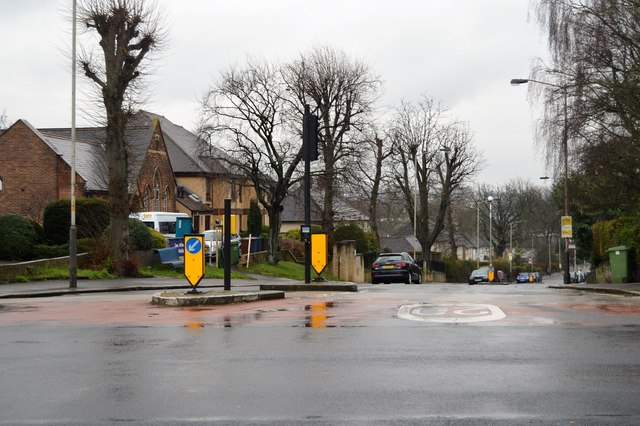
Red Post Hill — near Herne Hill Road
Geograph · CC BY-SA 2.0

By the mid-19th century, the road from the modern Herne Hill Junction to Denmark Hill was lined with substantial villas set in spacious grounds and the area had become a prosperous suburb for the merchant class. That world vanished almost entirely after the railways arrived, replaced by the compact terraces and working-class housing that define the street today.

✦   ✦   ✦
Name Origin

An Old English Corner of Land

The earliest documented reference to “Herne Hill” is in two fire insurance policies issued by the Sun Insurance Company in 1792 (where the spelling is “Hearns” and “Herns” Hill). Yet the name first appears on maps around 1789, emerging from centuries of accumulated place-memory. The etymology remains contested but revealing. One interpretation of the name is “hill by a nook of land” deriving from the Old English hyrne (corner, angle) hyll. This linguistic reading makes perfect sense when you study the topography—the hill sits at an angle of the landscape, where the River Effra and its tributaries bend the ground.

Alternative explanations have drawn on two other sources. It may be that the River Effra – now sadly almost all underground – attracted large numbers of herons, so that a hillock by the river came to be known as Heron Hill. Finally, some scholars suggest the name derives from the Herne family, residents in the 17th century who may have held local prominence through land or trade. Herne Hill does not appear on maps before 1789 but the name may be old and identical with le Herne, a field-name found in Brixton just by, t. Hy 7. The weight of evidence points to the Old English etymology, though locals in earlier centuries may well have spoken of the place by family names or animal names that have been lost to history.

How the name evolved
before 1789 Island Green
1789 Herne Hill
1792 Hearns/Herns Hill
1862 onwards Herne Hill Road
✦   ✦   ✦
History

From Manor Land to Suburban Artery

The area now known as Herne Hill was part of the Manor of Milkwell, which existed from at least 1291, and was a mixture of farms and woodland until the late 18th century. No one lived here in any number; the land was divided between small landholders, their fields cut by the tributaries of the River Effra. In 1783, Samuel Sanders (a timber merchant) bought the land now occupied by Denmark Hill and Herne Hill from the Manor; he then began granting leases for large plots of land to wealthy families. This moment marks the birth of the modern landscape. The 1820s and 1830s saw the construction of substantial villas for merchants, bankers, and traders—men seeking to escape the smoke of central London whilst remaining connected to the City. John Ruskin arrived in 1823; his family lived here in a semi-detached house that became legendary in his autobiographical writing.

Key Dates
1291
Manor of Milkwell
The area is documented as part of this feudal holding, comprising farmland and woodland.
1783
Samuel Sanders Acquires Estate
Timber merchant buys Herne Hill land from the Manor and begins granting leases to wealthy families.
1789
Name First Recorded
Herne Hill appears on maps for the first time, replacing the earlier “Island Green” designation.
1823
Ruskin Family Arrives
John Ruskin’s father leases a semi-detached house at Herne Hill; the young critic lives here aged 4–19.
1862
Railway Transforms the Area
London, Chatham & Dover Railway opens Herne Hill station, providing cheap access to Victoria and the City.
1865–1867
Church Building Boom
Affordable housing demand sparks church construction; James Lewis Minet donates land on Herne Hill Road for a new Anglican church.
1906
Carnegie Library Opens
Grade II listed library building constructed on Herne Hill Road with £12,500 grant from Andrew Carnegie.
Did You Know?

An 1870 railway travel guide noted the population of Herne Hill was 701; the contemporaneous development of new residential streets would increase the population by 3,000. The railway had truly transformed rural farmland into a living, breathing suburb within a single decade.

Cheap and convenient access to London Victoria, the City of London, Kent and south-west London created demand for middle-class housing; the terraced streets that now characterise the area were constructed in the decades after the opening of Herne Hill station and the old estates were entirely built over. By 1900, the villas had vanished. Standardised two- and three-storey terraces replaced them, housing clerks, artisans, and shop-keepers. In 1865 James Lewis Minet offered to present an acre of ground in Herne Hill Road and fifty pounds towards the cost of building a church there. In 1866 the land was freely given to the Ecclesiastical Commissioners, who contributed £500 to the building fund. The foundation stone was laid by Melicent, wife of William Henry Stone, M.P., on June 29, 1866. The church accommodated 938 people and was consecrated by the Bishop of Winchester on June 25, 1867.

✦   ✦   ✦
Culture

Heritage & Community Spaces

Grade II Listed Building
Carnegie Public Library

The Carnegie Library on Herne Hill Road opened on 9 July 1906, funded by a £12,500 grant from Andrew Carnegie following Lambeth's application in 1902. Designed with open-access shelving—a novelty allowing direct book selection by patrons—the facility served as an early public lending hub with lecture and gallery spaces, enhancing community access to knowledge amid population growth. The building remains a working library and an architectural landmark.

The Herne Hill Conservation Area (CA61), established by Lambeth Council, covers a compact zone at the junction of Herne Hill and Milkwood Road, protecting mid-19th-century terraces, villas, and street layouts developed amid suburban expansion following the 1862 arrival of the railway. Herne Hill Road itself is fronted by some of the finest surviving terraces from the post-railway building boom, with the street serving as a conservation spine connecting the major institutions that gave the neighbourhood its character: the railway station, the library, schools, and the churches that rose to meet the spiritual needs of the expanding working-class population.

📖 Literature
Dr. Fu Manchu novel series
Sax Rohmer (Arthur Henry Ward) · 1913-1917
First three Fu Manchu novels written at 51 Herne Hill, Lambeth.
Works and residence
John Ruskin · 1842
Art critic and writer grew up on Herne Hill from age four until 1842.
✦   ✦   ✦
Notable Residents

Minds & Merchants

When John Ruskin was four years old his parents went to live at Herne Hill and later moved to Denmark Hill. In 1823 Ruskin's father took a long lease of a semi-detached house at Herne Hill. The young art critic and social theorist grew up here during the street’s golden age as a suburban refuge for cultivated merchants. Ruskin's account of his childhood there goes far to explain the urge which seized so many wealthy Londoners to move out into the country in the early 19th century. Though Ruskin moved to Denmark Hill by 1842, his early years on Herne Hill remained foundational to his thinking about landscape, beauty, and the moral claims of place.

Beyond Ruskin, Herne Hill Road and the surrounding streets housed generations of clerks, teachers, small traders, and artisans—ordinary lives that built an extraordinary community. The librarian who successfully lobbied Andrew Carnegie for funds to build the public library on Herne Hill Road remains unnamed in official records, yet his or her achievement transformed literacy and democratic access to knowledge for an entire generation of working-class families.

✦   ✦   ✦
Recent Times

War, Rebuilding, & Renewal

The 20th century tested Herne Hill Road’s resilience. During World War II five V-1 flying bombs fell at various sites in the Herne Hill area, causing six deaths. The post-war period saw careful repair rather than wholesale demolition—the terraces were mended and the conservation area designated to preserve the Victorian streetscape. Compared to other parts of Lambeth, the road escaped the tower-block infill that characterized the 1960s and 1970s.

Contemporary Herne Hill Road remains a working street: small shops, a library serving the neighbourhood, residential flats and houses where multiple generations have lived. A focal point of debate has been the Higgs Yard development on Herne Hill Road, approved in the late 2010s, which delivered 134 homes with 50% designated as affordable housing alongside 4,150 square meters of commercial space and public realm improvements. The street continues to transform, balancing the needs of gentrification and genuine community provision—a tension that echoes its transformation from villa lane to working-class suburb more than 150 years ago.

✦   ✦   ✦
Today

A Conservation Heart

Herne Hill Road today is a conservation-led street, its Victorian and Edwardian terraces protected by planning policy and community stewardship. The Carnegie Library continues to serve local readers; the street remains lined with small independent traders, community services, and residential properties housing families and single occupants. The railway viaduct that transformed the neighbourhood runs parallel to the road, a constant reminder of the 1862 moment when rural farmland became suburban promise.

The street connects two of Herne Hill neighbourhood’s most important green spaces and institutions. To the north lies Herne Hill railway station and the viaduct; to the south, the roads fan toward Brockwell Park, which is home to the 50.8 ha (125.5 acres) Brockwell Park. Near a hilltop in Brockwell Park stands the Grade II* listed Brockwell Hall, which was built in 1811–13 to the design of the architect David Riddall Roper. Herne Hill Road itself functions as a thoroughfare and a destination—part of the A215 arterial route, yet also a street where people choose to walk, shop, and gather. It is neither monumental nor spectacular, yet it tells the entire story of London’s suburban transformation with clarity and honesty.

8 min walk
Brockwell Park
125-acre Victorian park with ornamental gardens, lido, and Brockwell Hall. Hosts Lambeth Country Show and serves as primary green space for the neighbourhood.
12 min walk
Herne Hill Velodrome Park
Historic 1891 cycling track and open space. One of the world’s oldest velodromes, host to 1948 Olympic track cycling events.
✦   ✦   ✦
On the Map

Herne Hill Road Then & Now

National Library of Scotland — Ordnance Survey 6-inch, c. 1888. Hosted by MapTiler. Modern: © OpenStreetMap contributors.

✦   ✦   ✦

Frequently Asked Questions

Why is it called Herne Hill Road?
The name most likely comes from Old English ‘hyrne’ (corner or angle of land), referring to the topography of the area. Alternative theories suggest it derives from ‘Heron Hill’, as the River Effra once attracted large numbers of herons, or from the Herne family, who were prominent local residents in the 17th century. The name first appears in official records in 1789.
When was Herne Hill Road developed?
The area remained rural farmland until 1783, when timber merchant Samuel Sanders began leasing land to wealthy families. Victorian villas dominated the street from the 1820s until the arrival of the London, Chatham & Dover Railway in 1862, which sparked rapid development. Terraced streets replaced the grand estates between 1862 and 1900, transforming the road into a middle-class and working-class residential thoroughfare.
What is Herne Hill Road known for?
The road is best known for the Carnegie Public Library, which opened in 1906 after the local librarian secured a grant from Andrew Carnegie. The street exemplifies the Victorian streetscape created after the 1862 railway arrival, with conservation areas protecting its terraced housing and architectural heritage. It remains a central artery of the Herne Hill neighbourhood, connecting Herne Hill station to Brockwell Park and serving as a vibrant community space.