Time Walk
A Lane the Turnpike Trusts Never Took


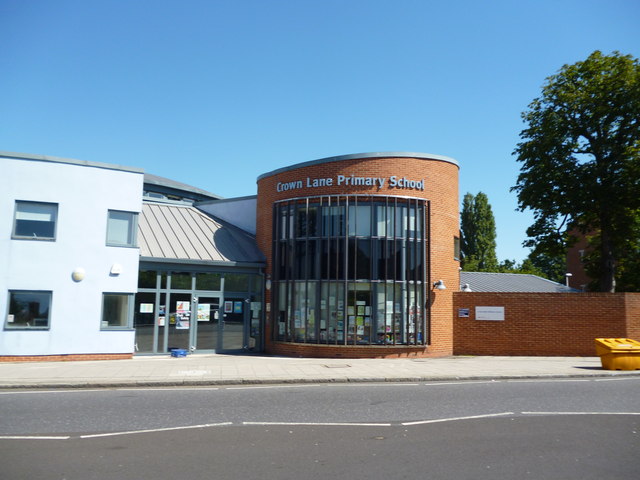
A princess once came to this lane to open a hospital for the incurably ill. Walking it today, you pass the red brick bulk of that Victorian hospital, its gables more manor house than institution, and, further on, the junction with Beulah Hill where a reservoir was sunk into the ridge in the nineteenth century. The lane still runs its old course here, mended for generations by parish labour rather than any turnpike trust.
Beneath the road lies sand and gravel left by ancient rivers, the deposits that raised this ground above the surrounding clay. The name itself points further back, to land that passed into royal hands in the sixteenth century — which is where the story properly begins.
Name Origin
Land of the Crown
Crown Lane takes its name from Crown land. According to the Victoria County History of Surrey (1912), the land came into royal possession when Balham was purchased by the king in or before 1540 and annexed to the honour of Hampton Court. Crown Lane ran through the same southern stretch of Lambeth parish. The sources do not say exactly which parcel of land along the lane carried the Crown's title, only that the lane and the royal landholding belong to the same area and period.
History
From Villas to a Hospital for Incurables
Crown Lane was one of the old country lanes of Lambeth, kept up by parish Surveyors of the Highways rather than by a turnpike trust. Between 1824 and 1843 a line of houses went up on its north side, built in the same style as the villas then rising at Tulse Hill and Herne Hill; all have since been demolished. A reservoir, later known as Norwood Reservoir, was built at the junction with Beulah Hill between 1868 and 1890 under the Lambeth Water Works and later the Metropolitan Water Board, linked to the Streatham Pumping Station.
The lane's most substantial surviving institution arrived in 1894. The British Home for Incurables, founded in 1861 at Clapham Rise, moved onto Crown Lane that year. Its new buildings, designed by Arthur Cawston, were an asymmetrical group in Tudor and Jacobean styles, deliberately domestic rather than institutional in feel. The Princess of Wales, later Queen Alexandra, opened the building on 3 July 1894; Cawston did not live to see it long used, having died in a shooting accident that June.
Later planning documents looked back on this stretch of lane as a template. A 1981 designation report on Leigham Court Road noted that road had been laid out following the pattern of earlier development along Crown Lane, with large family houses set in spacious formal gardens.
The architect of the British Home and Hospital for Incurables, Arthur Cawston, died in a shooting accident in June 1894 — weeks before his building on Crown Lane was opened by the Princess of Wales that July.
People
A Princess, an Architect, and Three Names from 1940
A different kind of record survives from 18 October 1940, when three people are listed as having died at 1 Crown Lane on the same day: Gertrude Caroline Burgess, aged 28, a widow; Stephen Bacon, aged 43, husband of Ivy Bacon; and Francis George Brown, aged 57, son of George and Annie Elizabeth Brown.
Today
The Ridge Still Shows
Crown Lane still sits on the high ground that first drew builders to it. The sand and gravel that raised this part of Streatham underlies the lane itself. Nearby, the Streatham Common Conservation Area takes in woodland toward the borough boundary and Crown Lane that may be a relic of the Great North Wood. To the north, the Leigham Court Road (South) conservation area is bounded at the junction with Crown Lane.
On the Map
Crown Lane Then & Now
Frequently Asked Questions
Why is it called Crown Lane?
It is named after Crown land. Land in this part of Lambeth parish passed into royal ownership when Balham was purchased by the king in or before 1540 and annexed to the honour of Hampton Court.
What is Crown Lane known for?
It is best known as the site of the British Home and Hospital for Incurables, which moved there in 1894 in buildings designed by Arthur Cawston and opened by the Princess of Wales, later Queen Alexandra.
Was Crown Lane ever a turnpike road?
No. It was one of the ancient country lanes of Lambeth parish, repaired by parish Surveyors of the Highways rather than by a turnpike trust.