Time Walk
Towers Above a Park


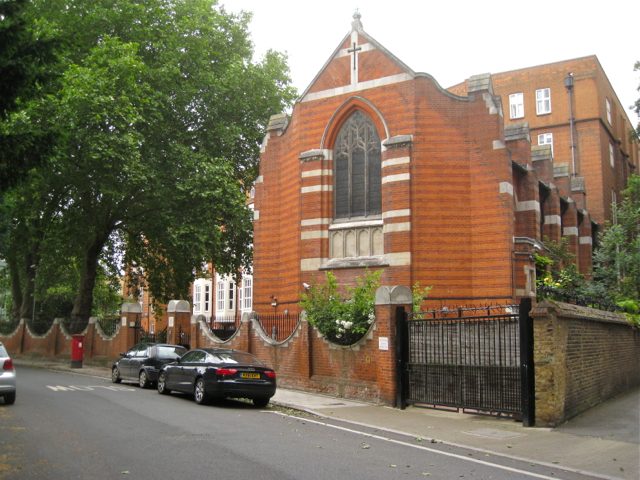
Three Victorian institutions went up here within a decade, and their towers still dwarf everything around them. Walking along today, a visitor passes large red-brick blocks on one side and the green edge of Myatt's Fields Park on the other, a pairing that gives the road its own distinct feel.
Beneath that street life lies a short burst of institution-building in the late 1890s, when a board school, a boys' school and a teacher-training college went up almost side by side. That layered history is the key to its name.
Name Origin
A Trace of the Minets
Cormont Road takes its name from the Minet family, who owned the estate the street was built on. The name is said to refer to the family's French connection. The sources used here do not explain the name beyond that.
History
Three Institutions in Twelve Years
Three large institutions rose on Cormont Road within little more than a decade. The Kennington Boys' High School, later known as Charles Edward Brooke School, opened here in 1897. The following year, the London School Board's Cormont Secondary School opened on 10 January 1898, designed by T. J. Bailey, built to hold 894 children with six-storey towers flanking a central block.
In July 1899, Lady Cranborne, later Marchioness of Salisbury, laid the foundation stone of St Gabriel's Church Training College for women teachers on the road. It was the vision of Charles Edward Brooke, a senior curate at the nearby church of St John the Divine on Vassall Road. Designed by architect Philip A. Robson, it rose five storeys to a gabled porch with a statue of St Gabriel. Its chapel, Canon Brooke's personal gift, was dedicated in 1903. The Kennington Boys' High School was extended in 1912.
Culture
A Summerhouse Among the Towers
Alongside the grand school buildings sits something much smaller: a rare survival of the estate's quieter, garden-scale side amid the institutional bulk around it.
The former St Gabriel's College building on Cormont Road, built as a teacher-training college in 1899, later housed Goldsmiths' Fine Art and Textiles department until 1988.
People
A Curate's Vision
Charles Edward Brooke, a senior curate at St John the Divine on Vassall Road, was behind the founding of St Gabriel's College. Lady Cranborne, who would later become Marchioness of Salisbury, laid its foundation stone in July 1899. The architects T. J. Bailey and Philip A. Robson shaped the road's two largest buildings, the board school and the training college respectively.
Today
A Backdrop to the Park
The large Victorian blocks still give Cormont Road its own distinct character. They stand as a backdrop to Myatt's Fields Park, which lies on the road itself. From schoolrooms to a teacher-training chapel to a fine art department, the street has carried education in one form or another since the 1890s.
On the Map
Cormont Road Then & Now
Frequently Asked Questions
Why is it called Cormont Road?
The name refers to the Minet family's French connection; the Minets owned the estate on which the street was built. The sources used here do not give further detail on the name itself.
What is Cormont Road known for?
Cormont Road is known for its cluster of large Victorian institutional buildings — a board school, a boys' high school and St Gabriel's teacher-training college — built between 1897 and 1903, which still give the street its distinctive backdrop to Myatt's Fields Park.
Who founded St Gabriel's College on Cormont Road?
St Gabriel's College was the vision of Charles Edward Brooke, a senior curate at St John the Divine on Vassall Road. Its foundation stone was laid by Lady Cranborne in July 1899.