Time Walk
A Gap Between Two Riverside Giants


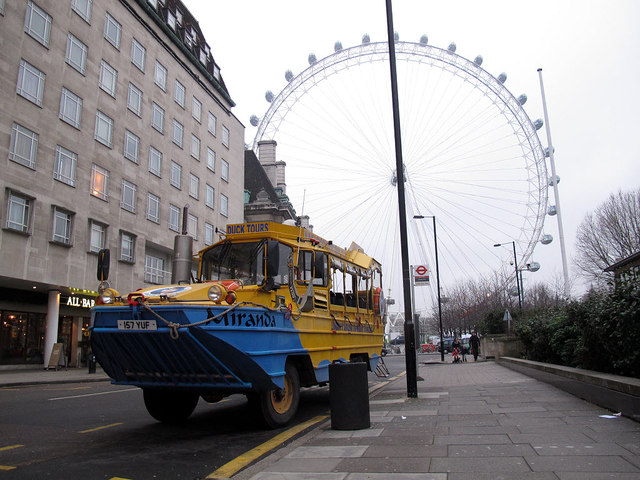
For a few months in 1951 this short street was a gateway into the future, one of the entrances to the Festival of Britain. Walking it today, the dominant presence is the Shell Centre to the north, with an imposing Portland stone block that once served County Hall standing to the south.
Underneath the current quiet lies a much busier 1951 landscape of pavilions, sculptures and a self-service restaurant, long since cleared away. What remains is a single relocated sculpture and a name whose origin points back centuries, to an archbishop rather than an engineer or a builder.
Name Origin
An Archbishop by the River
The street is thought to take its name from Henry Chichele, Archbishop of Canterbury in the 15th century, through his connection with nearby Lambeth Palace. Lambeth Palace has long stood as the London seat of the Archbishops of Canterbury, which is the likely thread linking Chichele's name to a street on the South Bank.
History
Trams, a Festival, and a Sterile Gap
Before the Festival of Britain, the riverside end of Chicheley Street held the offices, stores and depot of the London County Council Tramways. In 1951 the street briefly became part of something far larger: an entrance to the Festival of Britain stood at its southern end, facing a circular planted area furnished by the Faculty of Royal Designers for Industry.
After the Festival closed, the street settled into a much quieter role. By 2007 planning assessment, the public space here and the podium of the neighbouring Shell Centre were judged an underused and sterile area fronting York Road, Belvedere Road and Chicheley Street itself. In 2004, planning permission was granted for a building on that Shell Centre podium site, fronting Chicheley Street, ending its designation as public open space.
Culture
A Festival's Scattered Pavilions
The west side of Chicheley Street carried the Power and Production exhibition and the self-service Whistle Restaurant during the 1951 Festival, showcasing the growth of modern industry. David McFall's sculpture Boy and Foal stood at its entrance and later moved to Missenden Abbey; Karel Vogel's bas relief The Industries stood at the river end and has apparently been destroyed.
Nearby, the Minerals of the Island pavilion stood by the Chicheley Street gate, with the Country pavilion to its east, featuring a ground-floor Dairy Bar. Further pavilions explored British wildlife, in Natural Scene, designed by Brian O'Rourke, and the formation of the country's natural wealth, in Land of Britain, designed by H.T. Cadbury Brown.
A trace of that moment survives on the street today: Siegfried Charoux's sculpture The Motorcyclist, bought by the Royal Dutch Shell Oil Company and relocated here in 2019.
The Motorcyclist sculpture on Chicheley Street spent over sixty years away from the street before arriving in 2019 — it was first exhibited in Holland Park in 1957.
Today
Between Shell Centre and County Hall
Chicheley Street still runs between York Road and Belvedere Road, with the Shell Centre on one side and a Portland stone block that once served County Hall on the other. Where the Festival of Britain once staged its vision of industry and countryside, a single sculpture now stands as the street's main link to that chapter.
On the Map
Chicheley Street Then & Now
Frequently Asked Questions
Why is it called Chicheley Street?
It is thought to be named after Henry Chichele, the 15th-century Archbishop of Canterbury, through his connection with nearby Lambeth Palace, the London seat of the archbishops.
What is Chicheley Street known for?
It hosted an entrance to the 1951 Festival of Britain, with pavilions on industry, minerals, countryside and wildlife lining or standing near it, and now carries the relocated 1950s sculpture The Motorcyclist.
What sculpture stands on Chicheley Street today?
The Motorcyclist, by Siegfried Charoux, first shown at the LCC's 1957 open-air exhibition in Holland Park and bought by Shell, was relocated to Chicheley Street in 2019.