Lambeth London England About Methodology
Kennington · SE1

Hercules Road

Where the father of the modern circus and William Blake, one of England’s greatest visionary poets, lived within a street’s walk of each other.

Named After
Hercules Hall
First Recorded
c. 1770s
Borough
Lambeth
Character
Late Georgian
Last Updated
Time Walk

From Circus Ring to Poet’s Study

Hercules Road runs through Kennington, Lambeth, as a short residential street whose elegance belies its extraordinary past. The stretch of Georgian and Victorian buildings that survives today contains within its history some of the most vivid chapters of London’s 18th and 19th centuries: the birth of the modern circus, the creative forge of one of England’s greatest poets, and the energy of a neighbourhood that transformed overnight from rural field to urban entertainment hub.

2008
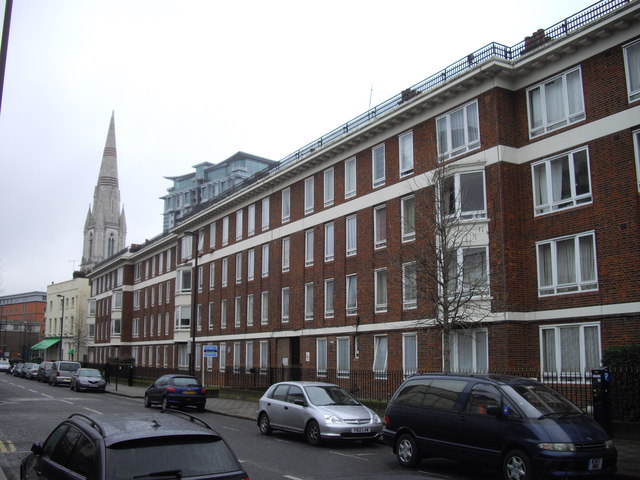
Hercules House, Lambeth
Wikimedia Commons · CC BY-SA 2.0
2010
Railway Arches in Hercules Road Lambeth
Wikimedia Commons · CC BY-SA 2.0
Today
William Blake Estate, Hercules Road Lambeth
Geograph · CC BY-SA 2.0

Today the street is quiet, its character domestic. A plaque marks where William Blake lived, and Blake Mosaics run beneath the railway arches nearby. Yet the name itself echoes back to Philip Astley’s mansion—a name that few Londoners today would connect to the man who revolutionised entertainment across the Western world.

✦   ✦   ✦
Name Origin

A Human Pyramid, a Circus, and One Man’s Mansion

The road is named after Hercules Hall, which was built by and was the home of Philip Astley (1742–1814), riding instructor, horse-trainer, and acknowledged as the inventor of the modern circus. The name itself comes not from the mythological hero but from one of Astley’s most celebrated performance pieces. Hercules Road in Lambeth, where Astley had his mansion, is named after one of his popular acts, the human pyramid, or Force d'Hercule. When Astley built his private residence, he chose to name it after this crowd-pleasing act—a testament to how central the performance was to his identity and fame.

Performing nearby in an open field behind the present site of St John’s Church, Waterloo, Astley realised the advantages of riding in a circle, and thus invented the circus ring. He was a principal among the many performers who made Lambeth a popular entertainment resort at that time. By the 1770s, when Hercules Hall stood as his residence, Astley had already created the format that would define entertainment for centuries to come. The street that inherited his mansion’s name thus carries within it the seed of modern circus—the circular ring, the integrated show, the ticket that admits you to everything.

How the name evolved
c. 1750s–1770s Hercules Row
1770s–1900s Hercules Buildings
1900s–present Hercules Road
✦   ✦   ✦
History

Entertainment, Creation, and Change

Originally called Hercules Row, the mid-18th century terrace of houses was built by Daniel Ponton, who was also the High Sheriff of Surrey. These elegant Georgian terraces were built during Lambeth’s transformation into the entertainment capital of London. Alongside gentlemen’s residences rose riding schools, amphitheatres, pleasure gardens, and the homes of performers. The neighbourhood attracted wealth and culture, drawing spectators nightly to the shows at nearby Westminster Bridge.

It was into this world that William Blake arrived. No. 13 Hercules Buildings, Lambeth, was the residence of William Blake and his wife Catherine during the most creative and productive period of his life. Moving from smaller premises in Soho in 1790, it was here during the next few years that Blake produced Songs of Experience, The Marriage of Heaven and Hell, Visions of the Daughters of Albion, America a Prophecy, The First Book of Urizen and much else. The Blakes lived there, at least from the summer of 1791, until they moved to Felpham on the South Coast in September 1800. In the decade after Astley’s death in 1814, the character of Lambeth shifted irrevocably. Lambeth was a pleasant rural area when Blake arrived. However, as legislation drove more industry across the river, it quickly changed into a noisy, disease-infested slum.

Key Dates
c. 1750
Hercules Row Built
Daniel Ponton, High Sheriff of Surrey, constructs the Georgian terrace that would later become Hercules Buildings and Hercules Road.
1768
Astley’s First Show
Philip Astley and his wife Patty Jones perform their first equestrian trick-riding exhibition on Easter Monday at Ha’penny Hatch, a field in Lambeth near present-day Waterloo station.
1770s
Hercules Hall Built
Astley constructs Hercules Hall as his private residence near his circus operations, giving the area its enduring name.
1790–1800
Blake’s Lambeth Years
William Blake lives at 13 Hercules Buildings, creating some of his most famous works including Songs of Experience, America a Prophecy, and The Marriage of Heaven and Hell.
1814
Astley Dies
Philip Astley dies on 28 October, aged 72, leaving behind a legacy that reshaped entertainment worldwide.
1917–1918
Blake’s House Demolished
No. 13 Hercules Buildings, Blake’s residence and creative centre, is torn down. A plaque is later erected to mark the site.
Did You Know?

Blake completed his masterpiece colour printing technique at 13 Hercules Buildings in 1795—using a method so skilled and individual that no complete set of his prints from that year has ever been found outside museums. The technique involved hand-applied pigment on copper plates, each print unique and unrepeatable.

By the early 20th century, industrial Lambeth had transformed the street entirely. In 1918, number 13 Hercules Buildings in Lambeth was demolished. This was the house in which William Blake lived with his wife during what is regarded as his most productive period in the 1790s. The street itself endured, but its Georgian character was fractured. Post-war reconstruction created the William Blake Estate on the site, and in more recent years, artist Eduardo Paolozzi and others have created Blake Mosaics in the railway arches beneath Carlisle Lane—a public artwork that brings Blake’s visionary designs back to the place where he conceived them.

✦   ✦   ✦
Culture & Heritage

Two Giants, One Street

The cultural weight of Hercules Road rests entirely on its former residents. Historically, Hercules Road is most well known for a former resident, the poet and visionary artist William Blake (1757–1827), who lived in a large house, 13 Hercules Buildings, and his address was Mr Blake Engraver, Hercules Buildings, Westminster Bridge. A blue plaque now marks the site. More recently, within the railway arches leading off Carlisle Lane, a large gallery of mosaics based upon his designs has been installed, evoking his fiery visions in the place where he conjured them. Ten years work by hundreds of local people have resulted in dozens of finely-wrought mosaics bringing Blake’s images into the public realm, among the warehouses and factories where they may be discovered by the passerby, just as he might have wished.

Literary Landmark
William Blake’s Productive Decade

13 Hercules Buildings was Blake’s workshop, studio, and creative centre during his most generative period. Here he engraved copper plates, applied hand-coloured pigment, and wrote the prophetic books that challenged Enlightenment rationalism. The house itself was a three-storey Georgian terrace with a garden—modest by the standards of the wealthy, but sufficient for an artist-engraver who was his own poet, printer, and publisher.

Philip Astley’s contribution to the street is less immediately visible. Hercules Hall no longer stands, and the Amphitheatre that made him famous was demolished in 1893 to make way for St Thomas’s Hospital’s garden. Yet the street name itself serves as his memorial—a permanent reminder that on Lambeth’s fields stood the first modern circus, the performance that united acrobats, clowns, musicians, and horsemanship under one tent and one ticket.

📖 Literature
Songs of Innocence and of Experience
William Blake · 1790-1800
Blake wrote major works at 13 Hercules Buildings during his most productive period.
🎬 Film
Passport to Pimlico
Henry Cornelius · 1949
Film set built at Lambeth Road junction with Hercules Road on WWII bombsite.
🎵 Music
In Lambeth: Visions from the Walled Garden of William Blake
John Zorn · 2013
Album inspired by Blake's time in Lambeth; title quotes Blake's poem Jerusalem.
· Art
Blake Mosaics
Southbank Mosaics · 2009
70 mosaics based on Blake's designs installed in railway arches near Hercules Road.
✦   ✦   ✦
Notable People

Residents and Legacies

In 1860 the actress and dancer Phyllis Broughton was born at 90 Hercules Buildings. She would become famous as a Gaiety Girl, performing in musical theatre during the 1880s and 1890s and accumulating considerable wealth from her success. Her birth on the street represents the final chapter of Hercules Road as a fashionable residential address before industrial change and demolition altered its character permanently.

Of all the street’s inhabitants, however, William Blake casts the longest shadow. His decade at 13 Hercules Buildings coincided with his transition from working engraver to visionary poet—the period when he moved from illustration and technical craft to the creation of prophetic books that would eventually secure his place as one of the greatest English artists. The street that once hosted his printmaking press and engraver’s workshop now honours his memory through art and archival scholarship.

✦   ✦   ✦
20th Century & Onwards

Demolition, Memory, and Reconstruction

The 20th century was unkind to Hercules Road. Hercules Road was formerly known as Hercules Buildings. This name change itself marked a shift in the street’s status and character. The elegant Georgian and Victorian buildings were progressively demolished as Lambeth faced post-war reconstruction. Bomb damage, changing economic priorities, and slum clearance schemes transformed the street from a historic residential neighbourhood into a modern housing estate. The William Blake Estate, built on the site of Blake’s former home, represented a deliberate choice to commemorate the past even as it was physically erased.

Since the 1990s, there has been a deliberate cultural recovery. The Blake Mosaics project, coordinated by South Bank Mosaics and involving hundreds of local residents, created a public gallery of art beneath the railway arches. These hand-crafted works depict Blake’s own imagery—the Divine Image, the Tyger, figures from Jerusalem and The Marriage of Heaven and Hell. They serve as a permanent reminder that this unpromising industrial landscape was once the home of one of England’s greatest visionary minds.

✦   ✦   ✦
Today

A Street Remembering Its Past

Hercules Road in 2026 is a quiet, everyday street in Kennington, Lambeth. The William Blake Estate occupies the block where his original house stood, its modernist concrete form a stark contrast to the Georgian architecture it replaced. The Pineapple public house, a surviving Victorian corner pub, stands as a reminder of the street’s more abundant past. Street trees line the pavements, and new green infrastructure is being installed as part of Lambeth Council’s healthy streets initiative, intended to create more cycle parking and planting spaces for residents and visitors.

5 min walk
Archbishop Park
Historic green space adjacent to Lambeth Palace, with mature trees and views toward Westminster.
10 min walk
Archbishop Park Playing Fields
Open recreation grounds managed by Lambeth Council, used by local schools and community.
12 min walk
Geraldine Mary Harmsworth Park
A Victorian public park in Kennington with planted gardens and pedestrian pathways, built as a memorial to Geraldine Mary Harmsworth.
15 min walk
Thames Foreshore (Lambeth Reach)
Riverfront with habitat for wading birds and occasional wildlife sightings; accessible via riverside walks.

What makes Hercules Road remarkable is not what is visible today but what is remembered. A plaque marks Blake’s former address. The Blake Mosaics tunnel beneath the nearby railway arches draws visitors and commuters alike to contemplate his art in the place where it was conceived. The street name itself, unchanged for two centuries, preserves the memory of Philip Astley’s Hercules Hall—a mansion long demolished but whose name launched the modern circus. For those who know where to look, Hercules Road tells the story of two of England’s greatest cultural figures, separated by a generation but united by a street that bore witness to their genius.

✦   ✦   ✦
On the Map

Hercules Road Then & Now

National Library of Scotland — Ordnance Survey 6-inch, c. 1888. Hosted by MapTiler. Modern: © OpenStreetMap contributors.

✦   ✦   ✦

Frequently Asked Questions

Why is it called Hercules Road?
The street is named after Hercules Hall, the mansion built by Philip Astley (1742–1814), the inventor of the modern circus. Astley named the hall after one of his famous acts, the Force d'Hercule—a human pyramid performance that delighted London audiences in the 1760s and 1770s. The street inherited the name from the hall.
Did William Blake really live on Hercules Road?
Yes. William Blake lived at 13 Hercules Buildings from 1790 or 1791 until 1800. This was his most productive period, when he wrote Songs of Experience, America a Prophecy, and The Marriage of Heaven and Hell. The house was demolished in 1917–1918, but a plaque and a series of mosaic artworks in the nearby railway arches commemorate the site and Blake’s legacy.
What is Hercules Road known for today?
Hercules Road is known as the home street of Philip Astley, founder of the modern circus, and as the address where William Blake created some of his greatest works. The street stands in Kennington, Lambeth, a neighbourhood that was transformed from rural fields into a centre of entertainment and industry in the late 18th century. Today, a William Blake Estate and Blake Mosaics tunnel celebrate the poet’s legacy, while the street name itself preserves the memory of Astley’s Hercules Hall.