Time Walk
A Short Link Between Two Squares
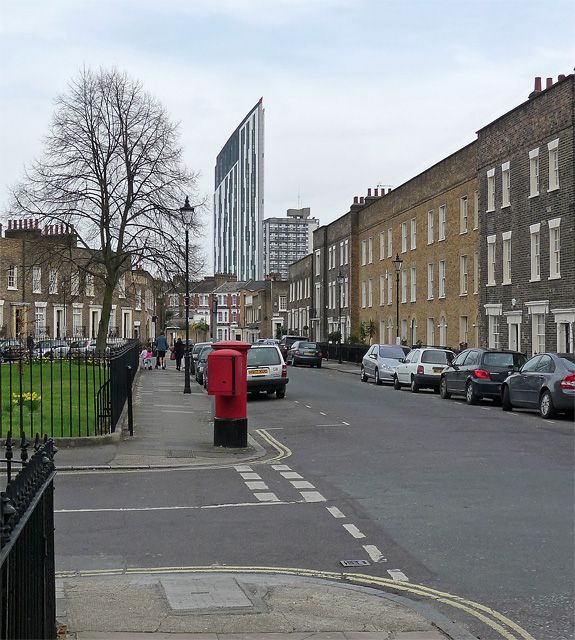
A tiny estate street, built in 1839–40, still doing exactly the job it was made for: joining St Mary's Gardens to Walcot Square. Walking it today, what stands out is the uniformity of the terraces, the ironwork balconies, and a handful of former mews buildings tucked among the houses.
Underneath the tidy fronts is a plan barely changed since it was laid out, under a different name, which is where its story properly begins.
Name Origin
From St Mary's Street to St Mary's Walk
The street was originally called St Mary's Street before it became St Mary's Walk. The sources used here do not explain why either form carries the name St Mary's, though the street runs directly into St Mary's Gardens at one end.
History
Fifteen Houses on the Walcot Estate
St Mary's Walk was developed in 1839–40, part of the wider building of the Walcot Estate in Lambeth. It comprises numbers 1 to 15, running consecutively, a small and self-contained run of houses rather than a long thoroughfare.
The houses built in these years stood two storeys over semi-basements, with stucco door surrounds, tall windows, and cast-iron balconies and railings. Among the terrace, mews-style buildings that once served as stabling survive, giving the street a secondary, more workaday character alongside its principal houses.
Today
Listed Houses, Little Changed
Three groups of houses here carry Grade II listing. Nos. 1–10 form a terrace of two storeys and basement, each with two windows; Nos. 9 and 10 are facsimile rebuilds, and the upper parts of Nos. 7 and 8 were also rebuilt. Nos. 11–13 match them in height and materials, with a stuccoed ground floor and basement marked out with incised lines. No. 14 stands apart as a villa of three windows, with a blocked sunk basement, a stucco plinth, and a first-floor cill band.
Nos. 9 and 10 St Mary's Walk look original but are facsimile rebuilds, and the upper storeys of their neighbours at Nos. 7 and 8 were also rebuilt — yet all are listed together as part of one early to mid-nineteenth-century terrace.
Small as it is, St Mary's Walk still reads as a single piece of 1839–40 estate planning, its stucco, ironwork and converted mews intact where the estate's wider pattern survives.
On the Map
St Mary's Walk Then & Now
Frequently Asked Questions
Why is it called St Mary's Walk?
The street was formerly called St Mary's Street before becoming St Mary's Walk. The sources used here do not explain the origin of the "St Mary's" name, though the street connects directly to St Mary's Gardens.
What is St Mary's Walk known for?
A short Walcot Estate terrace of fifteen houses built in 1839–40, several of them Grade II listed, with stucco detailing, cast-iron balconies and surviving former mews buildings.
When was St Mary's Walk built?
The street was developed in 1839–40 as part of the Walcot Estate in Lambeth.