Time Walk
A Garden That Keeps Changing Its Name


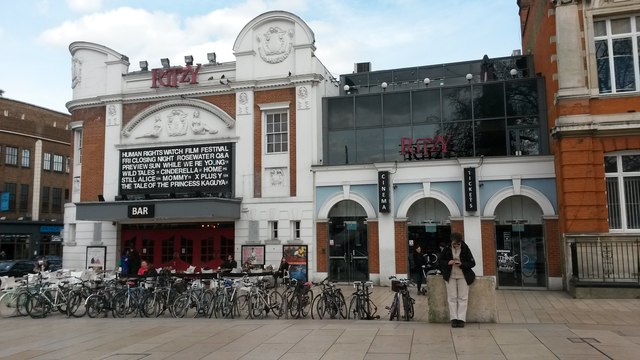
A plot of garden too stubborn to be built on has outlasted three names of its own. Today it sits at a busy crossroads, fronted by the Ritzy Cinema and the Tate Free Library. A bust and an old theatre's foundation stone still stand here among the traffic.
Beneath the modern square lies a patch of Rush Common land that once could not be built upon at all. That old restriction is why there is still open ground here, rather than shopfronts, for the story of its name to unfold.
Name Origin
From Shape to Sugar to Ship
The name comes from the plot's own form. In the early 19th century this was simply "an oval of garden", and the name Brixton Oval stuck to the ground itself.
In 1905 it became the Tate Memorial Garden, in memory of Henry Tate. Windrush Square, around it, was created in the 1990s when a coach garage and petrol station were cleared. It honours the area's Caribbean migrants and the HMT Empire Windrush, which docked in 1948. The name Brixton Oval nonetheless continued in local use, including as a postal address into the 2010s.
History
Common Land, Hoardings and a Memorial
This was common land first, and that is why it survived. Brixton Oval had formed part of Rush Common, private open land that could not be built upon, which is why a garden rather than a terrace occupies this corner of the crossroads.
Even as a protected garden it attracted controversy. In 1900 advertising hoardings were installed around Brixton Oval, and local complaints followed. Four years later Amy Tate bought the land to lay it out properly as a public garden, and in 1905 it was enclosed and dedicated to her husband's memory as the Tate Memorial Garden. A Grade II listed bust of Sir Henry Tate by the sculptor Thomas Brock, paid for by public subscription, was erected there that same year. The garden's protected status was formalised in 1931 under the London Squares Preservation Act.
Culture
A Lost Theatre and a Surviving Cinema
Beyond that lost building, the Ritzy Cinema and the Tate Free Library are the important historic buildings that still front Brixton Oval today.
People
A Merchant, a Sculptor, and a Pair of Performers
Sir Henry Tate was described, in the words used on the listing for his memorial, as "a baronet, upright merchant and wise philanthropist", and it was in his memory that the garden on Brixton Oval was created. The sculptor Thomas Brock made the bust of Tate that was erected here in 1905, funded by public subscription.
Two performers also had their address on Brixton Oval. Hal Stewart and Delhi (Pansy Bannerjee), known together as Stewart and Delhi, gave 2 Frinton House, Brixton Oval, as their main address in 1916.
A small plaque on a planter outside the Tate Library now remembers Norma Elaine Williamson, who came to London from Jamaica as a young girl and lived in Stockwell for the rest of her life. She retired as Director of Human Resources at the National Institute for Health and Care Excellence, and did extensive voluntary work with Age UK, serving as treasurer of the Brixton Society for some sixteen years.
"a baronet, upright merchant and wise philanthropist"Historic England listing description
Recent Times
Windrush Square Arrives
The garden was recently re-landscaped as part of the Windrush Square scheme.
At the junction of Brixton Oval with Rushcroft Road, an underground public toilet from the early 20th century still has its original cast-concrete entrance and lamp-and-vent pipes.
Today
Still an Oval at a Crossroads
Under the newer name of Windrush Square, the old oval shape and the old name both persist in how people still speak of this corner of Brixton.
On the Map
Brixton Oval Then & Now
Frequently Asked Questions
Why is it called Brixton Oval?
It was named for its shape: an oval plot of garden existed here from the early 19th century, and the name described the ground itself rather than a person or event.
What is Brixton Oval known for?
It is known for the Tate Memorial Garden, created in 1905 in memory of Sir Henry Tate, for the Grade II listed bust of Tate by Thomas Brock, and for the foundation stone of the lost Brixton Theatre, laid by Henry Irving in 1894.
Is Brixton Oval the same place as Windrush Square?
Largely. Windrush Square, created around the old oval in the 1990s, honours Caribbean migrants and the HMT Empire Windrush, though the older name Brixton Oval continued in local use afterwards.