Time Walk
A square that has changed hands more than it has changed shape


Walk into West Square today and the plan barely differs from what Thomas Kendall and James Hedger began laying out in 1791: three-storeyed Georgian terraces on three sides, a taller run on the fourth, wrapped around a communal garden that Southwark Council still maintains, Wikipedia notes, as public space open by day and locked at night. In 1812 a wooden tower stood on No. 36 relaying Admiralty shutter-telegraph signals to Chatham and Sheerness. In the 1880s children's voices came from the Charlotte Sharman School on the northwest side. A young child named Charlie Chaplin lived briefly at No. 39. The Imperial War Museum, once Bethlem Royal Hospital, still looms immediately to the west, just as the Survey of London describes the hospital's grounds once running hard against these gardens.
Name Origin
Colonel Temple West's inheritance
West Square owes its name to a family rather than a compass point. The Survey of London records that the square was built on the largest plot of ground in St George's Fields, land that had belonged first to Henry Bartelote and then passed into the ownership of the West family. Colonel Temple West died in 1784, and his will, as the Survey sets out, left his freehold estate in St George's Fields to his wife Jane for her lifetime, with the property to pass afterwards to his eldest son, also named Temple, in tail male.
It was this Temple West inheritance that made the land available for development once Jane's tenure ended, and building leases of the site were granted in 1791 to Thomas Kendall and James Hedger, both the Survey of London and Wikipedia agree. The square that rose over the following years carried the family name forward, a common enough practice on the newly enclosed St George's Fields, where landowners and builders alike left their names on the streets they platted. Unlike many London squares named for aristocratic patrons or royal associations, West Square's name is a modest piece of estate bookkeeping — the record of who owned the ground when the leases were signed, preserved in brick long after the West family's direct involvement had ended.
History
From building leases to a protected conservation area
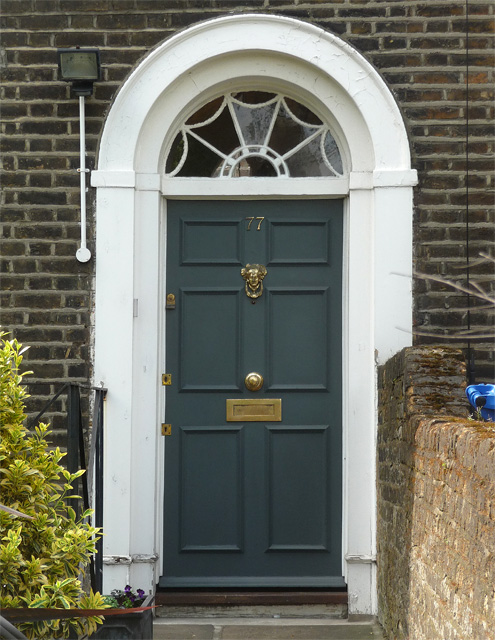
Construction moved quickly once the leases were granted. Most of the houses on the north, east and west sides were completed and occupied by 1794, the Survey of London notes, describing them as nearly all three-storeyed, with the west side's terrace grouped formally — its two centre houses topped by a pediment and set slightly forward, matched by houses at each end. The south side came a little later: Nos. 25–28, built a few years afterwards, rise a full storey higher than their neighbours and carry distinctive rectangular patterned door fanlights, the Survey records.
The square soon acquired unusual civic infrastructure. In 1812 the Admiralty erected a tower on No. 36, on the east side, to carry the shutter telegraph apparatus that relayed messages between Whitehall and New Cross, and onward to Chatham and Sheerness — a reminder that this residential square briefly formed a link in Britain's naval communications network. Through the 1800s, Wikipedia notes, West Square also housed staff of the neighbouring Bethlem Royal Hospital, whose grounds abutted the gardens behind the houses; the Survey of London adds that the hospital leased this eastern ground to the Governors of Bridewell in 1828 for 61 years, for a House of Occupations.
The Victorian and Edwardian decades brought institutional change. King Edward's Schools occupied the eastern side until their closure and demolition in the 1930s. At the end of the 19th century, per Wikipedia's account, the central garden itself was threatened with building development, prompting a campaign to preserve it; the freehold was bought for some £4,000 by the London County Council and the Metropolitan Borough of Southwark in 1909, and the garden — restored, under Madeline Agar, to its original cruciform layout of 1813 — reopened to the public in 1910. The London Squares Preservation Act 1931 gave it formal protection, and after the Second World War a proposal to demolish the surrounding houses and fold the site into Geraldine Mary Harmsworth Park was blocked by the Civic Amenities Act 1967, after which the square became a conservation area.
West Square makes a fleeting appearance in Chilean novelist Roberto Bolaño's 2666, where a taxi's route is traced with real precision through Brook Drive, Geraldine Street and Austral Street on its way to St George's Road.
Culture
Panoramas, novelists, and a modern dance studio
West Square's most distinctive cultural chapter belongs to Robert Barker, the panorama painter, and his son Henry. Robert Barker had already made his name exhibiting panoramas in Leicester Square before he settled at No. 14 West Square in 1799, where he lived until his death in 1806; the Survey of London records that he also erected a round wooden building in the square itself for his panorama work. His widow continued to occupy No. 14 afterwards. Henry Barker, who had assisted his father with the paintings, lived at No. 13 from 1802 — the year he married a daughter of William Bligh, commander of the Bounty — until 1824. Bligh himself lived for a period along nearby Lambeth Road, Wikipedia notes.
The square's literary afterlife is more unexpected: Wikipedia's account notes that West Square is traversed by a taxi in Roberto Bolaño's novel 2666, the cab's route running through Brook Drive, Geraldine Street and Austral Street before reaching St George's Road — a small fictional cameo for a very real Georgian address. In more recent times, part of the site of the old Charlotte Sharman School has been redeveloped as the Siobhan Davies Dance Centre, keeping a thread of creative use running through the square's institutional history.
People
Brewers, chemists, philanthropists and a future film star
Beyond the Barkers, the square's early residents included Henry Perkins, a book collector and partner in the brewing firm of Barclay, Perkins, who occupied No. 15 between 1804 and 1809. The Hedger family, who had built much of the square, remained closely tied to it: James Hedger's son James lived at No. 45 from 1808 until his death in 1812, when his brother Robert succeeded him there, while a third brother, William, occupied No. 31 from 1807 to 1819 — a small dynasty of builders' sons keeping houses within the family.
The square's best-known scientific resident is J. A. R. Newlands, the Victorian chemist credited with discovering the Periodic Law for the chemical elements, who was born and raised at No. 19; a blue plaque installed by the Royal Society of Chemistry now marks the house. Charlotte Sharman, the Congregational philanthropist, founded a girls' orphanage on the square on 6 May 1867 in a rented house next to her parents' home, and by 1871 had expanded it into a nursery at No. 32, a branch for older girls at No. 23, and an infirmary at No. 44. She died in 1929, aged 97, having built the operation into the Orphans' Nest on nearby Austral Street. And as a very young child, Charlie Chaplin lived briefly at No. 39, recalling in later life that he had been there around the age of three.
Recent Times
Listing, reconversion, and a museum's expansion
The square's Georgian fabric was formally recognised in the 1970s: the east, south and west sides were Grade II listed in 1972, and Historic England's list entries record specific listings for 3–8, 9–12 and 13–23 West Square, each first listed on 8 June 1973. Not every corner survived untouched — a terrace of five houses in the northwest corner was demolished around 1970 and replaced with modern townhouses designed to echo the surrounding Georgian style, and the corner house had at one time operated as a pub called The City Arms. The west side, long subdivided with pairs of houses run together into flats, was largely reconverted to single dwellings in 1997–98, except for Nos. 10 and 11.
Nearby, the old Sharman orphanage building on Austral Street passed to All Saints' Hospital and then, in the late 1980s, to the Imperial War Museums as the All Saints Annexe. Wikipedia records that in 2020 the building was being redeveloped as a studio for EPR Architects, with completion scheduled for February 2022, extending the museum's institutional footprint that has bordered West Square since the Bethlem Hospital days.
Today
A quiet Georgian survivor beside a great museum
West Square today sits just south of St George's Road, formally within the London Borough of Southwark though carrying the SE11 postcode commonly associated with Lambeth, Wikipedia notes. The Imperial War Museum stands immediately to the west, its All Saints Annexe just south on Austral Street, and the square's own communal garden — the one Edwardian campaigners fought to save — remains open to the public by day. The terraced houses, protected as listed buildings and sitting within a conservation area, preserve much of the Georgian streetscape that Kendall and Hedger laid out in the 1790s, a rare survival so close to the museum's grounds and the busy roads beyond.
On the Map
West Square Then & Now
Frequently Asked Questions
Why is it called West Square?
The square takes its name from Colonel Temple West, who owned the freehold estate in St George's Fields until his death in 1784. His land passed to his wife and then his son, and building leases granted in 1791 developed the site under the family name.
What is West Square known for?
West Square is known for its intact Georgian terraces around a public garden, its links to panorama painter Robert Barker, chemist J. A. R. Newlands (born at No. 19), philanthropist Charlotte Sharman, and a childhood residence of Charlie Chaplin at No. 39.
Is West Square open to the public?
The central garden is open to the public during the day, though it is locked at night, Wikipedia notes. The garden was bought by the LCC and Southwark in 1909 and formally reopened in 1910 after restoration to its original cruciform layout.