Time Walk
Six Hundred Years of Crooked Ground


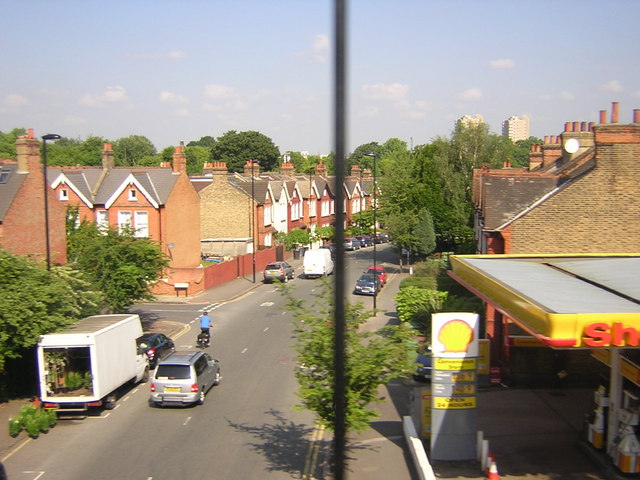
Croxted Road has been here so long that the Victorians could look back at it and already see it as a ruin. A road that first appears in the record as Crokstrete in 1335 was, by the 1880s, a rut-scarred lane lined with refuse heaps — a place the city was outgrowing but had not yet swept away. What lasted six centuries as a working country lane was about to vanish into the terraced suburbs. The writers who saw it at that turning point — most famously John Ruskin — left a portrait of a road at the edge of its own ending.
Name Origin
The Winding Way
The name Croxted Road comes from the road's own shape. First recorded as Crokstrete in 1335, the name likely alludes to the crooked or winding route the road takes across the terrain — a straightforward medieval descriptor that stuck for centuries. Between 1444 and 1557, the standard form became Croxted Lane, a variant that persisted into the nineteenth century. The name has changed form several times, but the idea behind it — a crooked path — has remained constant. The record comes down through the Dulwich Society's street histories.
History
A Lane at the Edge of the Manor
For much of its history, Croxted Road formed the western boundary of the old Manor from Herne Hill southwards — a working edge of estate land, neither fully the inner precinct nor open country. That liminal position shaped what the road was: a lane that mattered to the administrators of the place, marked as a boundary, but not a route designed for convenience or dignity.
By the early nineteenth century, the road was no longer purely rural — cottages lined its lower reaches, enough that a property dispute in 1821 could disrupt several households. Yet less than sixty years later, Croxted Lane had become something worse than rural: it was transitional. When John Ruskin wrote his description in 1880, he was documenting not a living landscape but its destruction. The deep ruts and refuse heaps tell the story of a lane being squeezed between what it had been and what the suburbs would make it.
The transformation of Croxted Lane into the residential Croxted Road, and the precise date when building began on the street we know today, awaits fuller documentation; this page will grow as those records come to light.
Culture
Ruskin's Ruin
John Ruskin saw Croxted Lane at a moment when it mattered to notice it. His description in Fiction — Fair and Foul (1880) — "a deep-rutted cart-road bordered by heaps of refuse" — captures not just a lane but a landscape in collapse. More poignantly, in Praeterita, his autobiography published five years later, he reached back to his youth and remembered the same place transformed: "a green by-road and narrow strip of untilled field with a tadpole-haunted ditch." Between those two memories — the ruin he saw as an old man and the pastoral he remembered from youth — lies the industrial pressure that was already beginning to remake South London. Ruskin's words are among the last clear-eyed accounts of Croxted Lane as it existed before the terraces came.
When John Ruskin described Croxted Lane in 1880 as bordered by "heaps of refuse," he was documenting the road at a turning point — no longer countryside, not yet suburb, but something caught between. Five years later, in his autobiography, he would remember the same place from his youth as a green lane with a tadpole-filled ditch.
Today
A Residential Street in Southwark
Croxted Road is now a residential street in Southwark, SE21. The crooked route that gave it its medieval name remains, traced across the terrain much as it has been for nearly seven centuries. The ruts and refuse of Ruskin's 1880s lane have long since been paved over; the tadpole ditch is gone. What persists is the line itself — the oldest part of this corner of London still in use, still bearing the same name.
On the Map
Croxted Road Then & Now
Frequently Asked Questions
Why is it called Croxted Road?
Croxted Road takes its name from the road's crooked or winding route. It was first recorded as Crokstrete in 1335, and was known as Croxted Lane from at least 1444 through the 1550s. The name is a straightforward medieval descriptor — a "crooked street" — that has persisted for nearly seven centuries.
How old is Croxted Road?
The road itself is very old — it first appears in the record as Crokstrete in 1335, making it at least six and a half centuries old. It formed the western boundary of the old Manor from Herne Hill southwards for much of its history, indicating it was a significant demarcation line even in medieval times.
What did John Ruskin say about Croxted Lane?
In 1880, Ruskin described Croxted Lane as a deep-rutted cart-road bordered by heaps of refuse. Five years later, in his autobiography Praeterita, he recalled it as it had been in his youth — a green by-road and narrow strip of untilled field with a tadpole-haunted ditch. His two accounts capture the lane at a moment of transformation, caught between its rural past and its suburban future.