Lambeth London England About Methodology
Lambeth · SE24

Half Moon Lane

A pub with a nationally important historic interior gave this Camberwell lane its enduring name in 1760.

Name Meaning
The Half Moon Inn
First Recorded
As “Greenstreet”
Borough
Lambeth
Character
Victorian Residential
Last Updated
Time Walk

From Rural Lane to Music Venue

Half Moon Lane today is a residential street of Victorian and Edwardian terraces, bordered by the green spaces of south London. At its western end stands the celebrated Half Moon pub, a Grade II* listed building and one of only 270 British pubs with a nationally important historic interior. The street runs between Herne Hill railway station and the broader neighbourhood of Camberwell, connecting urban and parkland scenery. But the name is not the street’s only identity—it is layered.

2018
Herne Hill, Half Moon Lane junction
Wikimedia Commons · CC BY-SA 2.0
Today
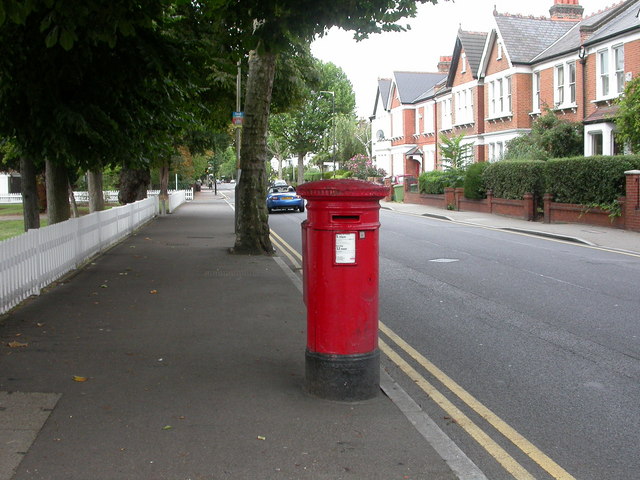
Herne Hill, cypherless postbox — near Half Moon Lane
Geograph · CC BY-SA 2.0

Today you find traces of the old music venue in its bones. The Half Moon hosted folk singers in the 1960s, was a landmark on the 1970s pub rock circuit, and even saw performances by U2. Yet long before it became a concert hall, the inn was known to the artist and critic John Ruskin, who wrote of walking between it and the College at Dulwich. That journey has been taken countless times since, and the path is named Half Moon Lane not because of the crescent moon in the sky, but because of the sign on a tavern that asked for a drink.

✦   ✦   ✦
Name Origin

A Tavern’s Sign Written into the Landscape

The lane was known from ancient times as Greenstreet, and from the 1720s until about 1800 as Ireland Green—a name that reflected the landowners of the moment rather than any geographical feature. The transition from Ireland Green to Half Moon Lane tells the story of how a pub became a place. The first public house ‘known by the Sign of the Half Moon’ was built by Joseph Miller in 1760. Yet an inn has stood on the site at the west end of Half Moon Lane, nearest Herne Hill, since the middle of the 17th century, so Miller was not creating something new so much as formalising it with a sign.

The half moon is a common emblem in tavern heraldry, appearing across London for centuries. A tributary of the River Effra flowed north towards Half Moon Lane and past the Half Moon pub, and before the river was covered over in the 19th century, John Ruskin describes this tributary as a "tadpole-haunted ditch". The lane takes its name not from its geography but from the public house, and that choice of sign has endured for more than 250 years.

How the name evolved
Medieval Greenstreet
c. 1720–1800 Ireland Green
1760+ Half Moon Lane
✦   ✦   ✦
History

Three Centuries of Hospitality

The Half Moon Inn predates the street itself. In 1805, during the Napoleonic Wars, army manoeuvres took place in Dulwich, with troops stationed on the village green in Half Moon Lane and at the cross roads by the Half Moon Public House. At that time, the lane and its surroundings were deeply rural, and the inn was a stopping place for travellers on the route between London and the Dulwich estate. The river Effra still ran openly, and the Half Moon Tavern was accessed by crossing a bridge over the Effra, which appears in an early sketch from 1810.

Key Dates
c. 1650
Inn Established
An inn standing at the west end of Half Moon Lane since the middle of the 17th century.
1760
The Half Moon Sign
Joseph Miller builds the first public house ‘known by the Sign of the Half Moon’.
1805
Napoleonic Camp
Troops stationed at the Half Moon during military manoeuvres near Dulwich.
1844
Tombstone Discovery
Edward Alleyn’s original tombstone, removed from Dulwich College Chapel, rediscovered in the pub’s skittle ground.
1894–1896
Rebuilt
The Half Moon is entirely rebuilt, becoming a Victorian inn with hotel rooms and modern facilities.
1960s
Folk Club
The Half Moon hosts one of South London’s premier folk clubs, drawing large Tuesday night crowds.
1970s–1980s
Pub Rock Era
Becomes a significant South London venue for Dr. Feelgood, Nine Below Zero, Eddie and the Hot Rods, and other pub rock acts.
1980
U2 Performs
U2 plays three gigs at the Half Moon, later a landmark date in the band’s early London presence.
Did You Know?

Dylan Thomas lived locally on Milkwood Road and drank at the Half Moon. His friend, sculptor and London Welsh rugby player Evan Samuel, recounted how Dylan would join the rugby teams after matches for “a few pints at the old Half Moon Hotel at Herne Hill”.

Between 1894 and 1896 the old Half Moon, much frequented by visitors from London on account of its garden and rustic surroundings, was rebuilt. The new Victorian pub that emerged is still standing. Its snug contains original back-painted mirrors signed by W. Gibbs & Sons glass decorators of Blackfriars, and the large, uncompartmented public bar at the Half Moon is a typical feature of pubs built during the 1890s pub boom. In the early to mid 1960s, the Half Moon hosted one of the premier folk clubs in South London, drawing large numbers of people every Tuesday night. The club was run by Ed Parslow and Charles Pearce, both students at Camberwell College of Arts. The Half Moon was a significant South London venue on the 1970s pub rock circuit. Around 1974, local musician Stevie Smith started the Sunday jam sessions at the Half Moon, featuring other Herne Hill musicians such as Steve Waller and Brendan Hoban, alongside The Jeff Beck Group, the Rory Gallagher band, and Thin Lizzy.

✦   ✦   ✦
Culture

A Pub Built to Last

Historic Interior
Half Moon, Herne Hill

The Half Moon is a Grade II* listed public house at 10 Half Moon Lane, Herne Hill. It is one of only 270 pubs on the Campaign for Real Ale’s National Inventory of Historic Pub Interiors. The pub is listed by CAMRA as "A pub with a nationally important historic interior." The snug bar contains six back-painted mirrors depicting birds and signed by the renowned ’W. Gibbs & Sons glass decorators’ of Blackfriars.

The Half Moon remains a working pub and has become what is called an Asset of Community Value. In 2015, the Half Moon Public House was listed by Southwark Council as an Asset of Community Value, and is described by Nikolaus Pevsner as, "a cheerful corner pub of 1896". The street itself, while primarily residential, is defined by the presence of this single building—the pub that for more than two and a half centuries has been the reason travellers turn down this lane.

📖 Literature
Under Milk Wood
Dylan Thomas · 1954
Dylan Thomas found inspiration for the poem while staying nearby Milkwood Road
Walking essays
John Ruskin · 1800s
Ruskin refers to walking between the Half-moon hostelry and Dulwich college
Monthly Magazine letter
Anonymous correspondent · 1808
Letter records a chimney sweep's death at the Half Moon in February 1808
🎵 Music
Various performances
U2, Van Morrison, Frank Sinatra, David Bowie · 1980
The Half Moon was a noteworthy live music venue hosting gigs by U2 in 1980
✦   ✦   ✦
Notable People

A Magnet for Writers and Musicians

The 19th-century English author, poet and artist John Ruskin refers to walking "between the hostelry of the Half-moon at the bottom of Herne Hill, and the secluded college of Dulwich". Ruskin’s writings reveal the Half Moon not as an isolated tavern but as a landmark on an established route between two important places. The poet and writer Dylan Thomas lived locally on Milkwood Road and used to drink at the Half Moon. In the 20th century, the pub became a gathering place for musicians, and by the 1960s and 1970s, it was the venue where South London’s folk and rock scenes took shape.

The hall of the pub, once packed with musicians playing for small crowds on Tuesday nights and weekends, has since quietened, but the building itself remains a memorial to the people who passed through it. The street carries no individual name plaques or commemorative devices, but the Half Moon pub stands as a collective monument to the many writers, musicians, and travellers who made the journey.

✦   ✦   ✦
Recent Times

Preservation and Quiet Continuity

The music venue that made Half Moon Lane memorable to generations of South Londoners has largely quietened since the 1980s. The pub remains, listed and protected, but its role as a concert hall has faded. However, its listing as an Asset of Community Value reflects ongoing efforts to preserve what it represents: continuity with the past, a place where people gather, and a building worth protecting for future generations. The Victorian terraces that line the rest of the lane have been gradually restored and maintained, and the street retains its residential character.

In recent years, the Half Moon has undergone periods of closure for refurbishment and management changes, yet it has remained central to local identity. The street name itself endures as one of the few South London thoroughfares still visibly tied to a pub—a reminder that in the 18th century, when Joseph Miller built his Half Moon, the sign on a building could anchor a place name so firmly that centuries of change would not dislodge it.

✦   ✦   ✦
Today

A Street Rooted in Its Landmark

Half Moon Lane is a quiet residential street in south London, lined with Victorian and Edwardian terraced houses characteristic of the Camberwell neighbourhood. The street slopes gently from Herne Hill railway station eastwards, passing through an area of low-rise residential development before meeting the wider road network. The Half Moon pub at the western end remains the street’s most distinctive feature and the only building of historical significance marked by formal listing.

The lane is within walking distance of Brockwell Park, one of South London’s most important green spaces, and Dulwich Park, a Victorian landscaped garden created in 1890. Both parks are accessible within 15 to 20 minutes on foot. The neighbourhood has become increasingly popular with families and young professionals, though the character remains decidedly local rather than affluent. The street itself is not a destination in the way Dulwich Village or Camberwell Grove might be, yet it carries a subtle distinction: it is one of the few London streets still named after a pub’s sign, a living reminder of a time when taverns and their marks shaped the urban landscape.

12 min walk
Brockwell Park
Historic 50-acre Victorian park with walled garden, lido, and views of central London.
18 min walk
Dulwich Park
72-acre Victorian landscape with boating lake, formal gardens, and historic gates.
5 min walk
Herne Hill Station
Railway station on the Chatham Main Line, with direct connections to central London.
Local flora
Urban gardens & verges
Street trees and residential gardens support local bird and insect populations.
✦   ✦   ✦
On the Map

Half Moon Lane Then & Now

National Library of Scotland — Ordnance Survey 6-inch, c. 1888. Hosted by MapTiler. Modern: © OpenStreetMap contributors.

✦   ✦   ✦

Frequently Asked Questions

Why is it called Half Moon Lane?
The lane takes its name from the Half Moon Inn, a public house first established with that name in 1760 by Joseph Miller. Although an inn had existed on the site since the 17th century, Miller’s choice of the half-moon sign—a common heraldic emblem for taverns—created the enduring name.
Was Half Moon Lane always called that?
No. Before 1760, the lane was known as Greenstreet from medieval times, and from the 1720s to about 1800 as Ireland Green, named after the landowners who leased adjacent property. The current name dates from when Joseph Miller’s Half Moon Inn established itself as the street’s defining landmark.
What is Half Moon Lane known for?
The Half Moon Lane is best known as the location of the Half Moon pub, a Grade II* listed historic inn with a nationally important interior. The pub was a celebrated folk club in the 1960s and a significant South London rock venue in the 1970s and 1980s, hosting acts including Dr. Feelgood, Eddie and the Hot Rods, and U2. The pub was also frequented by the poet Dylan Thomas. Today, it remains an Asset of Community Value and one of only 270 British pubs on CAMRA’s National Inventory of Historic Pub Interiors.