Southwark London England About Methodology
Southwark · SE5

Crown Street

The birthplace of a Victoria Cross hero, and a quiet residential street in the heart of Victorian Camberwell.

Name Meaning
The Crown
First Recorded
c. 1880s
Borough
Southwark
Character
Victorian Terrace
Last Updated
Time Walk

A Street of Ordinary Lives, Extraordinary Sacrifice

Crown Street runs through Camberwell in the SE5 postcode, a quiet residential road lined with late-Victorian terraced housing that still stands much as it did when first built more than a century ago. The street belongs to the working-class landscape that defined Southwark in the industrial age: solid, unpretentious brick buildings with bay windows and slate roofs, the homes of working families, tradespeople, and clerks who built London through ordinary labour. The street’s claim to fame is not in grand architecture or famous residents of note, but in the quiet heroism of one of its inhabitants—a young man named Sidney Bates, who would become one of only 676 soldiers decorated with the Victoria Cross.

2011
Southwark Crown Court
Wikimedia Commons · CC BY-SA 2.0
2011
Southwark Crown Court entrance
Wikimedia Commons · CC BY-SA 2.0
2025
Rose and Crown, Southwark, SE1
Wikimedia Commons · CC BY-SA 4.0
Today
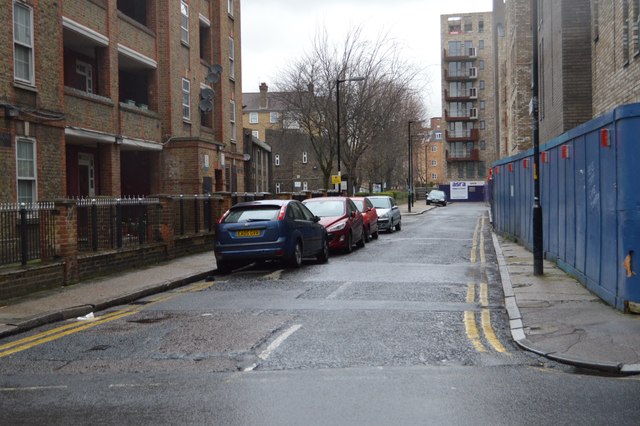
Crown St — near Crown Street
Geograph · CC BY-SA 2.0

Today the street remains much as it was: part of the residential fabric of south London, a place where history is not monumental but intimate, and where memory lives not in plaques but in family stories and local knowledge. But one name echoes louder than the rest.

✦   ✦   ✦
Name Origin

A Sign Above the Door

Like many London streets, Crown Street most likely takes its name from a public house or inn that once stood on or near the site. The ‘Crown’ was an enormously popular name for taverns and alehouses throughout London, often chosen to signal loyalty to the crown or because landlords held leases on Crown land. The exact tavern or inn that gave the street its name has not been documented in surviving records, but the pattern is clear: Southwark’s development in the Victorian era frequently saw streets named after the commercial enterprises that lined them. As neighbourhoods grew and regularised, these commercial landmarks lent their names to the roads themselves.

The street appears in electoral records and Ordnance Survey maps by the 1880s, suggesting development occurred in the preceding decades, likely following improved transport links into the area. The name was already established by the time the first detailed street directories recorded it, indicating that the naming convention was applied relatively early in the street’s formal history as a distinct thoroughfare.

How the name evolved
c. 1870s The Crown Inn
1880s Crown Street
present Crown Street, SE5
✦   ✦   ✦
History

From Development to Local Legend

Crown Street was developed during the period of intensive suburban expansion that transformed Camberwell and Southwark in the second half of the 19th century. Like much of the area, it emerged as part of the building boom that followed improved rail and transport connections into south London. The street was built to house the expanding urban working and lower-middle class population drawn to London’s industrial and commercial opportunities. The terraced housing that forms the street’s character is typical of speculative development of the era: solid, modestly appointed, and designed for rental to tenants of modest means.

Key Dates
c. 1870s
The Crown Inn
A public house of this name likely stood near the site, from which the street would later take its name.
c. 1880s
Street Development
Crown Street emerges as a named thoroughfare in Camberwell, lined with Victorian terraced housing built to house the working population.
1921
Sidney Bates Born
Corporal Sidney Bates is born at Crown Street on 14 June 1921, the son of Frederick Bates, a rag-and-bone man.
1930s
Comber Grove School
Young Sidney attends Comber Grove School nearby, where he earns the nickname ‘Basher’ for his boxing prowess.
6 June 1944
D-Day Heroism
Sidney Bates is awarded the Victoria Cross for his extraordinary bravery during the D-Day landings at Normandy, remaining the only person decorated with Britain’s highest military honour to be commemorated on the British Normandy Memorial.
Did You Know?

Sidney Bates remains the sole Victoria Cross recipient commemorated on the British Normandy Memorial. His entry features a small gunmetal cross—the only one among all 22,442 names on the memorial—signifying his decoration with the highest military award for bravery. He was known to his friends in Southwark as ‘Basher’, a nickname earned through his boxing skills at the local school.

The street’s role in local history is modest but poignant. For most of its existence, Crown Street has been simply what it appears: a residential street where families lived, worked, and raised children. It is one of hundreds of similar streets across Southwark, each with their own untold stories of ordinary lives. Yet the street’s connection to Corporal Sidney Bates has ensured it a place in the broader narrative of wartime sacrifice. Though he did not spend his entire life on Crown Street, his early years there—his childhood in the 1920s and 1930s as the son of a working man, his schooling at Comber Grove, his formation in this landscape of Victorian respectability and working-class dignity—were formative to who he became.

✦   ✦   ✦
Culture

Memory and Local Heritage

Crown Street’s cultural significance is inseparable from the memory of Sidney Bates and the broader heritage of working-class Southwark. The street sits within the Camberwell area, one of south London’s most established residential neighbourhoods, characterised by solid Victorian terraces and a strong sense of community continuity. According to local heritage records, Sidney Bates’s military service and posthumous recognition have ensured that Crown Street remains part of Southwark’s living memory of the Second World War and its sacrifices.

Victorian Terraced Heritage
The Building Stock of Camberwell

Crown Street’s terraced housing exemplifies the Victorian speculative building that transformed Southwark in the late 19th century. These modest, solid houses with bay windows and slate roofs were built for the industrial and working population, and remain occupied today as residential homes, retaining much of their original character and proportions.

The street lacks the grand public heritage assets of other parts of Southwark, but its cultural importance rests on the stories of the people who lived there. Southwark itself is a borough rich in literary and historical associations, and Crown Street is part of this broader tapestry of ordinary lives that constitute local history. The connection to Sidney Bates—a local boy who rose to extraordinary courage in the face of invasion—gives the street a place in the heritage of working-class sacrifice and service.

✦   ✦   ✦
✦   ✦   ✦
People

Courage from Camberwell

Corporal Sidney Bates remains the most prominent figure connected to Crown Street. Born on 14 June 1921 to Frederick and Gladys Bates, Sidney grew up at Crown Street in the 1920s and 1930s, surrounded by the working-class life of Southwark. His father worked as a rag-and-bone man, collecting materials for reuse and recycling—the kind of honest, itinerant work that defined the working poor. Young Sidney attended Comber Grove School nearby, where he earned his nickname ‘Basher’ through his boxing prowess. By all accounts, he was a normal boy of his neighbourhood: athletic, spirited, and rooted in the values of his community.

On 6 June 1944, during the D-Day landings, Corporal Bates performed acts of extraordinary bravery that earned him the Victoria Cross—the highest military decoration for valour in the British honours system. He remains the only recipient of the Victoria Cross commemorated on the British Normandy Memorial, his entry marked with a small gunmetal cross that distinguishes him from the 22,441 other names. The street on which he was born is now part of his legacy, a quiet testimony to the fact that heroism emerged not from privilege or grandeur, but from the ordinary streets of working London.

✦   ✦   ✦
Recent Times

A Street Unchanged

Crown Street has been largely spared from the dramatic regeneration that has transformed other parts of Southwark in recent decades. The terraced housing that lines the street remains fundamentally intact, housing families much as it did a century ago. The area around Camberwell Green has seen modest investment and care, particularly from housing trusts and community organisations working to support long-term residents. The street remains part of the residential character of Camberwell ward, contributing to the distinctive identity of south London’s most established neighbourhoods.

The local significance of Sidney Bates’s story has grown with time, particularly as interest in wartime history and local heritage has expanded. Southwark Heritage, the borough’s community history archive, has documented his story in detail, ensuring that the connection between Crown Street and one of Britain’s most decorated soldiers is preserved in accessible form. The street itself requires no monument or plaque; the memory lives in local knowledge and the historical record.

✦   ✦   ✦
Today

A Residential Street with History

Crown Street remains a quiet residential thoroughfare in the Camberwell Green ward of Southwark, part of the SE5 postcode. The street is composed primarily of Victorian terraced houses, most dating from the 1880s-1900s, built in the speculative development boom that created the characteristic housing stock of south London. These properties retain their original character: modest, solid, well-proportioned bay-fronted terraces with slate roofs and brick chimney stacks. The street forms part of the wider residential context of Camberwell, an area known for its continuity of population and its strong sense of neighbourhood identity.

The nearest railway station is Denmark Hill, approximately 0.8 miles distant, serving the Northern and other lines. The street itself is quiet, dominated by residential use, with Comber Grove School and other local amenities nearby. The main significance of Crown Street today lies not in what can be seen, but in what is remembered: the connection to Sidney Bates remains an important part of local historical consciousness, and the street stands as a quiet reminder that heroism has emerged from ordinary places throughout modern history.

10 min walk
Camberwell Green
Historic public space at the heart of Camberwell, surrounded by local shops and amenities. Recently enhanced with investment in street improvements.
12 min walk
St Giles Park
Small public park near St Giles Church, Camberwell, providing green space within the residential neighbourhood.
15 min walk
Peckham Rye Common
One of south London’s largest green spaces, offering woodland walks, ponds, and meadow habitat. Historic park with cultural events and community use.
18 min walk
Nunhead Cemetery
Victorian cemetery with significant ecological value, mature trees, and notable monuments. Important for local heritage and wildlife.
✦   ✦   ✦
On the Map

Crown Street Then & Now

National Library of Scotland — Ordnance Survey 6-inch, c. 1888. Hosted by MapTiler. Modern: © OpenStreetMap contributors.

✦   ✦   ✦

Frequently Asked Questions

Why is it called Crown Street?
Crown Street most likely takes its name from a public house or inn bearing the Crown sign, which would have been situated on or near the site before the street was formally named. The ‘Crown’ was one of the most common names for taverns and public houses across London. As Victorian development regularised the area in the 1880s, the commercial landmark lent its name to the street itself. The exact tavern has not been documented in surviving records, but this naming pattern was typical of street development in the era.
Who was Sidney Bates?
Corporal Sidney Bates was born on Crown Street on 14 June 1921, the son of Frederick Bates, a rag-and-bone man. He attended Comber Grove School nearby, where he earned the nickname ‘Basher’ for his boxing ability. During the D-Day landings on 6 June 1944, he was awarded the Victoria Cross for extraordinary bravery in the face of enemy action. He remains the only Victoria Cross recipient commemorated on the British Normandy Memorial, distinguished by a small gunmetal cross among the names of 22,442 other service personnel.
What is Crown Street known for today?
Crown Street is known primarily for its connection to Corporal Sidney Bates, one of Britain’s most decorated wartime soldiers. The street itself is a quiet residential thoroughfare in Camberwell, lined with Victorian terraced housing typical of late-19th-century south London development. It remains part of the living community of Southwark and is remembered in local heritage as a place of ordinary lives that produced extraordinary courage. The street exemplifies the residential character of working-class Victorian London that persists to this day.