Southwark London England About Methodology
Southwark · SE5

Albany Road

Named after a royal duke whose Scottish title stretches back to the Gaelic word for Scotland itself — a name that outlasted the canal it once crossed, the streets that once flanked it, and the Victorian terraces that were swept away to make south London’s largest park.

Name Meaning
Land of Scotland
First Recorded
c. 1830s
Borough
Southwark
Character
Urban residential
Last Updated
Time Walk

Between Two Old Roads, One Vast Park

Albany Road cuts a straight line across Walworth, linking the Old Kent Road to the east with Camberwell Road to the west. Both of those roads are ancient; Albany Road is the relative newcomer, built in the early nineteenth century to join them. Today, one side of the road faces Burgess Park, south London’s largest open space, which has consumed the entire fabric of the neighbourhood that once pressed against Albany Road from the north.

2011
Pillar box, Albany Road
Wikimedia Commons · CC BY-SA 2.0
2015
Albany Road, SE5
Albany Road, SE5
Wikimedia Commons · CC BY-SA 2.0
2018
Albany Rd, B214
Albany Rd, B214
Wikimedia Commons · CC BY-SA 2.0
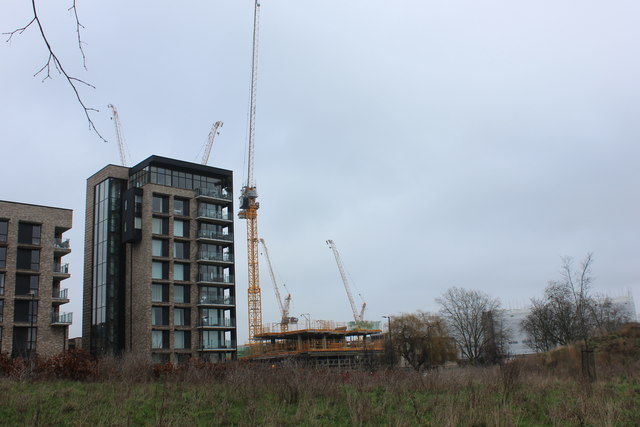
Today
Construction work on Albany Road
Geograph · CC BY-SA 2.0

The street has a dual character: on one side, Victorian and Edwardian terrace houses survive in reasonable condition; on the other, the wide-open green of Burgess Park marks where hundreds of dwellings, corner shops, pubs and side streets once stood. The name hanging above all this has its own long story — one that begins not with builders or landowners, but with a royal title.

✦   ✦   ✦
Name Origin

A Royal Title from the Highlands

That royal title is “Albany” — and it belongs to Scotland. The word derives from Alba, the Gaelic name for Scotland, which the Romans adapted as Albania to describe the highlands north of the Forth. As a ducal title, “Albany” was traditionally awarded to younger sons of British monarchs. The road is most likely named after Prince Frederick, Duke of York and Albany (1763–1827), the second son of King George III, who served as Commander-in-Chief of the British Army. As documented by British History Online, the wider Camberwell area was undergoing rapid suburban development in exactly this period, with streets laid out and named during the 1820s and 1830s when “Albany” was at the height of its royal currency.

The same ducal name gave its identity to Albany Street in Regent’s Park, which was laid out in the 1820s, and to the Albany residential chambers in Piccadilly, which took Frederick’s name when he exchanged Melbourne House for a Whitehall property in 1791. Builder-developers in Walworth were following a well-established naming convention: SE1 Direct notes that South London’s Victorian street grid is dense with titles from George III’s large family. The road’s exact naming date is not recorded in surviving parish documents, but it appears on maps from the 1830s onwards.

How the name evolved
pre-1820s Unnamed lane / field path
c. 1830s Albany Road
present Albany Road
✦   ✦   ✦
History

Canal Bridge, Corner Shop, Cleared Street

The ground Albany Road occupies was, before the nineteenth century, low-lying market garden land. British History Online’s Victoria County History of Camberwell records that the northern lowlands of the parish were “market gardens in great numbers” before the endless small streets of the later Victorian era were built. Albany Road was among the first to cut through this ground, serving as a direct connector between the Old Kent Road coaching route and the Camberwell Road.

Key Dates
c. 1830s
Road Laid Out
Albany Road appears on early maps linking Old Kent Road to Camberwell Road, cutting through former market garden land.
1835
Baptist Chapel
A Baptist chapel on Albany Road was purchased for the use of the Congregationalist community, one of the street’s earliest recorded institutions.
1848
William IV Opens
The William IV public house opens on Albany Road, later one of the last buildings absorbed into Burgess Park before demolition in 2010.
c. 1900
Tenement Era
Private landlords began replacing Victorian terraces with purpose-built tenement blocks to improve profitability in this working-class district.
1940s–80s
Burgess Park Created
Post-war slum clearance and planned open-space creation progressively demolished the streets north of Albany Road, forming what became Burgess Park.
2010
Last Pub Demolished
The long-disused William IV, the last surviving pub within the Burgess Park boundary on Albany Road, was demolished. The site is now an outdoor gym.
Did You Know?

The Grand Surrey Canal once crossed Albany Road near its eastern end. The canal’s route through what is now Burgess Park has been absorbed into the park’s lake, making the former waterway one of the few traces of the street’s industrial past that remains visible today.

By 1835, the street had its first documented religious institution. As recorded by British History Online, a Baptist chapel on Albany Road was purchased for the use of the Congregationalist community that year. The street’s social character at this period was solidly working class: corner shops, tradesmen, fishmongers, doctors’ surgeries and public houses formed a tight commercial fabric. The junction with Calmington Road was a small neighbourhood hub, with a cluster of shops serving the daily needs of the surrounding streets.

Towards the end of the nineteenth century, private landlords in the area began replacing terraced housing with purpose-built tenement blocks — a change typical of working-class Southwark at that time. The most dramatic transformation came after the Second World War, when the London County Council and later Southwark Council pursued large-scale clearance of the densely packed streets north of Albany Road. Whole roads — Secretan Road, Kempshead Road, sections of Cunard Street — were erased. The resulting open land was gradually landscaped into Burgess Park, formally unified in the 1980s. Albany Road became its southern boundary.

✦   ✦   ✦
✦   ✦   ✦
Culture

Dickens’ Walworth and the Pub That Survived Everything

Charles Dickens set large portions of Great Expectations in Walworth — the neighbourhood that Albany Road runs through. Wemmick’s famous “Castle,” the eccentric miniature fortress where Pip visits his clerk friend, was conceived as a Walworth home, the very ordinariness of the surrounding streets making the fantasy all the more pointed. Dickens knew this part of south London well; its working-class density and proximity to Newington and Bermondsey made it ideal material for his particular brand of urban observation.

Albany Road itself was pub territory. The William IV stood from 1848 until 2010, outlasting the Grand Surrey Canal, the Victorian terraces, and the entire neighbourhood around it before being demolished within Burgess Park. The Albany Arms occupied the corner with Cunard Street. The Duke of Edinburgh stood at no. 140. Each pub name — royalist to the last — mirrored the street’s own naming logic.

Literary Landscape
Wemmick’s Castle Country

Charles Dickens placed Wemmick’s eccentric “Castle” in Walworth in Great Expectations, published in 1861. The surrounding streets — dense, working-class, close to the Old Kent Road — provided the social texture Dickens needed. Albany Road sits in exactly this fictional territory, running through the neighbourhood Dickens immortalised as an unlikely place for a miniature drawbridge and a moat.

✦   ✦   ✦
Notable People

The Duke, the Doctor and the Fishmonger’s Family

Prince Frederick, Duke of York and Albany (1763–1827), never set foot on the road that bears his title — but his name shaped it. The second son of George III, he served as Commander-in-Chief of the British Army and was a significant public figure in the Regency period. His ducal name, “Albany,” was among the most fashionable of the 1820s and 1830s, scattered across London’s expanding suburbs by speculative builders seeking a note of distinction.

At street level, the road’s documented residents were more modest. At no. 103, Dr Robert Galloway Whitelaw — a Scottish physician — maintained a consulting room, surgery and dispensary for many decades, records show him resident there in 1917. Next door, the Skelton family ran both a fried fish shop and a fresh fishmonger’s. The business had been founded by Eleanor Skelton, widowed at 38 with eight children, who built it into a two-shop enterprise passed to her son Stephen and eventually to a third generation.

✦   ✦   ✦
Recent Times

Park Edge, Regeneration Pressure

The last physical remnant of the pub culture that once defined Albany Road’s northern side disappeared in 2010, when the derelict William IV was demolished. Shortly before its end, the building was wrapped in ghostly white as part of a community arts project — one final flourish before the wrecking ball. The site became an outdoor gym within Burgess Park, which by then had absorbed a hundred years of street life into open lawn and tree planting.

Southwark Council’s long-running regeneration of the Aylesbury Estate — the vast post-war housing development close to Albany Road to the north-east — has brought sustained construction activity to the wider area since the 2000s. Albany Road itself has seen new residential development on gap sites along its length, and improved access routes into Burgess Park from the road have encouraged its use as a green corridor between Peckham and Camberwell.

✦   ✦   ✦
Today

One Side Victorian, One Side Green

Albany Road today is a street of two faces. The southern side retains Victorian and Edwardian terrace houses, mostly converted to flats. The northern side opens directly onto Burgess Park — 56 hectares of green space carved from the urban fabric over half a century of clearance. The contrast is abrupt: bay windows and brick on one side; hawthorn, path and open sky on the other. The street feels wider than it is, precisely because half its former context has gone.

The stretch near the Old Kent Road end retains more commercial activity — small shops, a fire station, and the corner that once marked the Thomas a Becket pub on Old Kent Road. For those who know the area, Albany Road is still a through-route. For those who don’t, the park edge makes it feel like a boundary. Both readings are correct.

Immediately adjacent
Burgess Park
South London’s largest park, formed from cleared Victorian streets. Includes a lake (former canal), sports facilities, and community gardens.
10 min walk
Myatt’s Fields Park
Victorian pleasure ground in Camberwell, with formal bedding, a bandstand and a well-preserved 19th-century layout.
12 min walk
Kennington Park
Historic open space on the site of Kennington Common, where Chartist rallies were held in 1848. Rose garden and sports pitches.
Wildlife
Burgess Park Lake
The former Grand Surrey Canal channel, now a freshwater lake supporting herons, moorhens and migratory wildfowl in the heart of the urban park.
✦   ✦   ✦
“Market gardens in great numbers” occupied the low ground north of Camberwell before the endless small streets of the later Victorian era were built upon it.
British History Online — Victoria County History of Surrey, Camberwell
✦   ✦   ✦
On the Map

Albany Road Then & Now

National Library of Scotland — Ordnance Survey 6-inch, c. 1888. Hosted by MapTiler. Modern: © OpenStreetMap contributors.

✦   ✦   ✦

Frequently Asked Questions

Why is it called Albany Road?
Albany Road is most likely named after Prince Frederick, Duke of York and Albany (1763–1827), the second son of King George III. Developers across South London favoured royal and aristocratic names during the Georgian and early Victorian building booms of the 1820s and 1830s, when the road was laid out. The title “Albany” itself derives from the Gaelic Alba, the ancient name for Scotland, and was traditionally given to younger sons of British monarchs.
What was Albany Road like in the 19th century?
In the nineteenth century Albany Road was a working-class residential street of terraced houses linking the Old Kent Road to Camberwell Road. It crossed the Grand Surrey Canal, was lined with corner shops and public houses, and had a Baptist chapel purchased for Congregationalist use in 1835. By the late Victorian period, private landlords had begun replacing terraced rows with tenement blocks to improve profitability in this densely populated district.
What is Albany Road known for?
Albany Road is best known today for its position along the southern edge of Burgess Park — south London’s largest park — which was carved out of densely built Victorian streets from the 1940s onwards, erasing many of the roads that once intersected Albany Road. The street also sits in the heart of Walworth, the neighbourhood Charles Dickens drew on for the Walworth scenes in Great Expectations. The former Grand Surrey Canal, which once crossed the road near its eastern end, is now preserved as Burgess Park lake.