Time Walk
A Side Turning with Three Surprises


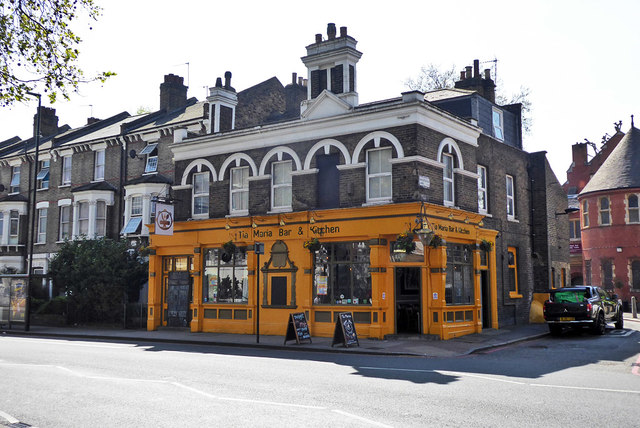
A quiet turning off South Lambeth Road hides a mission hall with a tower. Walk it today and three Victorian survivors stand close together: a former pub, a red-brick hall with a round turret, and a short terrace of housing, all tucked into an intimate corner of Vauxhall.
Beneath the ordinary surface of a side street, this short run of buildings marks where a largely rebuilt area still shows its nineteenth-century face. The lane's own name is the next puzzle worth pausing on.
Name Origin
A Name Without an Explanation
The lane takes its name from the former Wheatsheaf public house that once stood here. Why the pub itself was called the Wheatsheaf is not explained in the sources used here, and no further record of the naming survives in this pack.
History
Pub, Hall, and Terrace
Three buildings define the lane's Victorian character. The former Wheatsheaf public house dates to the 19th century, built in a Jacobean style with leaded lights and a mansard roof on its flank facing the lane. A short terrace of Victorian housing at Nos. 128-136 stands alongside it, and together the three buildings form a townscape group.
The lane's southern end, at its junction with Walton Close, marks the southern boundary of the Vauxhall Conservation Area.
Wheatsheaf Hall's round tower, with its conical roof and rows of round-headed windows, still marks the lane out from its plainer Victorian neighbours.
Today
The Edge of Vauxhall's Old Streets
Wheatsheaf Lane remains a small, intimate street south of Wyvil Road Primary School. Its pub, hall and terrace still stand together as the group that marks the southern edge of the Vauxhall Conservation Area. It is a short lane, but one that carries a name whose origin the surviving records do not spell out.
On the Map
Wheatsheaf Lane Then & Now
Frequently Asked Questions
Why is it called Wheatsheaf Lane?
The lane is named after the former Wheatsheaf public house that stood on it. Why the pub itself bore that name is not explained in the sources used here.
What is Wheatsheaf Lane known for?
It is known for its small group of Victorian buildings: the former Wheatsheaf pub, the Grade II listed Wheatsheaf Hall of 1896 with its round tower, and a short terrace of housing at Nos. 128-136.
Is Wheatsheaf Hall a listed building?
Yes. Wheatsheaf Hall, a former Congregational mission hall built in 1896, was given Grade II listed status in 1975.