Time Walk
A Road Built on Drained Ground


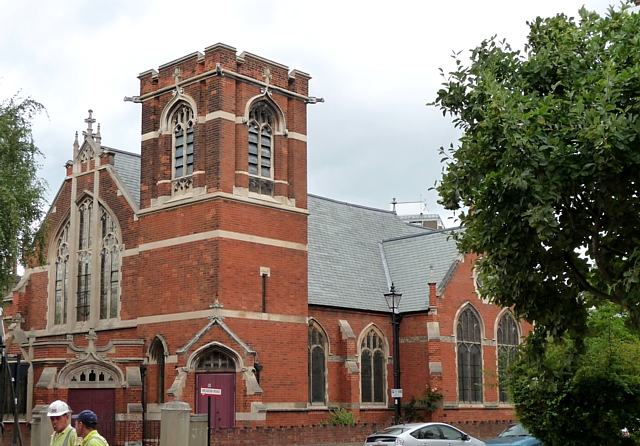
This whole street was once stagnant marsh, drained by one family so it could be built on. Walking it today, three things stand out: the red-brick gables of a Tudor-style almshouse, a pub with a curved corner, and quiet rows of deep red brick with Queen Anne flourishes.
Beneath the neat terraces lies that story of reclamation. The ground was drained at private expense early in the 19th century, long before the road was cut through it. That act, and the family who carried it out, gave the street its name.
Name Origin
The Fentiman Family's Marsh
Fentiman Road is named after John Fentiman, a local developer active here in the early 19th century. In 1801 he bought the Claylands demesne ground and drained it at his own expense, the site being described as very marshy with stagnant pools. He then built himself a handsome mansion, which stood south of the Oval opposite the end of Claylands Road.
Fentiman went on to buy 32 acres of copyhold land in 1806, and in the same year agreed that Dorset Road, then South Lambeth New Road, should remain open to the public for ever. He died in 1820. His son, also John Fentiman, took on the remaining 30½ acres and was admitted in 1823 as a brick merchant of Camberwell. The road itself was laid out around 1838, on a line just south of Caron House, cutting through what had been that house's garden ground.
History
Almshouses, Chapels and Candle Works
Long before the road existed, charity had already marked this ground. Noel de Caron founded an almshouse in 1618 for seven women over 60, stipulating in his will that whoever occupied his house in South Lambeth should pay an annual rent of £28, from which a pension of twenty shillings was paid quarterly to each almswoman. By 1853 the old building was unsuitable for aged persons, and the site was sold to Price's Patent Candle Company for £1,500. New almshouses, in Tudor style with rich red brick and stone dressings, went up on the north side of Fentiman Road in 1854, next to what is now Vauxhall Park. The old site later passed to the Phoenix Gas Light and Coke Company in 1865, and by the 1950s had been absorbed into the South-Eastern Gas Board's works. The Victoria County History gives a different account, dating the founding to 1628 and the rebuilding to 1832, so the two sources disagree on the exact dates.
Two more almshouses, founded in Westminster at the end of the 17th century, were moved to Stanley Close on Fentiman Road shortly after 1855. George Whicher's will of 1680 had provided £1,500 for six old men; Judith Kifford's will of 1698 left £300 for two decayed virtuous poor gentlewomen
. In 1836 John Fentiman granted a lease of land on the north side of Claylands Road for a new chapel, which opened that June with Dr John Styles as minister until 1844. At the turn of the century a Methodist Church was built on Fentiman Road itself, erected in 1900–1 for a congregation founded at a chapel in Miles Street in 1854. It is a red brick building with a short tower, and was renovated in 1954.
Two sources give different histories for Caron's Almshouses: the Survey of London dates their founding to 1618 and their rebuilding to 1854, while the Victoria County History dates the same institution to 1628 and 1832.
Culture
A Mother and Children in Concrete
The relief can still be seen on the estate frontage today.
People
Founders, Brick Merchants and a Bombing
The road's namesake, John Fentiman, drained the marsh here and gave the street its name; his son carried the family's dealings forward as a Camberwell brick merchant.
Two 17th-century benefactors are remembered in the almshouses that later stood here. George Whicher's will of 1680 endowed a home for six old men; Judith Kifford's will of 1698 provided for two women she described as decayed virtuous poor gentlewomen
.
"decayed virtuous poor gentlewomen"Judith Kifford's will, 1698
War reached the street directly on 5 January 1945, when a V1 flying bomb hit No. 87, where Hubert Escott Borlase, then 72 years old, was living.
Recent Times
Protection and Development Pressure
By 2016, only the western section of the road, west of its junction with Meadow Road, had been drawn into the Vauxhall Conservation Area, while properties at that end were also judged to belong to Vauxhall for planning purposes. An Article 4 Direction removing permitted development rights was placed on Nos. 105–189. A resident spoke in 2016 in favour of protecting the street's historic buildings as development pressed in from Nine Elms.
Today
A Broad, Leafy Street
Fentiman Road remains a broad, leafy residential street. The Fentiman Arms, a mid-19th century pub with a curved corner, stands at No. 64 on the corner with Caroun Road. Nearby, Nos. 105–129 form an ornate late Victorian terrace with lavish Queen Anne detailing, while No. 104 is a symmetrical mid-19th century villa, and Nos. 106–112 are protected tall pairs of the same period. The street that began as drained marshland is now one of protected terraces.
On the Map
Fentiman Road Then & Now
Frequently Asked Questions
Why is it called Fentiman Road?
It is named after John Fentiman, a local developer who drained the marshy Claylands ground from 1801 and later bought up land in the area; the road itself was laid out around 1838.
What is Fentiman Road known for?
It is known for Caron's Almshouses, founded in 1618 and rebuilt here in 1854, its ornate late Victorian terraces, and a 1952 concrete relief by sculptor Peter Laszlo Peri on Horton House.
When was Fentiman Road laid out?
The road was laid out around 1838, on a line just south of Caron House, cutting through what had been the house's garden ground.