Time Walk
A Quiet Street Behind the High Road


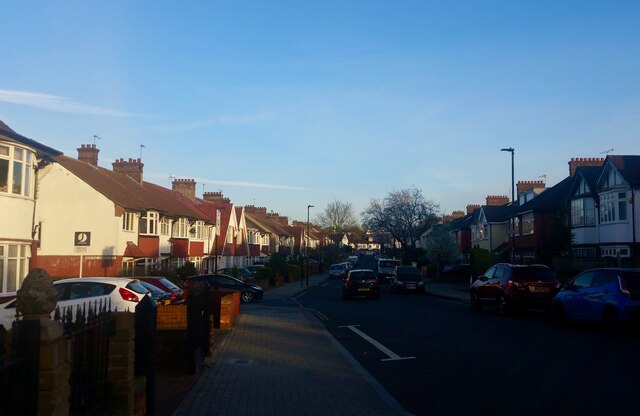
A blue plaque on an ordinary house marks where a knighted composer once lived. Walking Pendennis Road today, the eye catches red-brick gables, tile hanging on one detached house, and a church tucked among the villas. It feels like any Streatham side street until that plaque stops you.
Beneath the brickwork lies a street whose own name the records used here never explain. What they do preserve, in detail, is who built here and who lived here — which is where this walk must turn next.
Name Origin
An Unexplained Name
The sources used here do not explain where the name Pendennis Road comes from. No reference to a person, a place, or a naming event survives among the records consulted for this page.
History
Church, Gables and a Shaw Attribution
A Presbyterian church was recorded standing in Pendennis Road in the Victoria County History account of Streatham parish, published in 1912. Nearby, Nos. 55 to 63 Streatham High Road run between Pendennis Road and Pinfold Road, a red-brick terrace with decorative gables, dated to around 1900 in one report and around 1902 in another.
At 5 Pendennis Road stands a detached Arts and Crafts house in red brick with tile hanging, reputedly designed by Richard Norman Shaw. A short distance along, Nos. 11 and 13 form a semidetached pair noted for their group value.
Culture
A Composer's House
People
The Man Behind the Plaque
Sir Arnold Bax lived at 13 Pendennis Road, where he is now marked by a blue plaque. Beyond composing concert music and poetry, he wrote the score for David Lean's Oliver Twist.
Today
Gables, Brick and a Blue Plaque
Pendennis Road today presents the same mix the surveys describe: a Presbyterian church, Edwardian terraces with decorative gables nearby, and the tile-hung Arts and Crafts house at No. 5. At No. 13, the blue plaque to Sir Arnold Bax remains the street's single most specific claim to fame.
On the Map
Pendennis Road Then & Now
Frequently Asked Questions
Why is it called Pendennis Road?
The sources used for this page do not explain the origin of the name Pendennis Road.
What is Pendennis Road known for?
It is known for the blue plaque to composer Sir Arnold Bax at No. 13, and for its Edwardian houses, including an Arts and Crafts house at No. 5 reputedly designed by Richard Norman Shaw.
Who was Sir Arnold Bax?
Sir Arnold Bax (1883–1953) was a composer and poet who lived at 13 Pendennis Road, now marked by a blue plaque, and who wrote the score for David Lean's film Oliver Twist.