Time Walk
A Terrace Almost Entirely Listed


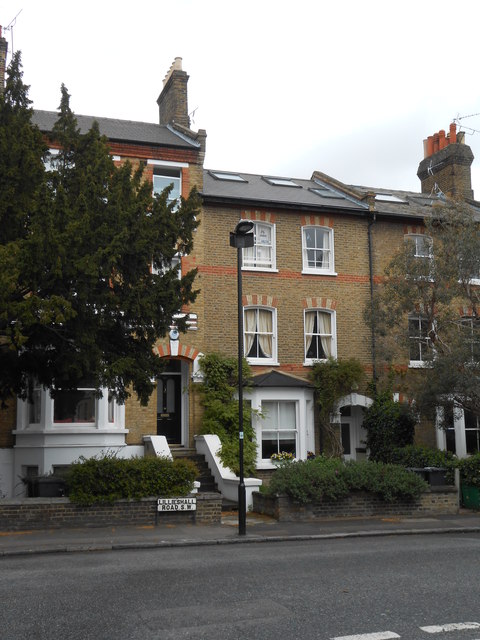
Almost every house on Lillieshall Road carries a listing number. It's a short, quiet run of brick cottages and terraces, with the odd stucco front or gable end breaking up the brickwork, the oldest pair dated to around 1830.
Beneath that unbroken run of brick and stucco lies a street built up gradually, house by house and pair by pair, in the decades before Victoria came to the throne. That piecemeal growth is the clue to its name — or rather, to the absence of one.
Name Origin
An Unexplained Name
The sources used here do not explain why the street was called Lillieshall Road. No naming record, lease or map reference has turned up among the material consulted for this page.
History
Built in Pairs and Short Runs
Lillieshall Road grew in small instalments rather than as a single planned terrace. The oldest buildings to survive are Nos 11 and 13, a pair of semi-detached cottages of about 1830, built in stock brick with slate roofs and a shared brick ridge stack. Close by, Nos 15, 17, 19 and 21 form a longer run of early-to-mid 19th-century houses, also in stock brick, with a parapet along the roofline.
Further along, the street shows real variety of detail for such a short road. Nos 27 and 29 have a frieze cornice; Nos 8 and 10 carry coped gables; No. 26 has pilasters flanking its door; No. 24 has a round-headed doorway; and Nos 23 and 25 are rendered in stucco with gable ends, a contrast to their brick-faced neighbours. Nos 12, 14, 16 and 18 form another long run under a parapet, while Nos 20 and 22, and Nos 5, 7 and 9, complete the pattern.
Almost the whole street was listed Grade II on a single day, 17 July 1978. One pair, Nos 8 and 10, followed later, listed on 27 March 1981.
Ten separate Historic England list entries cover Lillieshall Road, nearly all dated to the same day — 17 July 1978 — suggesting the whole street was surveyed and listed together.
On the Map
Lillieshall Road Then & Now
Frequently Asked Questions
Why is it called Lillieshall Road?
The sources used for this page do not explain the origin of the name. No naming record, lease or map reference for it has been found among the material consulted.
What is Lillieshall Road known for?
For a short residential street, an unusually high number of its buildings are Grade II listed — ten listing entries in total, covering most of its houses and cottages, built in the early-to-mid 19th century.
What is the oldest building on Lillieshall Road?
Nos 11 and 13, a pair of semi-detached stock-brick cottages with slate roofs, are dated to around 1830, making them the earliest dated buildings on the street.
When were the Lillieshall Road houses listed?
Most were listed Grade II on 17 July 1978. Nos 8 and 10 were listed separately, on 27 March 1981.