Time Walk
A Road Built for a Hospital


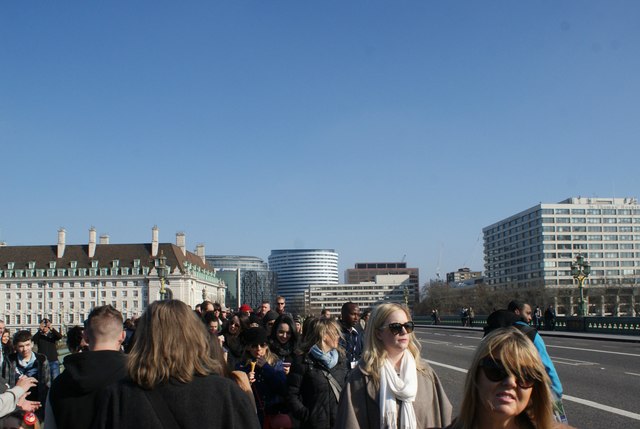
This road exists because a hospital needed a new home. Walk its length today and the hospital still dominates — its wards and wings rising on one side, the old brick wall of Lambeth Palace running close on the other. The road curves rather than runs straight, a deliberate bend put in during the 1960s to keep traffic clear of the hospital as it grew.
Underneath the pavement lies reclaimed river ground. Before the road was built here it was marshy shoreline known as Stangate, with a narrow path called Bishop's Walk running in front of the palace that gives the road its name. That path was swallowed into the new road when it was cut through in the late 1860s.
Name Origin
The Archbishop's Doorstep
Lambeth Palace Road takes its name directly from Lambeth Palace, which it borders along its western side — the official London residence of the Archbishop of Canterbury, standing on the south bank of the Thames a few hundred yards from the Palace of Westminster.
The underlying place name, Lambeth, is thought to come from the Old English for "lamb" and "hythe", meaning a landing place — a harbour from or to which lambs were shipped. The road is therefore named twice over for the same stretch of riverbank: once for the sheep-landing that gave the district its name, and once for the archbishop's house that gave the road its own.
History
From Stangate to the Embankment
The road was laid out on reclaimed ground once called Stangate, following the construction of the Albert Embankment between 1866 and 1870. It runs parallel to the Thames from Lambeth Bridge down to Westminster Bridge Road.
The newly cleared riverside land was the reason St Thomas' Hospital moved here at all: the hospital, needing a fresh site, took the ground near Stangate that the embankment works had just reclaimed. Queen Victoria laid its foundation stone in 1868 and opened the finished building in June 1871. Henry Currey, the hospital's architect, designed it in separate pavilion blocks rather than one large building — a layout probably owed to Florence Nightingale, who had been consulted both on the hospital's move from Southwark and on the new design.
Older fittings travelled with the hospital. Four statues of cripples, first put up over the Borough hospital's gate in 1682, were re-erected either side of the new main entrance facing the road. A statue of Edward VI from the same year was set between the first two blocks, and a marble statue of Sir Robert Clayton, president of the hospital from 1692 to 1707, carved by Grinling Gibbons's workshop in 1701–2, came from Southwark to stand in the medical school's triangle.
The road grew further buildings through the early twentieth century. St Thomas' House for medical students, designed by Harold Wynne Currey, went up on the east side in 1925–27, and Riddell House, a nurses' home by Sir Edwin Cooper, followed next door in 1936–37. The old brick wall of Lambeth Palace facing the road was re-faced in the 1860s.
War and rebuilding reshaped the hospital again. After Second World War bomb damage, rebuilding began with the East Wing in 1962; new thirteen-storey ward blocks and a piazza over a car park followed, requiring the road itself to be realigned away from its original straight course. A further thirteen-storey North Wing was completed by John Laing in 1975.
The Edward VI statue standing outside St Thomas' Hospital was carved in 1682 by Thomas Cartwright to Nathaniel Hanwell's design, commemorating the 1551 charter by which the boy king re-founded the hospital after its Reformation closure.
Culture
Statues, Fountains and a Memorial to Agents
The road carries a small trail of sculpture alongside its hospital buildings. Outside the main entrance stands "Cross the Divide" by Rick Kirby, two stainless steel figures reaching toward each other, unveiled in 2000. In the formal garden of the hospital's piazza is a Torsion Fountain, based on a 1929 design by Naum Gabo and erected in 1973.
Before any of this, the road's southern end once bordered Astley's Amphitheatre, which stood on the triangle of ground between Westminster Bridge Road, Lambeth Palace Road and Stangate from 1843 to 1893. A century earlier still, sanitary engineer George Jennings ran a pottery depot here for the business he had built up since setting up his own firm in Lambeth in 1837; he went on to install the first public conveniences at the Great Exhibition in 1851 and patented the first syphonic cistern in 1854. The sculptor Bernard Schottlander is connected to the road through his work at Becket House.
People
A Poisoner, a Queen, and Five Agents Who Did Not Return
In 1891 the man who became known as the Lambeth Poisoner took lodgings at 103 Lambeth Palace Road. Thomas Neill Cream had trained at St Thomas' Hospital Medical School and gained further qualifications in Edinburgh in 1878; he went on to murder up to ten people with strychnine in three countries before being hanged in November 1892.
Queen Victoria laid the hospital's foundation stone and later opened it. Florence Nightingale never stood on the road itself in the record consulted here, but her advice shaped the pavilion buildings that still line it.
Five names on the SOE memorial mark women who passed through occupied France rather than this road: Sonia Olschanezky, a courier in the Juggler circuit; Yolande Beekman, a wireless operator with Musician; Vera Leigh, of the Donkeyman circuit; Andrée Borrel, code named Denise; and Diana Rowden, a courier for Acrobat. All were captured by the Gestapo and executed in 1944.
Today
Still a Hospital Road
Lambeth Palace Road still does the job it was cut for: it carries traffic past the hospital rather than through it. Lambeth Palace's new purpose-built library, with its own public entrance on the road, opened in 2021, adding a modern front to the old archbishop's wall. A protected 1935 telephone kiosk still stands at the junction with Albert Embankment. The road remains, as it has been since the 1860s, a thoroughfare built to serve the institutions on either side of it rather than a destination of its own.
On the Map
Lambeth Palace Road Then & Now
Frequently Asked Questions
Why is it called Lambeth Palace Road?
It is named after Lambeth Palace, the Archbishop of Canterbury's London residence, which the road borders to the west. The underlying name Lambeth is thought to combine Old English words for "lamb" and "hythe", a landing place.
What is Lambeth Palace Road known for?
It is the home of St Thomas' Hospital, rebuilt here in 1868–71 after the Albert Embankment reclaimed the riverside ground once called Stangate. It also carries the SOE Agents Memorial and a run of statues brought over from the hospital's old Southwark site.
When was Lambeth Palace Road built?
It was laid out between 1866 and 1870 as part of the Albert Embankment works, on ground that had earlier been a path called Bishop's Walk, recorded in 1841. It was realigned to its present curved course in the 1960s.