Time Walk
A Street That Replaced a Windmill


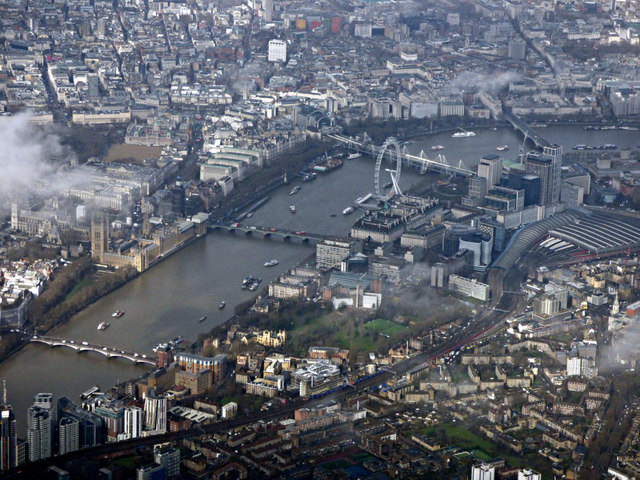
A windmill once ground Lambeth's grain here, long before any houses stood. Today the street carries an archbishop's name, with nothing above ground to show the mill ever existed.
Underneath the street plan is the memory of that working mill, mapped and taxed across the eighteenth century under its old name, Mill Street — the key to why the street was renamed at all.
Name Origin
From a Working Mill to an Archbishop
Juxon Street was formerly known as Mill Street. Its current name honours William Juxon (1582–1663), Bishop of London from 1633 until Parliament deprived him of the see in 1646, and Archbishop of Canterbury from 1660 until his death in 1663.
The earlier name pointed to an actual windmill, shown on Rocque's map of 1741–45 to the west of Three Coney Walk, close to the site later occupied by Mill Street. The sources used here do not explain exactly when the name changed from Mill Street to Juxon Street.
History
The Mill That Vanished Under a Viaduct
A mill stood on or near this ground from at least the 1730s. A drawing by Bernard Lens in 1735, titled "a view of the Palace of Lambeth," shows a tower mill with four sails standing before the palace as seen from the river.
A succession of tenants worked it across the century. The druggist George Rudd held the tenancy in 1760; after his death it passed in 1788 to trustees including John Field, an apothecary. Rate books record the occupiers directly: Thomas Corner was charged 15 shillings on a rateable value of £30 in 1770, and the 1773 rate book carries an entry for "Thomas Corner for ye Mill" after Paradise Row — an entry with no equal in later years.
John Fleet became the miller in 1809, but the London Gazette of 3 August 1811 recorded him in bankruptcy. A Mr B Holden then took over, holding the mill until 1820. A watercolour by H. Pyall from that year depicts it as a seven-storey tower, circular and stone-built, with an upper ten-sided wooden section. The mill site was obliterated by a railway viaduct sometime during the century that followed 1788.
The 1773 rate book entry "Thomas Corner for ye Mill" appears only once — no later year's rate book repeats it, though Corner's tenancy is also recorded in 1770.
"Thomas Corner for ye Mill"Lambeth rate book, 1773
People
The Archbishop Behind the Name
William Juxon was born in 1582, probably in Chichester, and educated at the Prebendal School and Merchant Taylors' School before gaining a scholarship at St John's College, Oxford, in 1598. He became vicar of St Giles' Church, Oxford, in 1609, and rector of Somerton, Oxfordshire, from 1615.
In December 1621 he succeeded William Laud as President of St John's College. His rise at court followed: Clerk of the Closet to Charles I in 1632, Bishop of London in 1633, and in March 1636 Lord High Treasurer of England and First Lord of the Admiralty, posts he held until May 1641.
Parliament deprived him of the See of London on 9 October 1646, when the Long Parliament suppressed episcopacy. At the Restoration, letters missive of 2 September 1660 named him restored Bishop of London and Archbishop of Canterbury, an office he held until his death in 1663.
On the Map
Juxon Street Then & Now
Frequently Asked Questions
Why is it called Juxon Street?
It is named after William Juxon (1582–1663), Bishop of London from 1633 and Archbishop of Canterbury from 1660. The street was formerly called Mill Street.
What is Juxon Street known for?
It stands on or near the site of a windmill recorded from the 1730s to the 1820s, which was later obliterated by a railway viaduct.
What was Juxon Street called before?
It was known as Mill Street, a name tied to a working windmill shown on Rocque's map of 1741–45 and recorded in Lambeth's rate books through the 1770s.