Time Walk
A Road Built for an Enclosure


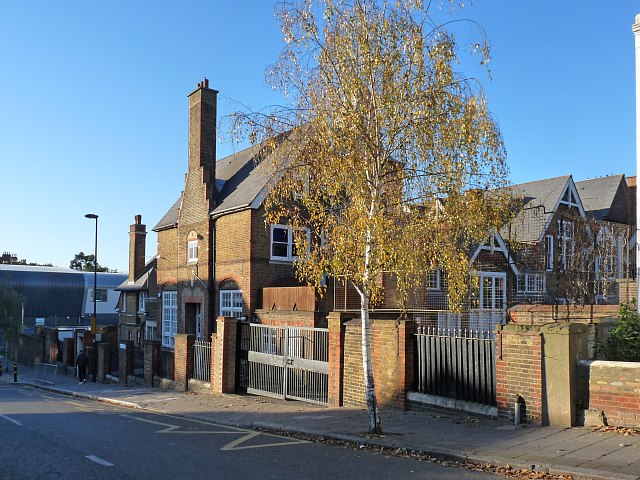
This road exists because common land was fenced off in 1810 and someone needed a way in. Today it carries a Victorian Baptist church, a pair of listed Georgian houses, and two old pubs, one a former Italianate mansion.
Underneath the shopfronts and school railings is a much older story: woods where gipsies once camped, long before the inclosure commissioners drew their lines. That name is where this walk should really begin.
Name Origin
The Woods Above the Road
Gipsy Road shares its name with Gipsy Hill, which climbs south from it. The Survey of London explains where that name comes from.
Gipsy Hill, it records, "gets its name from the gipsies who encamped in the woods there for many years." A building called the Gipsy House once stood near the railway, by Oaks Avenue, a further trace of the name on the ground.
"gets its name from the gipsies who encamped in the woods there for many years"Survey of London, Vol 26, Norwood: Introduction
History
From Common Land to Suburban Street
Gipsy Road did not grow organically out of a village lane. It was provided for in the 1810 Award of the Lambeth Manor Inclosure Commissioners, drawn up to give access to newly enclosed land on Rush Common and Norwood Common. In 1823 the parish Surveyors of the Highways took the new road, and others like it, into their keeping.
Building came gradually. Nos. 3 and 5 were put up under a 65-year building lease granted in 1832 to John Loat, a builder, and were already described as "lately erected" by 1842. They are a pair of houses sharing a front, with a small round window set in a triangular gable above. Historic England listed them in 1981.
Later in the century the road filled with institutions. Gipsy Road Baptist Church went up in 1881–2 at a cost of £5,000, probably designed by the builder Richard Henry Marshall, and was extended in 1890. Two board schools followed close together: Gipsy Hill Primary School opened in 1875 to a design by E. R. Robson, with a Junior Mixed School added in 1895–6, opening in 1896 for 410 children. Kingswood Primary School, also on Gipsy Road, opened in 1880 for 600 children to Robson's design, and was extended in 1904–5.
Culture
Ragstone and a Steep Staircase
The Baptist church gives the road its most distinctive building. Within a decade of its building it hosted at least one Norwood wedding: William Farmer and Annie Louisa Cutter married there in June 1891.
A former church building on the road, the Gipsy Hill Vestry, now survives as flats — a mid-19th century stone building with a gabled front, pinnacles, lancet windows and rose tracery, still entered up its original flight of steps.
People
Weddings, Widows and War
Annie Louisa Farmer, married at the Baptist chapel in 1891, went on to edit the Norwood Review between 1907 and 1912. Mary Ann Bagshaw, widow of John Bagshaw MP, was living at Cambledon Villas on Gipsy Road at the time of her death in 1891.
The road's 20th-century households included loss as well as ordinary life. Joseph Russell lived at 156 Gipsy Road with his wife Emma before he was killed in action in France on 28 May 1917; Emma was still recorded at the same address in 1939, by then a widow. Next door at No. 154, Howard Frederick John Hales and his wife Margaret Irene were living in 1939.
Today
Still the Road Up to Gipsy Hill
Gipsy Hill still rises south from Gipsy Road, the line it has always traced. Two older pubs remain landmarks on the road: the Two Gipsy, a modest 19th-century pub remodelled between the wars, and the Mansion House, formerly the Paxton Arms, an Italianate building with a central tower.
On the Map
Gipsy Road Then & Now
Frequently Asked Questions
Why is it called Gipsy Road?
It shares its name with neighbouring Gipsy Hill, which the Survey of London says got its name from gipsies who encamped in the nearby woods for many years.
What is Gipsy Road known for?
Its Victorian Baptist church, two 19th-century board schools, a pair of Grade II listed Georgian houses at Nos. 3 and 5, and its origins in the 1810 Lambeth inclosure of Rush Common and Norwood Common.
How old is Gipsy Road?
It was provided for in the 1810 Award of the Lambeth Manor Inclosure Commissioners and taken over by the parish Surveyors of the Highways in 1823.