Time Walk
Under the Arches to Lambeth Palace

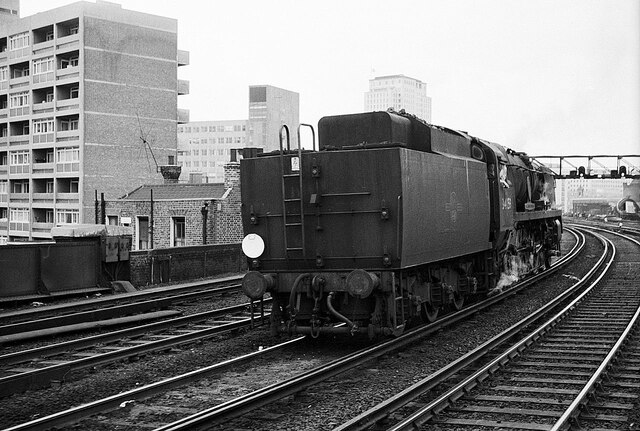
A bishop's house that outlasted three dynasties gave its name to a lane that outlasted the house itself. Carlisle Lane now winds beneath the railway arches carrying trains into Waterloo, bounding the east side of Archbishop's Park, with allotments and a park maintenance yard tucked along its southern stretch.
Nothing of Carlisle House remains to see. What a walker finds instead is a back lane shadowed by viaduct brick, its older identity surfacing only in the name on the street sign. Beneath that ordinary surface lies a story of bishops, potters and glassmakers — which Name Origin takes up next.
Name Origin
A Bishop's House in Lambeth Marsh
The lane is named after Carlisle House, which once stood nearby in Lambeth Marsh. The house began as "La Place", granted by the Archbishop of Canterbury to the Bishop of Rochester in 1197. It changed hands under Henry VIII in 1539, when the Bishop of Carlisle took La Place in exchange for his house near Temple Bar — while Lord John Russell took the Bishop of Carlisle's former house, and the Bishop of Rochester moved on to Lord John Russell's house in Chiswick.
Carlisle House stood near the north-east corner of the Lambeth Palace grounds. Writing in 1878, Edward Walford noted that Carlisle Lane "keeps in remembrance" the old house, and that the house itself had stood on the site between the thirteenth and sixteenth centuries.
"Carlisle Lane ... keeps in remembrance" Carlisle HouseEdward Walford, Old and New London, 1878
The street was itself formerly called Carlisle Street before the name Carlisle Lane took hold. Its northern end was once known as Back Lane, and the stretch to the south — where the lane widened and Carlisle House stood — was called The Green.
History
From a Pottery Kiln to a Railway Viaduct
Carlisle House passed through an unusually mixed set of uses after the Restoration. It was sold in 1647 and reverted to the see of Carlisle by 1660. By about 1690 part of it was a pottery, and by 1720 it had two white kilns producing stoneware alongside two stone kilns. The pottery closed around 1730 and the building became a tavern.
Later the house turned domestic and scholarly. In 1763 it was leased to John Baptiste Le Maire Froment, a dancing master. By 1786 it was a private house, then an academy for young gentlemen; in 1826 its master, R. Bennet, published several books for children. In 1827 the Bishop of Carlisle obtained an Act to grant building leases on his Lambeth property, and the house — by then "very ancient and much out of repair" — was pulled down. Its grounds, lying between Hercules Road and Carlisle Lane, were cut into streets and built over by Robert Armstrong of Hercules Buildings and John Woodward of Crozier Street, Stangate. Walford recorded that around eighty small houses went up on the site, including Allen and Homer Streets and parts of Carlisle Lane and Hercules Buildings.
No. 20 Carlisle Lane had already been built for the gardener of Lambeth Palace after a new kitchen garden was laid out beside the lane in 1784. Nos. 35–41, a neat terrace, went up around 1827 on part of the old Carlisle House grounds; it was originally seven houses long but was cut short late in the nineteenth century when the railway was widened. That widening was part of a longer process: in the 1840s the line from Nine Elms was extended to Waterloo, and the resulting viaduct on the east side of Carlisle Lane required the demolition of terraced houses, with further viaduct widening and demolition following as the railway grew in the 1900s.
By 1720 Carlisle House had two kilns making fine white stoneware, decades before the site became the churchyard-adjacent lane known today.
Culture
A Madonna from Bruges and a Red Cross by the Railway
Holy Trinity Church stood out from the lane's terraced houses with its small south-east tower showing Romanesque touches. In 1851 a marble font given to St Mary's Church by John Hart in 1615 was moved there. The church was seriously damaged by bombing during the 1939–45 war.
Industry left its own mark. Jessie Rust opened a glass works at 43 Carlisle Lane in 1846, making flint, opaque and coloured glass and specialising in decorative mosaics, before the works moved away in 1870.
Recent Times
From Schoolroom to Buddhist Centre
Holy Trinity Primary School's buildings on the lane date from 1847. Between 1998 and 2007 the school building was used as the Kagyu Samye Dzong London, a Buddhist centre. Nearby, Southbank Mosaics artists worked with some 300 volunteers over seven years to install mosaics based on the words and paintings of William Blake on the walls of the railway tunnels along the lane.
Today
Still in the Shadow of the Bishops
Carlisle Lane still runs in the shadow of the railway that once tore through it. The bishop whose house it remembers left no building behind, only a name that survived the pottery, the tavern, the school and the bombs.
On the Map
Carlisle Lane Then & Now
Frequently Asked Questions
Why is it called Carlisle Lane?
It is named after Carlisle House, a mansion granted to the Bishop of Rochester in 1197 and passed to the bishopric of Carlisle in 1539. The house stood nearby until its demolition in 1827.
What is Carlisle Lane known for?
It is known for Holy Trinity Church, consecrated 1839 and designed by Edward Blore, and for the railway viaducts into Waterloo that run alongside it, which led to the demolition of several of its houses.
Was Carlisle House always known by that name?
No. It began as "La Place" under the Bishops of Rochester from 1197, before passing to the bishopric of Carlisle in 1539, after which it became known as Carlisle House.
What stood on the site before the modern houses?
Carlisle House itself, which by the early 18th century contained a pottery making white stoneware, and later a tavern, a dancing school and a boys' academy, before its demolition in 1827.