Time Walk
A Lane Where a Duke's Mansion Once Stood
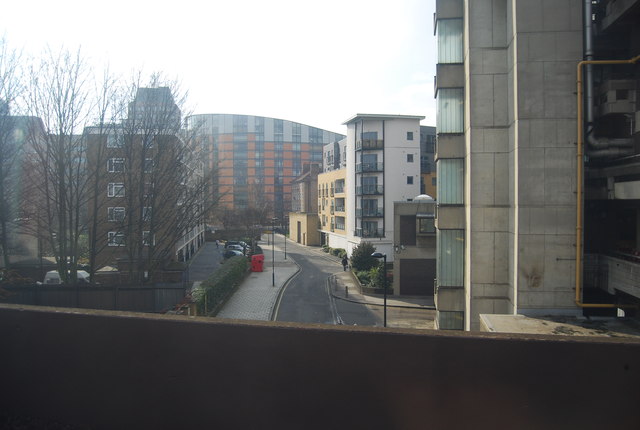
A future queen once played in the gardens that this quiet Lambeth lane now crosses. Walk it today and you find a narrow residential row, a corner building called Norfolk House, and little else to suggest a duke once lived here.
Beneath the pavement lies a much older story: a cartway recorded in 1610, cut through ground once part of a great mansion's orchards. That buried layer is where the name begins.
Name Origin
The Mansion Behind the Row
Norfolk Row is named after Norfolk House, a Tudor mansion set in acres of gardens and orchards and the principal London residence of the Dukes of Norfolk. The Victoria County History notes that its memory is kept alive in both Norfolk Place and Norfolk Row.
Writing in 1878, Edward Walford recorded that Norfolk Row stands on the site formerly occupied by Norfolk House and a range of buildings, on what had been Church Street. The site itself had belonged to the Earls of Arundel in the later Middle Ages before passing to the Howard dukes.
History
From Ducal Gardens to a Cartway
Norfolk Row began life as a route through land that had belonged to one of England's great noble families. In 1559 Thomas, Duke of Norfolk, sold Norfolk House and other Lambeth property to Richard Garthe and John Dyster. The deed described the ground sold as "three acres of medowe" in "the bishopp of Canterburyes marshe".
In the following decades ground that had been sold by John Parker to John Gryffyth, and on which Hodge's Distillery was later built, gave rise to the lane that became Norfolk Row. By 1610 it was referred to as a cartway leading to a lane on the back side of Lambeth.
"three acres of medowe" in "the bishopp of Canterburyes marshe"Deed of sale, 1559, quoted in Survey of London, Vol 23
People
A Future Queen's Childhood Home
Catherine Howard, later Henry VIII's fifth wife, spent her childhood at Norfolk House, nominally in the charge of her stepgrandmother, Agnes, Dowager Duchess of Norfolk. The mansion's owner, Thomas Howard, third Duke of Norfolk, used it as a suburban residence until his attainder in 1547.
The young Earl of Surrey also studied Latin at Norfolk House, tutored by the antiquary John Leland. After Catherine Howard's arrest, the Dowager Duchess searched through coffers that Francis Dereham had left at Norfolk House, standing at the end of the chest with a candle and putting back papers she liked not.
Elizabeth Boleyn, mother of Anne Boleyn and first cousin of Catherine Howard, rests at St Mary's Church, Lambeth, close to the family's old Norfolk House ground.
Culture
A Monk in Portland Stone
Recent Times
The Bell at the Corner
A public house called the Bell stood at Lambeth Road, at the corner of Norfolk Row. Its landlord in 1888 was recorded as George Huntsman.
Today
A Rear Address on a Duke's Ground
No. 2 Norfolk Row is now the rear section of No. 111 Lambeth Road. It is a modest footnote to a site that once held gardens, orchards, and a queen's childhood home — the ducal mansion is gone, but its name still marks the lane.
On the Map
Norfolk Row Then & Now
Frequently Asked Questions
Why is it called Norfolk Row?
It is named after Norfolk House, the Tudor mansion and principal London residence of the Dukes of Norfolk that once stood nearby, its memory kept alive in both Norfolk Place and Norfolk Row.
What is Norfolk Row known for?
Its connection to Norfolk House, where Catherine Howard, later Henry VIII's fifth wife, spent her childhood, and where the Earl of Surrey studied Latin under the antiquary John Leland.
When was Norfolk Row first recorded?
It was referred to in 1610 as a cartway to a lane on the back side of Lambeth, running through ground once part of the Norfolk House estate.