Southwark London England About Methodology
Southwark · SE15 · Peckham

Holly Grove

The street has carried three names in two centuries — and its pocket park was born from land the railway didn’t need.

Name Meaning
Grove of holly trees
First Recorded
c. 1816 (as George Street)
Borough
Southwark
Character
Georgian & Victorian residential
Last Updated
Time Walk

Georgian Facades, a Pocket Park, and a Gallery

Holly Grove in Peckham is one of the few streets in inner south London that feels deliberately designed rather than incrementally accumulated. A long shrubbery runs along the north side, giving the houses opposite an unusually generous outlook—almost rural by Peckham standards. The houses themselves range from stately early-Georgian semi-detached villas to the more modest Victorian pairs that arrived after the railway.

The street sits within a designated conservation area, and several of its Georgian houses are Grade II listed. At No. 4, the Hannah Barry Gallery brings contemporary art to this historic setting—a juxtaposition that captures the street’s character today. The name itself, with its suggestion of evergreen shade, is the third name this road has carried. How it acquired each one is the real story.

2019
32 And 33, Holly Grove
Wikimedia Commons · CC BY-SA 4.0
c. ?
panoramio (3178)
panoramio (3178)
Wikimedia Commons · CC BY 3.0
Historical image not found
Today
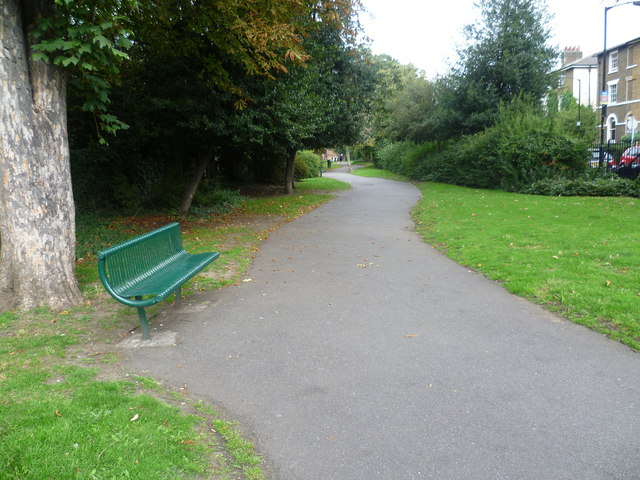
Holly Grove Shrubbery, Peckham
Geograph · CC BY-SA 2.0
✦   ✦   ✦
Name Origin

Three Names, Two Centuries

The road did not begin as Holly Grove. When the first Georgian houses were built here between 1816 and 1822, the street was known as George Street. By the mid-19th century it had become South Grove—a name that at least acknowledged the leafy character of the area. As the Southwark Council conservation area appraisal records, the road was known as Holly Grove (formerly George Street and then from the mid 1800’s South Grove), confirming the three distinct phases of naming.

The final name most likely reflects the holly trees associated with the suburban planting of the area rather than any recorded individual or event. As documented by British History Online, the wider Camberwell parish in which Peckham sat was historically well wooded—the Domesday record describes the lord of the manor receiving sixty fat hogs fed on the beech-masts and acorns of the surrounding woodland. Holly, a common understorey tree in such managed woodland, may well have been present in the fields cleared for this development. No primary document records the precise reason for the renaming, so the etymology must remain probable rather than verified.

How the name evolved
1816–1822 George Street
mid-1800s South Grove
late 1800s Holly Grove
✦   ✦   ✦
History

From Georgian Suburb to Railway Commuter Street

The first houses on the street appeared from around 1816 as part of a wave of middle-class suburban development in Peckham. The area was then still agricultural—part of the ancient Camberwell parish, historically described by British History Online as lying within the manor once held by the Bishop of Lisieux following the Norman Conquest. The new Georgian villas were planned with outlooks over green space, giving the street an intentional suburban character from the outset.

Key Dates
1086
Domesday Peckham
The Domesday Book records Peckham as “Pecheha” under the Bishop of Bayeux; the area remains heavily agricultural and wooded.
1816
First Houses Built
The earliest Georgian townhouses on the street—then called George Street—are constructed as middle-class suburban villas.
c. 1860s
Road Layout Fixed
The street plan is established by this decade, with the south side lined with houses; the north side remains open land.
1867
Railway Arrives
The opening of Peckham Rye station triggers a second wave of development, filling the remaining empty land with smaller, more affordable Victorian housing.
1896
Shrubbery Founded
Camberwell Borough Council purchases a surplus strip of land for £1,050 and transfers it to the local vestry as a public pocket park in April 1896.
1971
Conservation Area
Holly Grove is designated a conservation area on 6 September 1971, one of Southwark’s earliest such designations; it is extended in 1984, 1990, and 2008.
Did You Know?

When the railway was built behind the gardens in the 1860s, the engineers set aside more land than they needed. The surplus was gifted to the houses of Holly Grove—which is why some rear gardens here are unusually long, stretching up to 18 metres.

The arrival of the railway fundamentally changed the social character of the street. The Georgian villas of the first phase attracted prosperous merchants; the smaller Victorian pairs that followed were aimed at the aspiring middle classes newly able to commute to the City. Between the two world wars Peckham’s industrial base increased and wealthier residents moved further out, but Holly Grove retained its distinctive planned character. Historic England’s listed building records confirm that several of the original Georgian houses—built to classical proportions with sash windows and original internal features—survive as Grade II listed structures.

✦   ✦   ✦
Culture

The Shrubbery, the Gallery, and the Listed Row

The Holly Grove Shrubbery is the street’s defining cultural landscape. Created in April 1896 when Camberwell Borough Council acquired the narrow strip of undevelopable land behind the railway-era houses, this slender pocket park runs along the north side of the street, framed by iron railings. It was too small to build on and too large to leave derelict—so the vestry made it a public garden instead. The shrubbery was opened in 1897 and has remained a green buffer between the street and the railway ever since.

Contemporary Art on a Georgian Street
Hannah Barry Gallery, No. 4 Holly Grove

Founded in 2007, Hannah Barry Gallery settled permanently at No. 4 Holly Grove after evolving from temporary South London exhibitions. The gallery runs four solo exhibitions per year and is closely associated with the Bold Tendencies arts organisation, which operates from the rooftop of Peckham’s multi-storey car park nearby. The pairing of a Georgian townhouse address with one of London’s most forward-looking contemporary galleries is characteristically Peckham.

The conservation area as a whole, designated by Historic England’s framework for local designations, is described in Southwark’s own appraisal as “essentially a 19th century planned suburban development with a strong landscape element” that contrasts sharply with its immediate surroundings. The intensity of development is deliberately low—two-storey houses, many in pairs rather than terraces—preserving the relaxed suburban character that sets Holly Grove apart from the busier commercial streets of central Peckham.

✦   ✦   ✦
People

Artists, Gallerists, and the Aspiring Middle Classes

William Ellison painted Holly Grove in 1951, capturing the street in the post-war period before its conservation designation. The painting—documented in the Peckham Peculiar archive—shows the street when many of the Georgian houses were beginning to show their age, the area’s social character still shifting after two world wars had accelerated the movement of wealthier residents away from Peckham.

Hannah Barry, the gallerist, has been based at No. 4 since the gallery settled permanently in Peckham. Her work with the Bold Tendencies organisation, which transformed the local multi-storey car park into an arts venue, has made Holly Grove a destination within London’s contemporary art world. The street’s broader resident history reflects its three architectural phases: prosperous Georgian merchants, Victorian railway commuters, and the diverse creative and professional community of contemporary Peckham.

✦   ✦   ✦
Recent Times

Conservation Extended, Peckham Regenerated

The conservation area has been extended four times since its original 1971 designation—in 1984, 1990, and most recently in September 2008—reflecting the ongoing recognition of the street’s architectural value. As reported by SE1 Direct and local Southwark sources, the wider Peckham area has undergone significant regeneration, with the Bellenden Road neighbourhood immediately adjacent to the conservation area developing a strong independent retail and restaurant culture.

Peckham Rye station, the railway hub that originally shaped the street’s Victorian development, is currently undergoing major refurbishment. The Peckham Coal Line—a community-led project to create a linear park along disused railway infrastructure—passes close to the eastern end of Holly Grove, adding another layer of greenery to a street that has always prized its landscape character.

✦   ✦   ✦
Today

Georgian Calm amid the Energy of Peckham

Holly Grove today is among the most architecturally coherent streets in Peckham. The Grade II listed Georgian houses on the south side face directly onto the shrubbery, their original sash windows framing one of inner London’s more unusual urban views: a long belt of greenery where a row of houses might otherwise stand. The street lies at the edge of Peckham’s busiest commercial zone, with Rye Lane a few minutes to the east and Bellenden Road immediately north.

The immediate neighbourhood—Warwick Gardens, Lettsom Gardens, and the shrubbery itself—gives Holly Grove a green density unusual for this part of the borough. The street remains primarily residential, anchored at its western end by Peckham Rye station and at its heart by the quiet authority of its listed Georgian facades.

On the doorstep
Holly Grove Shrubbery
The pocket park running along the north side of the street—created from surplus railway land in 1896 and public ever since.
5 min walk
Warwick Gardens
A Victorian pleasure garden at the western end of the street, popular with local families and dog walkers.
8 min walk
Lettsom Gardens
Named after the physician Dr John Coakley Lettsom who once owned land in the Camberwell area; a quiet neighbourhood green.
15 min walk
Peckham Rye Park & Common
One of south London’s great open spaces—64 acres of common and formal park, historically associated with William Blake’s childhood visions.
✦   ✦   ✦
Holly Grove itself … is planned with outlooks over green space … giving the area a relaxed suburban feel.
Southwark Council, Holly Grove Conservation Area Appraisal (2008)
On the Map

Holly Grove Then & Now

National Library of Scotland — Ordnance Survey 6-inch, c. 1888. Hosted by MapTiler. Modern: © OpenStreetMap contributors.

✦   ✦   ✦

Frequently Asked Questions

Why is it called Holly Grove?
The name most likely refers to holly trees associated with the leafy suburban development laid out here in the early 19th century. The street previously carried two other names—George Street from around 1816 and South Grove from the mid-1800s—before the current name was adopted in the later Victorian period. No single document records the exact moment or reason for the change to Holly Grove, so the etymology remains probable rather than definitively verified.
What were Holly Grove’s previous names?
The street has carried three recorded names. It was first known as George Street when the earliest Georgian houses were built between 1816 and 1822. By the mid-19th century it had become South Grove. The current name Holly Grove had been adopted by the later Victorian period. The Southwark Council conservation area appraisal documents all three stages of the street’s naming history.
What is Holly Grove known for?
Holly Grove is known for its collection of Grade II listed Georgian and Victorian houses, the Holly Grove Shrubbery pocket park running along its north side, and its designation as one of Southwark’s earliest conservation areas since 1971. The street is also home to Hannah Barry Gallery at No. 4, a leading contemporary art space established in 2007 that has made the address well known within the London art world. The shrubbery itself—created from surplus railway land in 1896—gives the street its distinctive, unusually green character.