Southwark London England About Methodology
Southwark · SE1 · Peckham

Elm Grove

Carved from Peckham’s market-garden fields in the 1830s, Elm Grove was one of a trio of aspirational “grove” streets designed to make suburban living feel like a gentleman’s estate.

Name Meaning
Elm-tree grove
First Recorded
c. 1830s
Borough
Southwark
Character
Victorian terrace
Last Updated
Time Walk

Elms, Terraces, and the Bussey Building Next Door

Elm Grove runs as a short residential street in Peckham, tucked between Rye Lane and Bellenden Road, its two-storey Victorian terraces still wearing their original high-ceilinged proportions and generous bay windows. Peckham Rye station stands barely 160 yards away, lending the street a commuter accessibility that its original builders could never have imagined. Today it is prized precisely for what it has held on to: a quiet scale, period houses, and a neighbourhood identity sharpened by Peckham’s confident cultural resurgence.

2019
26, Elm Grove
26, Elm Grove
Wikimedia Commons · CC BY-SA 4.0
2019
34, Elm Grove
34, Elm Grove
Wikimedia Commons · CC BY-SA 4.0
Historical image not found
Today
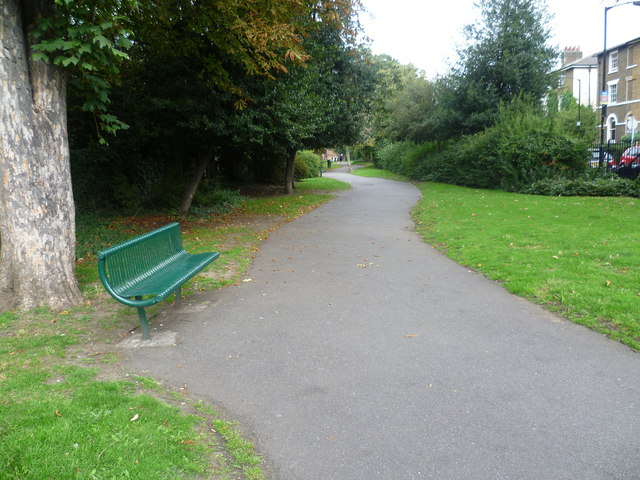
Holly Grove Shrubbery, Peckham — near Elm Grove
Geograph · CC BY-SA 2.0

The Bussey Building—home to an art café, a rooftop bar and an open-air cinema—stands close by, embodying the transformation of this corner of south London. But Elm Grove itself predates all that creative industry by nearly two centuries. The name is older than the station, older than the railway, older than most of what surrounds it—and it points to a very specific ambition in early Victorian Peckham.

✦   ✦   ✦
Name Origin

The Grove Ideal: Trees as Social Aspiration

That ambition was encoded in the name itself. “Grove” was not merely a description of trees—it was a marketing concept. When early Victorian developers laid out Peckham’s new streets on former market-garden land, they deliberately chose botanical names to evoke a leafy, cultivated gentility. The same neighbourhood produced Holly Grove and Blenheim Grove at almost the same moment, and as documented by British History Online in the Victoria County History of Surrey, the original planning principle was to provide terraces and semi-detached houses with aspects onto green areas—a common approach to speculative high-class suburban housing of the period.

The elm specifically was the tree of the English country estate—tall, formal, and unmistakably aristocratic in connotation. Naming a new street “Elm Grove” was a promise to prospective middle-class tenants: this is not a yard or a lane or a road, but a place of cultivated calm. The name most likely reflects the elm planting that characterised such planned developments rather than any prior grove on the site, though no documentary record has been found to confirm this conclusively. The form of the name has not changed since the street’s laying-out.

How the name evolved
c. 1830s Elm Grove
present Elm Grove
✦   ✦   ✦
History

From Market Garden to Middle-Class Grove

Peckham in the early nineteenth century was still semi-rural—a Surrey village of market gardens, orchards, and scattered villas on the southern fringe of London. The transformation came fast. George Choumert, the developer who shaped this part of Peckham, built what is now Holly Grove between 1816 and 1822. The area around it followed in the same speculative spirit, and as recorded by British History Online in its coverage of the Camberwell parish, Elm Grove was added to the neighbourhood in the 1830s. This was market-garden land converted to housing within a single generation.

Key Dates
1816–22
Holly Grove built
George Choumert develops the neighbouring Holly Grove, establishing the botanical grove model for the wider Peckham development.
1826
Friends Meeting House
A Friends Meeting House is built in what will become Highshore Road, yards from Elm Grove, evidencing the neighbourhood’s respectable Nonconformist character.
c. 1830s
Elm Grove laid out
The street is added to Peckham on former market-garden land, part of the planned speculative development that also produced Blenheim Grove nearby.
1865
Railway arrives
The construction of the railway to Peckham Rye station transforms the area’s connectivity and accelerates the infilling of surrounding plots.
c. 1870s
Catholic church established
A Roman Catholic church on Elm Grove serves the expanding population of Peckham, reflecting the diversification of the neighbourhood’s religious community.
2000s
Cultural regeneration
The Bussey Building and surrounding Rye Lane quarter undergo creative regeneration, raising Elm Grove’s profile among London’s most sought-after residential streets.
Did You Know?

Elm Grove was part of the same planned speculative development as Holly Grove and Blenheim Grove—all laid out within a few decades of each other as Peckham’s fields were converted to middle-class housing. The three “grove” streets survive today as the clearest echo of that original vision of leafy suburban gentility in south London.

The development pattern was deliberate and coherent: terraces and semi-detached groups of houses arranged to give aspects onto green space, a formula well established in Regency and early Victorian suburban planning. The open space between Elm Grove and what was then called Victoria Road (now the northern end of Bellenden Road) was itself part of this planned character, ensuring sight lines and breathing room that distinguished a “grove” from an ordinary working street. The Southwark conservation area documents, as noted by sources covering the area, confirm that vestiges of this original pattern remain in both Holly Grove Shrubbery and Elm Grove today.

The railway’s arrival in the 1860s was simultaneously a gift and a disruption. It cut through the block between Holly Grove and Blenheim Grove, destroying the northern side of Blenheim Grove, though the broad integrity of the street plan was retained. Elm Grove escaped direct damage. What the railway brought was accelerated growth—the infilling of remaining plots, a new commercial energy along Rye Lane, and a shift in the social character of Peckham that would continue across the following century.

c. 1865
Peckham Rye station area, c. 1865
Peckham Rye station, opened 1865 — yards from Elm Grove.
Public domain via Wikimedia Commons
c. 1820s
Peckham High Street in the 1820s
Peckham village in the 1820s, before Elm Grove was carved from the fields.
Public domain via Wikimedia Commons
c. 1890
Rye Lane, Peckham, c.1890
Rye Lane in the 1890s — the commercial street onto which Elm Grove opens.
Public domain via Wikimedia Commons
Today
Contemporary Elm Grove
Victorian terraces survive on both sides
Victorian terraces on Elm Grove today — period proportions largely intact.
© OpenStreetMap contributors
✦   ✦   ✦
Culture

Chapel, Community, and a Catholic Presence

Faith has shaped this street since its earliest decades. As British History Online records in its Victoria County History coverage of the Camberwell parish, a Roman Catholic church stands on Elm Grove in Peckham, evidence of the pluralistic religious community that developed here alongside the expanding Victorian suburb. The neighbourhood as a whole had a notably diverse devotional character: a Friends Meeting House was built just yards away in Highshore Road as early as 1826, and a Baptist Chapel appeared on the corner of Blenheim Grove in 1823–24, serving the middle-class residents of the new development.

Victorian Sacred Architecture
Roman Catholic Church, Elm Grove

A Roman Catholic church on Elm Grove has served the Peckham community since the later Victorian period, recorded in the Victoria County History as one of several Catholic foundations in the Camberwell parish. Its presence reflects the religious pluralism that characterised Peckham’s expanding Victorian suburb, where Nonconformist chapels, Quaker meeting houses and Catholic churches coexisted within a few streets of each other.

The cultural life of the street today is inseparable from Peckham’s broader creative identity. The Bussey Building, a converted Victorian cricket-bat factory, stands close by as the most visible symbol of the neighbourhood’s reinvention—rooftop bars, gallery spaces and independent cinema where industry once operated. SE1 Direct, Southwark’s community news platform, has tracked how the regeneration of the Rye Lane quarter has drawn national and international attention to this corner of the borough, making Elm Grove’s Victorian terraces among the most coveted addresses in south London.

✦   ✦   ✦
People

The Developer Who Built the Groves

George Choumert is the single most important figure in the formation of this part of Peckham. He built the neighbouring Holly Grove between 1816 and 1822, establishing the template of botanical grove names and planned terrace development that Elm Grove followed. Choumert’s vision was essentially speculative: attract the middle classes from central London with the promise of a leafy suburban estate at modest cost. The success of Holly Grove made Elm Grove possible. Choumert Road and Choumert Square nearby still carry his name in the neighbourhood he shaped.

No verifiable individual has been found to have lived or worked specifically on Elm Grove itself and left a documented historical record beyond the current residents. The social profile of the street’s original occupants was broadly middle class—the market gardeners who had worked the land were displaced by clerks, tradespeople and small professionals who constituted the new Peckham—but no specific names are recorded for this street in the primary sources consulted. MOLA has conducted extensive archaeological work across Southwark, and future investigations in this part of Peckham may yet illuminate the pre-development history of the land on which the street stands.

✦   ✦   ✦
Recent Times

Regeneration and the Return of the Rye Lane Quarter

Peckham’s regeneration from the 1990s onwards transformed the setting of Elm Grove dramatically. The Rye Lane corridor—once associated with decline—became one of London’s most celebrated independent high streets, and the streets feeding off it, Elm Grove among them, became destinations in their own right. House prices on the street have reflected this trajectory: the average sold price in recent years has reached over £850,000, with individual properties selling above £1,000,000.

The arrival of the Bussey Building as a cultural hub, alongside independent restaurants, boutique shops and the long-established covered market on Rye Lane, has cemented the neighbourhood’s identity. Historic England’s conservation area framework for Southwark provides a degree of protection to the period character that makes the street desirable—the Victorian terraces cannot be arbitrarily demolished or dramatically altered, ensuring that the original 1830s grain of the street survives into the future.

✦   ✦   ✦
Today

Grove Living in the Twenty-First Century

Elm Grove today is what its Victorian builders always intended: a residential street of considered ambition. The period houses—high ceilings, bay windows, rear gardens—remain the dominant fabric. Peckham Rye station, approximately 160 yards away, connects the street to London Bridge in under ten minutes. The Rye Lane street market and the Bussey Building are within minutes on foot, making Elm Grove one of the few streets in Southwark that combines genuine Victorian character with immediate access to a thriving cultural quarter.

The green spaces near Elm Grove are generous for inner London. Peckham Rye Park and Common, one of south London’s most beloved open spaces, is a short walk away. The park has provided the neighbourhood with breathing room since the Victorian era, and the elm trees that may have originally given the street its name have their descendants in the mature tree canopy of the Rye today.

10 min walk
Peckham Rye Park & Common
64 acres of parkland and common, with a Japanese garden, boating lake and extensive wildflower meadows. One of south London’s most cherished green spaces.
12 min walk
Burgess Park
Southwark’s largest park at over 140 acres, created from cleared post-war land. Features a lake, BMX track and extensive open grassland.
15 min walk
Nunhead Cemetery
One of the Magnificent Seven Victorian cemeteries, now a Local Nature Reserve managed for wildlife. Ancient trees and wildflower glades amid Victorian monuments.
Nearby
Choumert Square Gardens
A small private communal garden in the heart of the Choumert conservation area, yards from Elm Grove, preserving the leafy character of the original development.
✦   ✦   ✦
“The original plan principle was to provide terraces and semi-detached groups of houses with aspects onto green areas—a common approach to speculative development of high-class housing in the London suburbs.”
Southwark Conservation Area Documents, via The Underground Map / London Borough of Southwark
✦   ✦   ✦
On the Map

Elm Grove Then & Now

National Library of Scotland — Ordnance Survey 6-inch, c. 1888. Hosted by MapTiler. Modern: © OpenStreetMap contributors.

✦   ✦   ✦

Frequently Asked Questions

Why is it called Elm Grove?
Elm Grove most likely takes its name from the elm trees associated with the planned speculative development laid out in Peckham in the 1830s. The “grove” element was a deliberate marketing choice: developers of the period used botanical grove names to signal a cultivated, middle-class character. The same neighbourhood produced Holly Grove and Blenheim Grove at the same time. The elm was the emblematic tree of the English country estate, and naming a street after it was a promise of genteel suburban living on what had until recently been market-garden fields.
When was Elm Grove built?
Elm Grove was laid out in the 1830s as part of the rapid suburban expansion of Peckham around Rye Lane. It followed in the wake of the neighbouring Holly Grove, which George Choumert built between 1816 and 1822, establishing the template of planned grove development in this part of Southwark. The street predates the railway—Peckham Rye station did not open until 1865—and was built for a middle-class population arriving by coach and on foot from central London.
What is Elm Grove known for?
Elm Grove is known today as one of Peckham’s most sought-after residential streets, prized for its Victorian period houses, high ceilings and bay windows. It sits yards from Peckham Rye station and close to the Bussey Building, an arts and culture landmark in regenerated Peckham. The street retains vestiges of the original planned “grove” character that its 1830s developers intended, and is part of the conservation area landscape that protects the broader Peckham Victorian suburb.