Southwark London England About Methodology
Southwark · Dulwich · SE21

College Road

London’s last surviving private tollgate still charges on this Dulwich road — a road that was “Locus Lane” before an Elizabethan actor’s college remade it entirely.

Name Meaning
Dulwich College
First Recorded
14th century
Borough
Southwark
Character
Private road, Victorian villas
Last Updated
Time Walk

The Road That Still Charges a Toll

College Road in Dulwich is one of the most unusual roads in London: it is private, and it still charges a toll. The Dulwich tollgate, the last of its kind in the capital, sits partway along the road and the Dulwich Estate—the charitable successor to Edward Alleyn’s original College of God’s Gift—continues to collect charges from vehicles passing through. Most tollgates were swept away by Act of Parliament in 1864; this one survived, as it has since c. 1791.

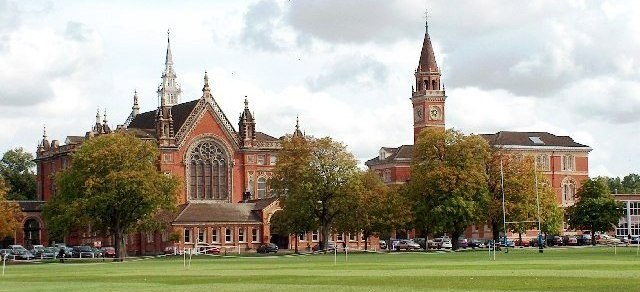
The road runs south from Dulwich Village through wooded grounds, with Dulwich College’s grand Victorian buildings on the western side and Dulwich Woods—a remnant of the ancient Great North Wood—across the road to the east. That the road bears the College’s name at all is a relatively recent development. For most of its history it answered to something quite different.

2005
Dulwich College, College Road, Dulwich.
Wikimedia Commons · CC BY-SA 2.0
2007
College Road, Dulwich
Wikimedia Commons · CC BY-SA 2.0
2022
College Road Dulwich 350 20220424 1331
Wikimedia Commons · CC BY-SA 4.0
Today
View of a house on Dulwich Village from Gallery Road — near College Road
Geograph · CC BY-SA 2.0
✦   ✦   ✦
Name Origin

From Locus Lane to the College Road

The road has carried three names. The northern section, from the Old College southwards as far as the Mill Pond, was originally known in the 14th century as ‘Estrete’—that is, East Street. The southern portion came later and under quite different circumstances: the Tollgate was originally the notion of John Morgan, Lord of the Manor of Penge, who in 1787 made a road from the top of what is now Fountain Drive, through Dulwich Woods, to link fields he had rented with Penge Common. As one of the College Audit Meetings in 1787 records, “John Morgan proposes to make a road (which he calls Locus Lane)” to save a distance of over a mile between Penge and the Dulwich high road.

First called Locus Lane, then Penge Road, the name was finally changed to College Road in 1870 after the construction of the New College. That new college was Dulwich College in its current form: it began as the College of God’s Gift, founded in 1619 by Elizabethan actor Edward Alleyn, and took its current form in 1870 when it moved into its present premises. Once those premises occupied the western side of the road, the road’s name followed.

How the name evolved
14th century Estrete
1787 Locus Lane
early 19th c. Penge Road / Morgan’s Road
1870 College Road
“John Morgan proposes to make a road (which he calls Locus Lane), saving a distance of 1 mile 8 poles from Penge to the Dulwich high road via the Common.”
Dulwich College Audit Meeting minutes, 1787
✦   ✦   ✦
History

Actor, Estate, and the Road That Paid Its Own Way

The story of College Road begins not with a road but with a purchase. In 1538, Henry VIII sold the area to goldsmith Thomas Calton. Calton’s grandson Sir Francis Calton, due to financial pressures, sold the Manor of Dulwich for £5,000 in 1605 to Elizabethan actor and entrepreneur Edward Alleyn, who vested his wealth in a charitable foundation, the College of God’s Gift, established in 1619. That foundation owned almost all of the land through which College Road would eventually run—and still does through its modern successor, the Dulwich Estate.

Key Dates
14th c.
Estrete
Northern portion of the route recorded as ‘Estrete’ (East Street), the oldest documented name for land on the College Road alignment.
1619
College Founded
Edward Alleyn establishes the College of God’s Gift on 21 June, by letters patent from King James I, cementing the Estate’s ownership of all surrounding land.
1787
Locus Lane Built
John Morgan, Lord of the Manor of Penge, constructs the southern section of the road to link his fields with Penge Common, naming it Locus Lane.
c. 1791
Tollgate Added
A tollgate is installed to fund road maintenance. It becomes the last surviving private tollgate in London, still operational today.
1863
Railway Arrives
Sydenham Hill Station opens, transforming development pressure on College Road’s western side and bringing wealthy commuters to the area.
1868
Building Plots Laid Out
The Dulwich Estate divides the western side of the road into building plots with 100-foot frontages, attracting wealthy owner-occupiers and builder-developers.
1870
Renamed College Road
Dulwich College moves into its new Charles Barry the younger buildings on the road. Penge Road is formally renamed College Road in recognition.
Did You Know?

When Dulwich College was founded in 1619, one of its early statutes ordered that twenty acres of College woodland be felled and sold every year. As documented by British History Online, this systematic clearance gradually eroded the ancient Dulwich Wood over centuries — making the surviving patch of woodland visible from College Road today all the more remarkable.

The southernmost section of College Road, between the Tollgate and Sydenham Hill, dates from 1787. Built by John Morgan, Lord of the Manor of Penge, its aim was to provide better access for his cattle and carts between the Penge and Dulwich Commons. To stop the road being damaged by other people’s animals, the tollgate was added in 1791. The College “pound,” which formerly stood near the toll-gate in the Penge Road, was in 1862 ordered to be removed to the end of Croxted Lane.

Prior to the construction of Sydenham Hill Station in 1863, the imposing Woodhouse was the only house on the road. In 1868 the Dulwich Estate divided the land along the west side of the road, from the new railway station as far as Union Road, into potential building sites with 100-foot frontages. The result was a street of substantial detached Victorian houses for wealthy merchants and professionals. Like most of the other residents in the road, generous numbers of domestic staff were an essential prerequisite to the enjoyment of the College Road lifestyle.
✦   ✦   ✦
Culture

Pissarro’s Vantage Point and the Bell Tower House

The French Impressionist Camille Pissarro used College Road as his viewpoint. It was in the road in front of the site of a house called Redholme that Camille Pissarro sat when he painted both St Stephen’s Church and his view over the fields down to Alleyn Park. Pissarro was in south London in 1870–71, having fled the Franco-Prussian War. The road, newly named and still surrounded by open fields and young villa development, gave him a clear southward prospect that would disappear within a generation.

Georgian Survivor — Grade II Listed
Bell House, College Road

As recorded by Historic England, Bell House on College Road was designed in 1767 for Thomas Wright, a stationer who became Lord Mayor of the City of London. The house bears its name from a bell tower on its original roof; the bell was restored in the late 1990s. A large extension was added in the mid-19th century and it is accompanied by a lodge house. It is Grade II listed and became a Dulwich College boarding house in 1926, only returning to private ownership in 1993.

The parish of St Stephen, South Dulwich, was formed in 1868. The church, which is in College Road, consists of an apsidal chancel, nave and aisles, and spire. In the south wall of the chancel is a recess containing a fresco by Sir E. J. Poynter, P.R.A., representing the trial and martyrdom of St Stephen. That combination of a Pre-Raphaelite-adjacent interior and a Gothic exterior made it one of the more artistically distinguished churches built during Dulwich’s Victorian expansion.

✦   ✦   ✦
People

Actor, Importer, Suffragette

Edward Alleyn’s connection to College Road is foundational rather than residential—he never lived on it, as the southern section did not exist in his lifetime—but his College of God’s Gift shaped every inch of it. Edward Alleyn, as well as being a famous Elizabethan actor for whom Christopher Marlowe wrote his title roles, performed at the Rose Theatre and was also a man of great property and wealth, derived mainly from places of entertainment including theatres and bear-gardens. His investment in Dulwich’s land endures in the Estate that still owns the road today.

Among the road’s Victorian and Edwardian residents, one stands out. The incoming tenant of the large house Woodhall was James O’Mara, a successful Irish bacon importer and MP. Winston Churchill and he were the youngest MPs in the House of Commons when elected in 1900. The year he moved to College Road he changed his allegiance from the Irish Home Rule party to Sinn Féin; he and his family returned to Ireland shortly after the outbreak of the First World War in 1914. His wife Agnes was a suffragette and, in 1913, was Honorary Secretary of the Dulwich Branch of the New Constitutional Society for Women’s Suffrage.

✦   ✦   ✦
Recent Times

Gate Restored, Woods Protected

The tollgate came under pressure in the twentieth century. Public tenders for collecting toll ended in 1901, after which the Estates Governors maintained the charge directly. Mr E. A. Simmons took over in 1901, followed by his daughter, who was still taking tolls on College Road at the end of the 1950s. Following safety concerns expressed by the Health and Safety Executive, the operation of the Toll Gate had to be suspended, but in January 1993 tolls were once again being taken from the newly-constructed gate-keeper’s kiosk and gate.

On Saturday 28 October 1989, a large number of people gathered at the Tollgate to mark its 200th anniversary. On the western side of the road, the large Victorian houses that once housed single wealthy families have largely been subdivided or redeveloped into flats—though the street retains its private status and unusually quiet character. As noted by SE1 Direct, the Dulwich Estate’s ongoing stewardship of its private roads remains a distinctive feature of this part of Southwark, setting it apart from the rest of the borough’s street network.

“College Road is a private road controlled by the only private toll gate in London.”
Local description, College Road, Dulwich SE21
✦   ✦   ✦
Today

Woods, Spires, and the Toll Still Paid

College Road today is one of the few genuinely rural-feeling roads within the boundary of inner south London. Across the road from its Victorian houses are Dulwich Woods, the last remnant of the ancient Great North Wood, now popular with nearby residents going for a walk. Dulwich College’s playing fields and the spire of St Stephen’s Church remain the defining landmarks. The toll still operates from the rebuilt kiosk.

The nearest green spaces reinforce that unusual character. Dulwich Park, opened in 1890 and presented to the public by the Governors of Dulwich College, lies a short walk to the north. The woods themselves, immediately adjacent to the road, are accessible on foot and managed as a nature reserve. For a road that began as a cattle track named after a place, it has acquired a remarkably civilised and leafy afterlife.

Adjacent
Dulwich Woods
Ancient woodland directly east of the road — the last fragment of the Great North Wood, managed as a Local Nature Reserve.
10 min walk
Dulwich Park
Dulwich Park was opened in 1890 and was formerly farmland, part of the Court Farm; it now offers duck and rowing ponds, a bowling green, tennis courts, and a café.
15 min walk
Sydenham Hill Wood
A further pocket of ancient woodland to the south, designated a Site of Metropolitan Importance for Nature Conservation.
12 min walk
Belair Park
Parkland surrounding Belair House, a Georgian villa on the boundary of West Dulwich, with lake and open lawns.
✦   ✦   ✦
On the Map

College Road Then & Now

National Library of Scotland — Ordnance Survey 6-inch, c. 1888. Hosted by MapTiler. Modern: © OpenStreetMap contributors.

✦   ✦   ✦

Frequently Asked Questions

Why is it called College Road?
College Road takes its name from Dulwich College. The road was renamed in 1870 when the College moved into its grand new buildings designed by Charles Barry the younger on the road’s western side. Before that, the southern stretch was called Penge Road and, before that, Locus Lane — a name coined by its builder, John Morgan, in 1787. The northern portion had been known as ‘Estrete’ (East Street) since the 14th century.
Is the College Road tollgate still in operation?
Yes. The Dulwich tollgate on College Road is the last surviving private tollgate in London. First introduced around 1791 to fund the upkeep of John Morgan’s newly built road, it survived the 1864 Act of Parliament that abolished most tollgates in England, because College Road is a private road owned by the Dulwich Estate. The gate was rebuilt and a new kiosk installed in 1993 after a safety suspension, and tolls are still charged on vehicles passing through.
What is College Road known for?
College Road in Dulwich is best known for two things: Dulwich College itself, whose Victorian buildings by Charles Barry the younger stand on the road, and the Dulwich tollgate — London’s last surviving private tollgate, dating to c. 1791. The road is a private road owned and maintained by the Dulwich Estate, the charitable successor to Edward Alleyn’s original College of God’s Gift, founded in 1619. The French Impressionist Camille Pissarro also painted views of St Stephen’s Church from the road in 1871.