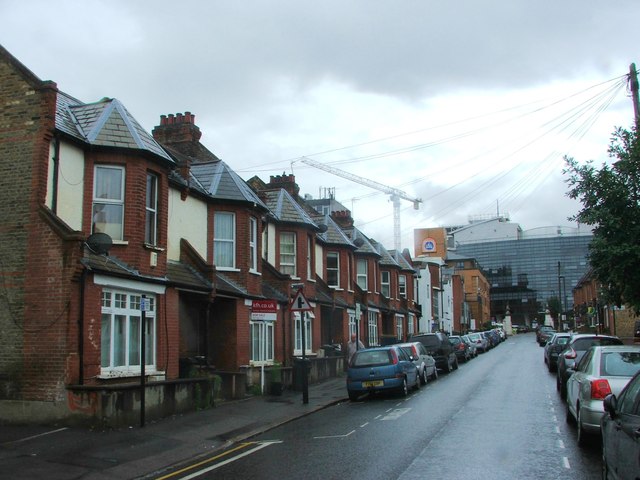
According to local historian Olive M. Walker, the Cold Harbour was located within the boundaries of the Manor of Coldharbour which abutted the Lane then known as Camberwell Lane. The manor comprised a mansion house, two barns, a stable, garden, orchard and meadow and pasture lands. By the early 19th century, the land was used chiefly as pasture and market garden ground before the great suburban expansion of south London began in earnest. British History Online's Survey of London documents how Loughborough Park was formed in the years 1844–57, and the detached portion of the Manor on the north-west side of Coldharbour Lane was built up in the early 1830s. The street thus became the spine of development, marking property boundaries and connecting newly laid streets.
c. 1270
Manor Estate
Manor of Coldharbour established as a substantial estate with buildings and farmland.
1741–45
Roque's Map
Lane recorded as Camberwell Lane on John Roque's map. Name change to Coldharbour Lane occurs within the next few decades.
1824–50
Suburban Building
Properties on the Lane developed as Victorian villas and terraces. Building leases granted to Lord Holland and onwards.
1865
Etymology Established
J. C. Hahn publishes articles in Notes & Queries confirming Saxon origin of Cold Harbour name.
1865
Railway Opens
Loughborough Junction station opens on the Lane, transforming it into a transport hub.
1800
Prince of Wales Pub
Historic pub established on the Lane, still operating today.
1981
Brixton Riots
Civil unrest erupts in nearby roads; windows broken on Coldharbour Lane itself.
1997
Gun Violence
Multiple shootings recorded on the street, marking the height of gang-related activity.
Did You Know?
The Camberwell beauty butterfly, one of the UK’s rarest migrants, was first formally recorded in scientific literature after two specimens were discovered on Coldharbour Lane in 1748. The butterflies likely arrived as stowaways on timber ships from Scandinavia bound for Surrey Docks.
The lane closed by Brixton Market became visibly derelict by the mid-1960s. Drug houses flourished, dealing mainly in cannabis. The 1981 Brixton riots exposed deeper fractures—windows were broken on the street itself, and with the support of community leaders and shop owners, plans were put in place to set up a mini-police station on Coldharbour Lane in the former premises of a drug dealer, with Police Safer Neighbourhoods Teams working from number 411. The 1990s and early 2000s saw further incidents: in June 1997, Anthony Baker was shot in the head during a raid at the Control Tower takeaway, just a few hundred yards from where Chief Inspector Alan O’Gorman was addressing a meeting about spiralling gun crime. In 2003, a newspaper described the lane as “the most dangerous street in the most dangerous borough in London”.
Recovery has been slow but real. Since the 2010s, gentrification and investment have gradually transformed the southern stretch. Independent businesses have opened; the rail corridor has been better maintained; community policing continues. Police bases closed in 2019, signalling a shift away from emergency-response policing to a normalised street. Today, the lane thrums with life again—not as it was in the Victorian era, but as a genuinely mixed neighbourhood.