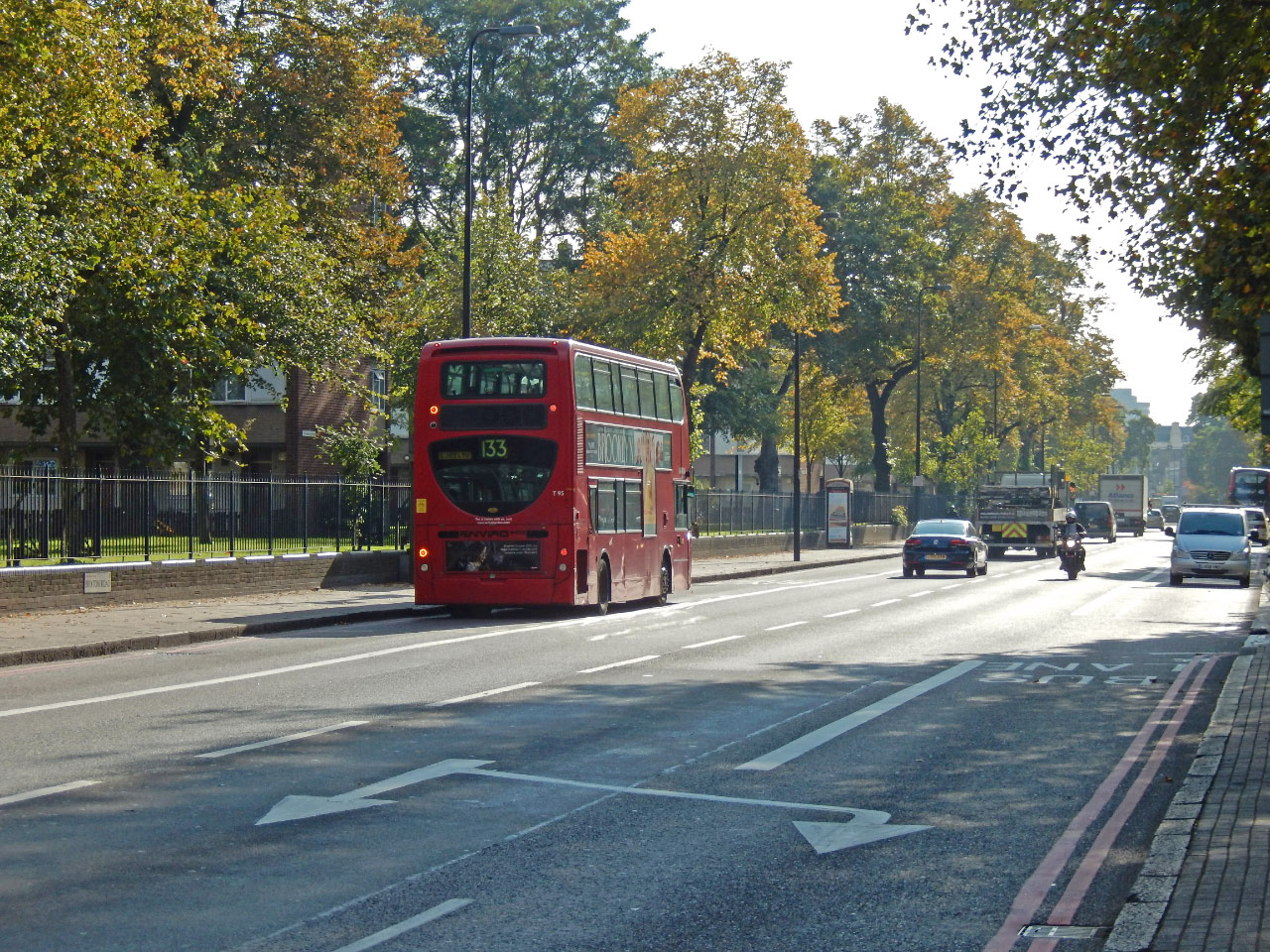
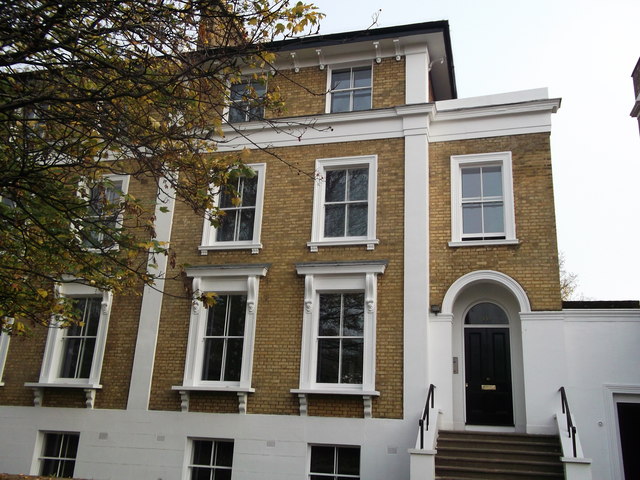
For most of its history, Brixton Road ran through open farmland and market gardens. The area remained largely rural until the early nineteenth century, its development held back by the boggy ground of the Oval depression and the absence of a convenient Thames crossing. That changed decisively in 1816 when Vauxhall Bridge opened.
c. 70 AD
Roman Route
Evidence suggests Brixton Road follows the alignment of a Roman road from Brighton to Kennington Park.
1086
Domesday Record
The Domesday Book records Brixiestan, the earliest known written form of the name Brixton.
1806
Enclosure Act
The Lambeth Manor Enclosure Act stipulates no buildings may be erected within 150 feet of the London–Croydon Turnpike Road (now Brixton Road), ensuring generous garden frontages.
1816
Vauxhall Bridge Opens
The new bridge catalyses suburban development; Regency terraces begin lining Brixton Road from the Oval southward.
1824
St Matthew’s Consecrated
St Matthew’s Church is consecrated on former common land at the south end of Brixton Road, indicating a now-substantial local population.
1877
Bon Marché Opens
The first purpose-built department store in Britain opens on Brixton Road — a sign of the road’s new commercial status.
1887
Sherlock Holmes
Arthur Conan Doyle sets the first crime scene of the entire Holmes canon in an abandoned house off the Brixton Road in A Study in Scarlet.
1902
Christ Church
Christ Church, Brixton Road — designed by Beresford Pite in an eclectic Byzantine style — is consecrated at the northern end of the road.
Did You Know?
In 1887, Arthur Conan Doyle chose an abandoned house off Brixton Road as the very first crime scene in the entire Sherlock Holmes series. The murder in A Study in Scarlet — Holmes’s debut — is discovered here before Holmes and Watson have even properly met.
The Archbishop of Canterbury’s manor of Lambeth Wick owned much of the land flanking the road. As the Survey of London records, the development of Lambeth Wick did not begin until 1820, delayed partly by uncertainty over the route of the new Vauxhall Bridge approach roads. Between 1820 and 1824, the whole of the manor was let under fifteen building leases to Henry Richard Vassall, third Baron Holland. The resulting development was, in the words of the Survey, piecemeal — producing “unrelated groups of villas and terrace houses” that gave the Brixton Road frontage an “untidy and haphazard appearance” despite the charm of individual buildings.
The railway arrived in 1862 and sparked a second building boom. By 1881 Brixton’s population had reached 62,837. The road became a shopping destination of regional importance, anchored by Britain’s first purpose-built department store, Bon Marché, which opened in 1877 at the corner of Brixton Road and Ferndale Road.