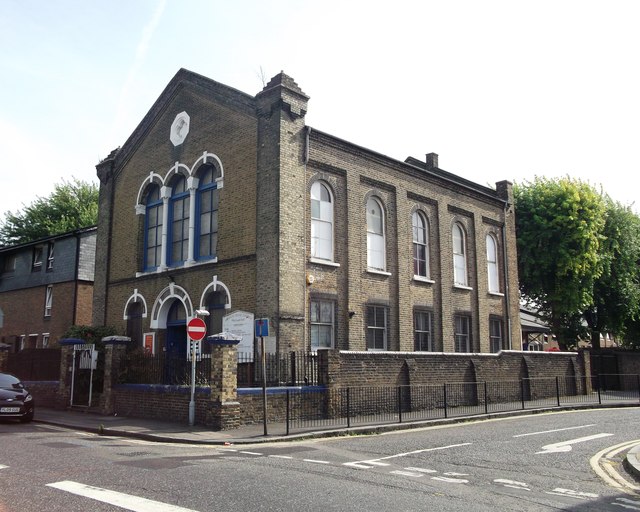
Peckham as a whole transformed dramatically during the nineteenth century. At the beginning of that century, it was what one observer called “a small, quiet, retired village surrounded by fields.” Yet by 1865, when Peckham Rye railway station opened, the area was poised for explosive suburban growth. The railway provided direct access to central London and the docks for artisans, clerical workers, and others seeking employment in the city. Housing for this growing middle and working class filled almost all the remaining fields in the area, with the exception of Peckham Rye Common itself, which the vestry of Camberwell St Giles had wisely purchased in 1868 to preserve as public common land.
1865
Railway Arrives
Peckham Rye railway station opens on the Chatham Main Line, transforming local accessibility.
1868
Common Preserved
Peckham Rye Common is purchased by the vestry of Camberwell St Giles to protect it from development.
c. 1870s–1900s
Housing Boom
Terraced housing spreads across North Peckham and the surrounding fields, driven by rail access and suburban growth.
1938
Street Registered
Claude Road appears in London street registers for the SE15 postcode area.
1965
Borough Created
The Metropolitan Borough of Camberwell is abolished; Peckham falls within the newly created London Borough of Southwark.
Did You Know?
In the early nineteenth century, Peckham and its surrounding villages served as the last stopping point for cattle drovers taking their livestock to market in London. The drovers lodged in local inns such as the Red Cow, and their herds were penned overnight in holding pens. This pastoral function gradually gave way to suburban housing as the railway age arrived.
Claude Road itself is a product of this Victorian and early twentieth-century housing boom. It likely dates from the period between the 1870s and the 1920s, when the North Peckham area was being rapidly developed with terraced housing for working and middle-class residents. The street’s modest scale—just 77 metres in length—suggests it was always a secondary street, possibly serving as an access road to larger thoroughfares. Its survival to the present day represents the stability of this residential neighbourhood despite the post-war redevelopment that transformed other parts of North Peckham.