Peckham Rye Park is recorded as being cultivated before the Norman Conquest in the 11th century. For most of its early existence the area was agricultural. Maps from the 1740s depict the area as a network of fields and smallholdings, with herds able to graze on the common before heading into the city. Since 1744 stagecoaches had travelled with an armed guard between Peckham and London to give protection from highwaymen.
1086
Domesday Record
Peckham recorded as ‘Pecheha’ in the Domesday Book, held from Odo of Bayeux.
c.1765
Blake’s Vision
The eight-year-old William Blake walks six miles from Soho to the Rye and sees angels in an oak tree.
1823
River Enclosed
The River Peck, which gave the Rye its name, is enclosed underground. A remnant survives in the park.
1865
Railway Arrives
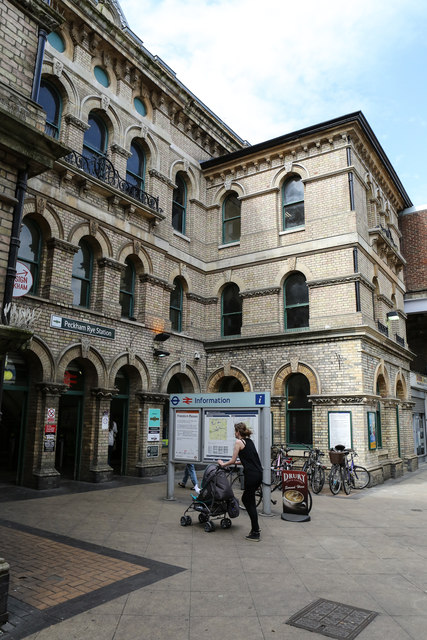
Peckham Rye station opens on 1 December for London, Chatham and Dover Railway services.
1868
Common Saved
Camberwell Vestry purchases the Rye, defeating development plans and securing it as public common land.
1894
Park Opens
Peckham Rye Park declared open on 14 May, after the London County Council paid £51,000 for Homestall Farm.
1940–41
Wartime
78 bombs fall in the Peckham Rye area. Part of the Common becomes a camp for Italian prisoners of war.
Did You Know?
Peckham Rye is Cockney rhyming slang for “tie” (necktie) — one of the few street names in London to double as a wardrobe item. The slang is first recorded in print in the early twentieth century.
During the mid-19th century, housing spread north and west of Peckham Rye, and many large houses were built in the area west of the Common and Park. When Peckham Rye railway station opened in 1865, the railway made Peckham accessible to artisans and clerical staff working in the city and the docks. In 1894, responding to concerns about dangerous overcrowding of the common on holidays, the vestry bought the adjacent Homestall Farm — the last farm in the area — and opened it as Peckham Rye Park.
According to bombsight.org, 78 bombs were dropped in the Peckham Rye area between October 1940 and June 1941. Underground air-raid shelters were built in the north-west part of the common in 1939 with enough room for 672 people. During the Second World War, part of the Common became a camp for Italian prisoners of war. The park recovered slowly after 1945, its lido closing in the 1980s before a community-led restoration in 2005 returned it to its Victorian character.