Southwark London England About Methodology
Walworth, Southwark · SE1

Burbage Close

A street name that carries the weight of Anglo-Saxon fortifications—from castled brooklands to a modern Southwark neighbourhood.

Named After
Old English Place Name
Borough
Southwark
Character
Residential Close
Last Updated
Time Walk

A Quiet Corner of Inner South London

Burbage Close is a modest residential street in Walworth, Southwark, distinguished primarily by its dense concentration of flats and period terraces rather than any prominent landmark or public building. The street occupies a quiet niche in a densely populated inner-city neighbourhood, close enough to Borough High Street and the Elephant & Castle to benefit from transport links but removed from the immediate bustle of major thoroughfares.

1988
Tower Block UK photo l37-11
Wikimedia Commons · CC BY 4.0
2012
Autumn on Burbage Road, Dulwich
Wikimedia Commons · CC BY-SA 2.0
2018
Burbage Rd
Burbage Rd
Wikimedia Commons · CC BY-SA 2.0
Today
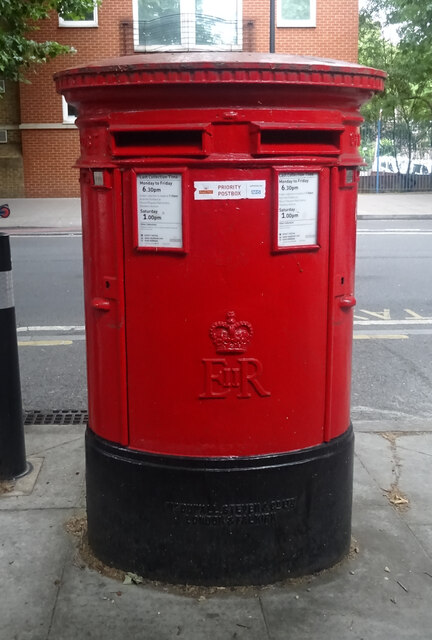
Double aperture Elizabeth II postbox on Great Dover Street — near Burbage Close
Geograph · CC BY-SA 2.0

The name itself tells a story older than the street—a story rooted in the very earliest layers of English settlement. What makes Burbage Close worth knowing about is not what it contains today, but where its name came from, and what that etymology reveals about how English places were named.

✦   ✦   ✦
Name Origin

Fortified Brooks and Saxon Settlement

The name Burbage is most likely derived from Old English elements: burh (a fortified place, stronghold, or castle) and baece or bece (a brook, stream, or valley). Together, the name means ‘the brook or valley of the fortified place.’ This etymology reflects a pattern of Anglo-Saxon settlement, where communities clustered around defensive positions and water sources. The name appears in English place-name records attached to settlements in Derbyshire, Leicestershire, and Wiltshire, all recorded with variant spellings in medieval documents—Burbeche, Burbache, Burbege, and Burbetce—before settling into the modern form Burbage. When urban expansion brought London southward across the Thames in the 19th and 20th centuries, streets in new developments inherited names from established English places and family names, linking the new city to the old.

✦   ✦   ✦
History

Urban Growth and Modern Housing

The precise date when Burbage Close was first laid out in Walworth remains undocumented in readily accessible historical sources. Like many streets in this part of Southwark, it emerged during the period of rapid residential development that characterised inner south London from the late 19th century onwards. The street sits within an area that had been progressively built upon since the early industrial period, but it bears the hallmark of later suburban infill—modest terraces and purpose-built flats rather than grand Victorian villas or Georgian townhouses.

The street’s current character reflects post-war and contemporary housing patterns. Census records show the street to be predominantly residential, with flats constituting the majority of dwellings, many of them social and private rental stock. MOLA (Museum of London Archaeology) has conducted extensive work across Southwark documenting the subsurface archaeology of the borough, but no specific excavations or findings relating directly to Burbage Close have been recorded in public archives.

Did You Know?

The area surrounding Burbage Close today is one of London’s most culturally diverse neighbourhoods, with residents from across the world. This reflects both historic migration patterns and contemporary housing pressure in central London.

✦   ✦   ✦
Culture & Character

Integration into a Living Borough

Burbage Close itself hosts no major cultural institutions, but it forms part of one of south London’s most vibrant neighbourhoods. Within easy walking distance lie the Fashion and Textile Museum on Bermondsey Street, the Cuming Museum (dedicated to the history of Southwark itself), and the thriving Borough Market and Bermondsey Square Antiques Market. The street benefits from its proximity to historic sites including Southwark Cathedral and the restored Old Operating Theatre on St Thomas Street—one of London’s finest survivals of Jacobean church architecture.

The wider Walworth area has been a centre for social housing initiatives and community development. As documented by British History Online, Southwark’s urban fabric has always been shaped by waves of development, migration, and regeneration—patterns that continue to define streets like Burbage Close today.

✦   ✦   ✦
Today

A Residential Close in Modern Southwark

Burbage Close remains a quiet residential street within the London Borough of Southwark’s Chaucer ward, comprising mostly mid-terraced flats and terraced houses. The street is well-served by public transport, sitting less than a mile from Elephant & Castle station and roughly half a mile from London Bridge station. Most properties on the street are flats, reflecting the dense urban character typical of inner-city London.

The neighbourhood has benefited from recent urban investment, particularly the development of Elephant Park, a two-acre green space opened in 2020—the largest new central London park in 70 years—which sits just eight minutes’ walk away. Local schools including Ark Globe Academy and St Saviour’s and St Olave’s School serve the area, whilst community facilities and healthcare are accessible throughout the ward.

8 min walk
Elephant Park
Two-acre urban green space with planting, seating, and community events.
10 min walk
Bishop’s Park Area
Tree-lined streets and pockets of greenery throughout Walworth residential zones.
✦   ✦   ✦
On the Map

Burbage Close Then & Now

National Library of Scotland — Ordnance Survey 6-inch, c. 1888. Modern: © OpenStreetMap contributors.

✦   ✦   ✦

Frequently Asked Questions

Why is it called Burbage Close?
Burbage derives from Old English, combining ‘burh’ (a fortified place or castle) and ‘bece’ (a brook or stream). The name originally belonged to places in Derbyshire, Leicestershire, and Wiltshire, and was applied to London streets as the city expanded and new developments took names from established English place names and settlement patterns.
What neighbourhood is Burbage Close in?
Burbage Close is located in Walworth, a neighbourhood within the London Borough of Southwark. It sits within the Chaucer ward and the Bermondsey & Old Southwark constituency, close to major landmarks like Borough Market and the Elephant & Castle.
What is Burbage Close known for today?
Burbage Close is a modest residential street comprising mostly flats and terraced housing. It is known primarily for its location within vibrant inner south London, with access to local schools, green spaces including Elephant Park, and cultural venues such as the Fashion and Textile Museum and Borough Market, all within walking distance.